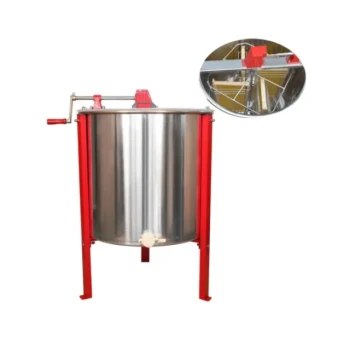
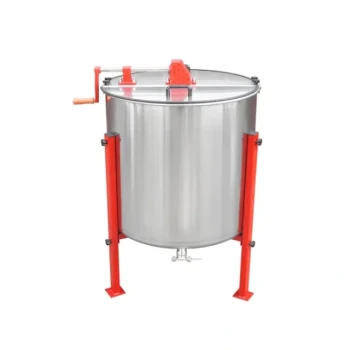
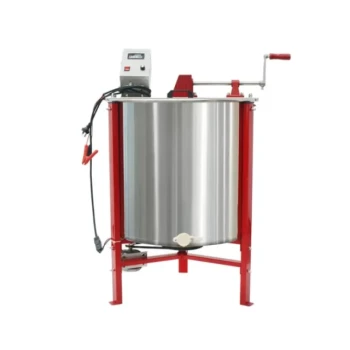
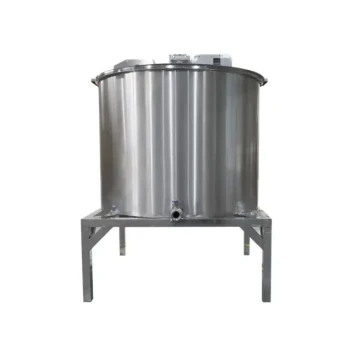
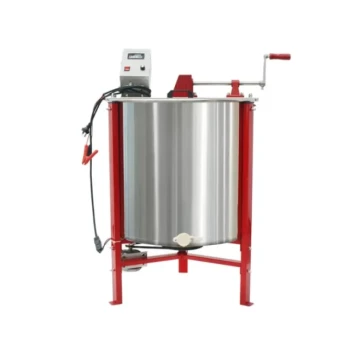
For the hands-on hobbyist, a manual honey extractor is often the preferred choice because it allows for direct, intimate involvement in the harvesting process. This option is best suited for beekeepers with a smaller number of hives who value the craft of extraction over industrial efficiency and appreciate the ability to work without reliance on electricity.
While electric models prioritize volume and speed, the manual extractor serves the beekeeper who values granular control and simplicity. It transforms extraction from a mechanized task into a quiet, tactile extension of beekeeping.
The Value of Direct Engagement
Fostering a Deeper Connection
For many, the joy of beekeeping lies in the process, not just the product. A manual extractor requires physical interaction, allowing you to be intimately involved in the final stage of the harvest. This tactile experience fosters a deeper connection to your practice that automated machinery often obscures.
Precision Control for Comb Preservation
One of the most significant technical benefits of manual operation is the ability to instantly adjust spinning speed and direction. You have full control via the hand crank, allowing you to start slowly and accelerate gradually. This gentle approach is critical for preserving delicate wax combs, which can easily blow out under the sudden torque of an electric motor.
The Benefit of Acoustic Comfort
Unlike the drone of an electric motor, a manual extractor operates quietly. This allows you to work in a peaceful environment, making the extraction process more meditative and less like a manufacturing operation.
Practical Advantages for the Independent Hobbyist
Total Location Independence
Because it requires no power source, a manual extractor offers complete portability. You can process honey directly in the field, at an off-grid cabin, or in a shed with no electrical access. This flexibility is essential for beekeepers operating in remote locations.
Simplicity and Maintenance
Manual extractors lack complex electronic components, motors, and wiring. This simplicity translates to easier cleaning and significantly lower maintenance requirements. There is simply less "tech" to break, ensuring the tool remains reliable season after season.
Understanding the Trade-offs
The Volume Threshold
While the manual process is rewarding, it is physically demanding. Beekeepers generally agree that manual extraction becomes inefficient once you exceed approximately ten hives. Beyond this point, the time and labor required can outweigh the benefits of personal involvement.
Physical Exertion
Manual extraction is labor-intensive. It requires sustained physical effort to crank the basket, which may not be suitable for beekeepers with physical limitations or those harvesting large batches back-to-back.
Making the Right Choice for Your Goal
The decision between manual and electric ultimately relies on the scale of your apiary and your philosophy regarding the process.
- If your primary focus is the craft and experience: Choose a manual extractor to maintain a quiet, tactile connection to your work and ensure gentle handling of your combs.
- If your primary focus is flexibility and simplicity: Choose a manual extractor for its portability, ease of cleaning, and ability to function without power.
- If your primary focus is efficiency and scale: Recognize that if you manage more than ten hives, the charm of manual cranking will likely be replaced by the need for the time-saving power of an electric model.
Select the tool that respects both your harvest size and the way you wish to experience your beekeeping journey.
Summary Table:
| Feature | Manual Honey Extractor | Electric Honey Extractor |
|---|---|---|
| Best Suited For | 1-10 Hives (Hobbyists) | 10+ Hives (Commercial) |
| Power Source | Manual (Hand Crank) | Electricity Required |
| Control | Granular, Tactile Control | Pre-set/Variable Speeds |
| Portability | High (Off-grid friendly) | Limited by Power Access |
| Maintenance | Low (Simple mechanics) | Moderate (Motor/Wiring) |
| Noise Level | Silent/Very Quiet | Constant Motor Hum |
Elevate Your Apiary with Premium Extraction Tools
Whether you are a dedicated hobbyist or managing a large-scale operation, HONESTBEE provides the professional-grade equipment you need to succeed. We specialize in catering to commercial apiaries and distributors, offering a comprehensive wholesale range that includes everything from precision manual and electric extractors to advanced honey-filling machinery and hive-making equipment.
Why partner with HONESTBEE?
- Full Spectrum Supply: Access a complete inventory of beekeeping tools, machinery, and industry consumables.
- Quality & Durability: Our hardware is designed to withstand the rigors of professional honey production.
- Growth Focused: We support distributors with competitive wholesale offerings and unique honey-themed cultural merchandise.
Ready to scale your business or upgrade your equipment? Contact us today to discuss how our specialized hardware and wholesale solutions can optimize your harvest and enhance your value to customers.
Related Products
- Stainless Steel 3 Frame Manual Honey Extractor Spinner for Bee Honey Extraction
- HONESTBEE 4 Frame Manual Self Reversing Honey Extractor for Beekeeping
- HONESTBEE 3-Frame Manual Acrylic Honey Extractor
- Stainless Steel Manual 8 Frame Radial Honey Extractor Machine for Beehives
- 6 Frame Manual Stainless Steel Honey Extractor Beekeeping Equipment
People Also Ask
- Which type of honey extractor is generally more durable? Focus on Material & Build Quality for Longevity
- What are the disadvantages of a manual honey extractor? Overcome Efficiency Bottlenecks in Your Apiary
- What is a manual honey extractor? The Essential Guide to Cost-Effective Beekeeping for Beginners
- Why are manual extractors popular among beginner beekeepers? A Guide to Starting Simple & Saving Money
- What are the primary advantages of utilizing a manual honey extractor? Cost-Effective & Gentle Harvesting