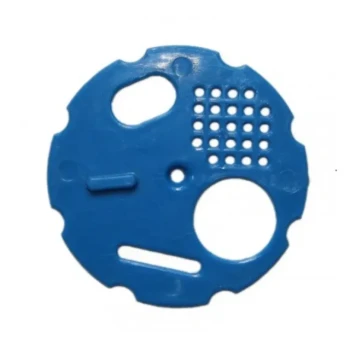
To ensure the security and climate control of your colony, placement must be precise. An entrance reducer should be placed directly on the landing board, fitted snugly into the gap between the bottom board and your first brood box (deep super). It is not meant to sit loosely in front of the hive; rather, it occupies the entrance slot to physically narrow the passage available to the bees.
By effectively shrinking the front door of the hive, the entrance reducer allows a smaller colony to defend itself against intruders and helps regulate internal temperature during extreme weather.
Achieving the Correct Fit
Positioning the Reducer
The entrance reducer is typically a notched wooden strip. It is designed to rest flat on the bottom board, which serves as the floor and landing area for the hive.
You must slide the reducer into the opening created where the first hive body (the box containing the bees) sits on top of the bottom board. It should fit tightly enough to stay in place, ensuring the only way in or out is through the specific notch you have selected.
Orientation of the Notches
Most reducers have two different sized notches: a small opening and a medium opening. You should position the reducer so the desired notch is facing downward against the landing board, providing a clear path for the bees to walk through.
Optimizing the Entrance for Colony Health
Protecting Weak or New Colonies
When you install a new nucleus colony (nuc) or a package of bees, you must use the reducer. In this scenario, position the reducer to expose the smallest opening.
This restricts the entrance to a size that a small workforce can easily guard. It prevents "robber bees" from other hives or pests from overwhelming the developing colony while they build up their numbers.
Winter Configuration
Using the smaller opening is also standard practice during winter months. This minimizes cold drafts entering the hive. It also helps keep out larger pests, such as mice, looking for a warm place to nest, though specific metal mouse guards are often more effective for this specific threat.
Understanding the Trade-offs
Recognizing Traffic Bottlenecks
While the reducer is essential for defense, it can become a hindrance for a booming colony. During the peak summer nectar flow, a strong colony requires a massive amount of traffic to collect pollen and nectar efficiently.
If you notice a chaotic "traffic jam" of bees struggling to enter or exit through the notch, the reducer is likely impeding their productivity.
Ventilation vs. Security
Leaving a reducer on a strong hive in high heat can reduce necessary ventilation. However, removing it too early in the season exposes the colony to robbery. You must balance the need for airflow with the colony's ability to defend a fully open entrance.
Making the Right Choice for Your Goal
The entrance reducer is not a "set it and forget it" tool; it requires adjustment based on the season and colony strength.
- If your primary focus is establishing a new colony: Use the smallest opening to help the bees defend against robbers until their numbers increase.
- If your primary focus is maximizing summer production: Remove the reducer entirely to prevent traffic bottlenecks during the nectar flow.
- If your primary focus is overwintering: Re-install the reducer with the small opening to minimize drafts and discourage rodents.
Mastering the use of the entrance reducer is a fundamental step in transitioning from keeping bees to managing colonies.
Summary Table:
| Setting | Configuration | Best Use Case | Primary Benefit |
|---|---|---|---|
| Smallest Notch | Facing downward on bottom board | New nucs, packages, wintering | Maximum defense and heat retention |
| Medium Notch | Facing downward on bottom board | Establishing colonies, early spring | Balanced airflow and security |
| Removed | Fully open entrance | Peak nectar flow, strong colonies | Prevents traffic jams and improves ventilation |
Scale Your Beekeeping Operation with HONESTBEE
At HONESTBEE, we understand the needs of commercial apiaries and professional distributors. Whether you are managing hundreds of colonies or supplying the local market, we provide the high-quality tools and machinery required for success. From precision-fit entrance reducers and durable hive hardware to advanced honey-filling machines and unique honey-themed merchandise, our wholesale portfolio is designed to enhance your efficiency and profitability.
Ready to upgrade your equipment? Contact us today to discuss our comprehensive wholesale offerings and discover how HONESTBEE can support your growth in the beekeeping industry.
Related Products
- Steel Round Disc Entrance Reducer for Flexzion Bee Hive Nuc Box Gate
- Beehive Entrance Reducer Guardian Metal Hive Entrance for Bees
- Professional Hive Front Entrance Bee Feeder
- HONESTBEE Entrance Bee Feeder Efficient Hive Front Liquid Feeding Solution for Beekeeping
- HONESTBEE Entrance Bee Feeder Professional Hive Nutrition Solution for Beekeeping
People Also Ask
- What is the purpose of an entrance reducer for a beehive? Strengthen Colony Defense and Prevent Robbery
- Why are entrance reducers used to counter hornet infestations? Protect Your Hive with Strategic Choke Points
- Why is it critical to maintain a smaller entrance for a newly established bee hive? Boost Colony Growth and Security
- What is the function of an entrance reducer on a beehive? Strengthen Colony Defense and Climate Control
- Under what conditions should a beekeeper adjust the size of a beehive entrance? Seasonal & Defense Management Tips