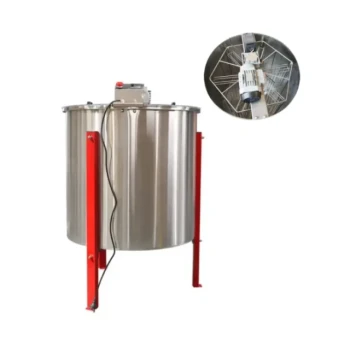
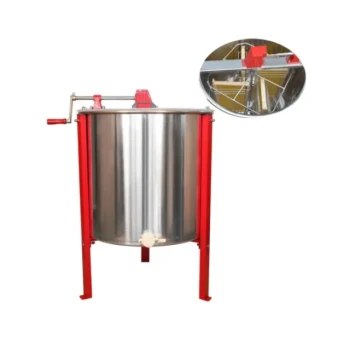
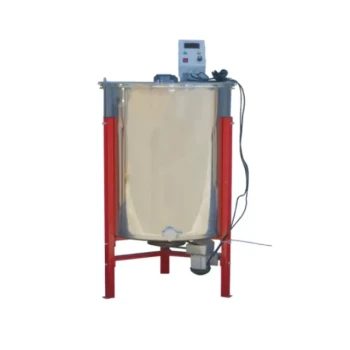
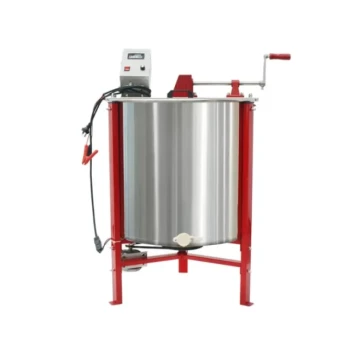
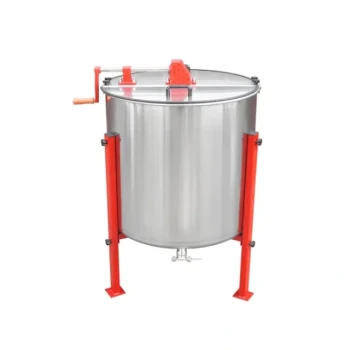
Electric honey extractors are unequivocally faster and more efficient than their manual counterparts. While a manual unit relies on limited physical stamina to crank frames, an electric model utilizes a motor to spin at consistent, high speeds, dramatically reducing the time and labor required for extraction.
The difference in throughput is massive: a manual extractor typically processes 2-4 frames in about 30 minutes, whereas an industrial electric unit can process up to 100 frames—yielding nearly 800 pounds of honey—in just minutes.
The Mechanics of Extraction Speed
Motor vs. Muscle
The primary driver of speed is the power source. Electric extractors use a motor to maintain a consistent spinning velocity without operator intervention.
Manual extractors rely entirely on a hand crank. This requires the beekeeper to physically generate the centrifugal force, which inevitably leads to fatigue and inconsistent speeds over time.
Throughput Capability
In terms of raw volume, electric models operate in a different league. An industrial electric extractor can handle approximately 100 deep frames simultaneously.
Given that a full deep frame weighs roughly 8 pounds, this translates to extracting 800 pounds of honey in a single rapid cycle.
The Time Cost of Manual Labor
Manual extraction is inherently time-consuming. Beyond the spinning itself, the process involves uncapping and rest periods for the operator.
Processing a small batch of just 2 to 4 frames takes approximately 30 minutes with a manual setup. For large harvests, this time creates a significant bottleneck.
Understanding the Trade-offs
Cost vs. Efficiency
While electric models offer superior speed, they come with a higher price tag. Manual extractors are cost-effective and generally sufficient for hobbyists managing a small number of hives.
Control and Tactile Feedback
Speed is not the only metric of success. Manual extractors offer greater control over the spinning speed, allowing the beekeeper to feel the resistance of the frames.
This tactile feedback can be valuable for preventing damage to delicate comb in a way that a powerful electric motor might not.
Upgradeability
It is worth noting that the choice is not always permanent. Some manual extractors can be upgraded to electric models later using manufacturer conversion kits or DIY motor attachments.
Making the Right Choice for Your Goal
When deciding between speed and simplicity, align your choice with the scale of your apiary.
- If your primary focus is large-scale efficiency: Choose an electric extractor if you manage more than 10 hives, as the labor savings are essential for handling high volumes of honey.
- If your primary focus is budget and control: Choose a manual extractor for small-scale operations (fewer than 10 hives) where you prioritize a hands-on experience and lower initial costs.
- If your primary focus is physical preservation: Choose an electric extractor if you have physical limitations, as it eliminates the demanding repetitive motion of hand-cranking.
Ultimately, while the manual extractor offers a connection to the process, the electric extractor provides the necessary horsepower to turn beekeeping into a scalable operation.
Summary Table:
| Feature | Manual Honey Extractor | Electric Honey Extractor |
|---|---|---|
| Primary Power Source | Manual Hand-cranking | Electric Motor |
| Processing Speed | Slow (2-4 frames / 30 mins) | Very Fast (Up to 100 frames / minutes) |
| Labor Intensity | High (Requires physical stamina) | Low (Automated spinning) |
| Capacity (Avg.) | 2 - 4 Frames | Up to 100 Deep Frames |
| Best Suited For | Hobbyists (<10 hives) | Commercial Apiaries & Professionals |
| Key Advantage | Lower cost & tactile control | Maximum throughput & labor savings |
Scale Your Honey Production with HONESTBEE Professional Equipment
Are you ready to transition from labor-intensive manual cranking to high-efficiency industrial throughput? At HONESTBEE, we specialize in empowering commercial apiaries and distributors with the heavy-duty machinery needed to thrive.
Our comprehensive wholesale range includes:
- High-Capacity Electric Extractors: Process hundreds of pounds of honey in minutes.
- Industrial Machinery: From hive-making to honey-filling machines for seamless operations.
- Complete Apiary Supplies: A full spectrum of beekeeping tools, consumables, and cultural merchandise.
Boost your harvest efficiency and maximize your ROI. Contact HONESTBEE today to discuss our wholesale offerings and find the perfect equipment tailored to your scale.
Related Products
- HONESTBEE 72 Frame Industrial Electric Honey Extractor for Beekeeping
- Commercial Electric 12 Frame Honey Extractor Spinner Motorized Honey Extractor
- HONESTBEE 6 Frame Self Reversing Electric Honey Extractor for Beekeeping
- HONESTBEE 3-Frame Manual Acrylic Honey Extractor
- Stainless Steel Manual 8 Frame Radial Honey Extractor Machine for Beehives
People Also Ask
- What is the importance of balancing honeycomb frames within a honey extractor? Ensure Stability and Protect Machinery
- How is honey separated from the frames after they are uncapped? Efficient Extraction Methods for High Yields
- What are the main benefits of using a honey extractor? Maximize Yields and Protect Your Honeycomb
- What are the recommended methods for removing honey from the honeycomb? Top Extraction Techniques for Maximum Efficiency
- How do manual honey extractors compare to electric honey extractors? Choosing the Right Tool for Your Apiary Growth