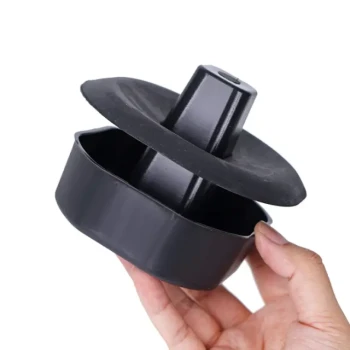
The use of coconut shells and metal lids in clay pot hives is a technical necessity for high-yield, sustainable Trigona beekeeping.
In five-liter clay pot systems, these components serve as essential seals that block light, repel predators, and prevent rainwater ingress. Beyond basic protection, they provide a modular interface that allows beekeepers to monitor honey storage and perform non-destructive extraction without disturbing the critical brood chamber.
To maximize commercial yields in stingless bee cultivation, infrastructure must balance natural colony simulation with professional accessibility. Coconut shells and metal lids achieve this by creating a controlled internal environment that simplifies maintenance and accelerates the harvesting cycle.
Enhancing Colony Stability and Defense
Environmental Simulation and Light Control
Trigona bees naturally nest in dark, enclosed cavities such as tree trunks or rock crevices. Coconut shells and metal lids effectively mimic these conditions, providing the absolute darkness required for the colony to focus on honey and propolis production.
Superior Protection Against External Stressors
As a primary sealing layer, these covers act as a barrier against natural predators and pests that target honey stores. Furthermore, they ensure the hive remains watertight, preventing moisture-related fungal growth and maintaining the precise internal humidity necessary for brood development.
Optimizing Commercial Harvest and Propagation
The Non-Destructive Harvesting Advantage
One of the primary advantages for professional beekeepers is the ability to separate the honey storage area from the brood chamber. By using a lid or shell, the beekeeper can access the upper honey pots for extraction while leaving the queen and the reproductive core of the hive completely undisturbed.
Facilitating Efficient Colony Eduction
Natural coconut shells are frequently utilized in the eduction process to establish new daughter colonies. Their organic structure provides a familiar environment for worker bees, allowing for sustainable colony propagation that increases a distributor's inventory without damaging the original mother colony.
Understanding the Trade-offs
Material Durability and Heat Management
While metal lids offer superior durability and ease of sterilization for long-term use, they require careful placement to avoid overheating in direct sunlight. Coconut shells provide excellent natural insulation and are preferred for propagation, though they may eventually degrade and require replacement over several seasons.
Impact on Maintenance Labor
The choice of lid material directly impacts the labor costs associated with hive inspections. Lightweight, standardized lids allow for rapid response times during site-wide inspections, which is a critical factor for large-scale commercial operations managing hundreds of hives.
Strategic Sourcing for Beekeeping Distributors
How to Apply This to Your Portfolio
Providing the right hive components is about offering a complete, high-performance ecosystem to your clients. As a distributor, your focus should be on sourcing components that reduce colony loss and maximize harvest efficiency.
- If your primary focus is one-stop sourcing for large-scale apiaries: Prioritize standardized metal lids that offer long-term durability and rapid deployment across thousands of clay pot units.
- If your primary focus is supporting sustainable propagation and high-quality honey: Stock natural coconut shell starter kits to facilitate non-destructive eduction and premium, organic-focused bee cultivation.
By integrating these specialized components into your supply chain, you provide beekeepers with the professional-grade tools required for efficient, high-volume Trigona honey production.
Summary Table:
| Feature | Coconut Shells | Metal Lids |
|---|---|---|
| Primary Benefit | Natural insulation & familiar environment | Extreme durability & easy sterilization |
| Best Use Case | Colony propagation (Eduction) | Large-scale commercial apiaries |
| Maintenance | Biodegradable; requires periodic replacement | Long-lasting; low maintenance labor |
| Harvesting | Facilitates organic, non-destructive access | Standardized for rapid site-wide inspections |
| Climate Control | Excellent natural thermal regulation | Requires shading to prevent overheating |
Partner with HONESTBEE for Professional Beekeeping Solutions
Elevate your wholesale portfolio with HONESTBEE, your premier partner for one-stop sourcing in the beekeeping industry. We cater specifically to commercial apiaries, distributors, and B2B resellers, providing a full-spectrum product range—from specialized hive-making and honey-filling machinery to high-demand consumables for Trigona cultivation.
Why Choose HONESTBEE?
- Comprehensive Portfolio: Access everything from hardware to honey-themed cultural merchandise.
- Reliable Supply Chain: Benefit from ultra-fast delivery and efficient order fulfillment to maintain your profit margins.
- Industry Expertise: Leverage our deep professional knowledge to support your OEM/ODM needs and technical requirements.
- Exceptional Service: Experience rapid response times and dedicated support tailored for high-volume traders.
Ready to scale your business with premium beekeeping equipment? Contact us today to discuss wholesale opportunities and custom solutions!
References
- Shelke RT, Vaz Riya. Indigenous technology in beekeeping of stingless bees (Trigona SPS.) by locals of south Goa, India. DOI: 10.22271/chemi.2020.v8.i4g.10178
This article is also based on technical information from HonestBee Knowledge Base .
Related Products
- Wholesales Dadant Size Wooden Bee Hives for Beekeeping
- Durable Plastic Interlocking Hive Connector for Beekeeping
- HONESTBEE Premium Italian Style Hive Tool with Hardwood Handle
- Professional Insulated Plastic Bee Hives
- Solid Bottom Board Australian Pine Wood Langstroth Bottom Board for Wholesale
People Also Ask
- What are the strategic benefits of installing beekeeping hives at an elevation of 1 to 6 meters? Protect Your Assets
- What are the key advantages of modern improved beekeeping hives? Scale Your Honey Yield and Production Efficiency
- What is the proper way to store unused bee hives? Expert Stacking Tips for Equipment Longevity
- What are the 2 types of bee hives? Langstroth vs. Top-Bar for Your Apiary
- How does the design of improved beekeeping hives contribute to maintaining honey quality and purity? Enhancing Purity