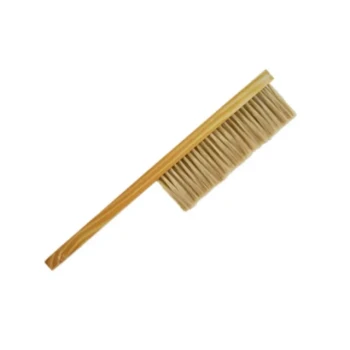
Precision and contamination control are the driving forces behind the use of these specific tools. Fine-bristled brushes are essential for navigating the narrow geometry of queen cells to maximize yield, while stainless steel tweezers provide the mechanical accuracy required to remove larvae without corrupting the surrounding jelly.
The extraction of royal jelly requires a delicate balance between maximizing yield and preserving unstable bio-active components; these tools facilitate a refined process that prevents mechanical contamination and maintains biochemical stability.
The Mechanics of Extraction
The Role of Stainless Steel Tweezers
The primary function of stainless steel tweezers is the precise removal of larvae from queen cells. Because royal jelly is harvested from active cells, the biological matter (the larva) must be separated from the nutritional substance (the jelly) with exactness.
Using high-quality tweezers allows for this separation without causing mechanical contamination to the jelly itself. This step ensures that the final product remains pure and free of biological debris that could compromise texture or quality.
The Function of Fine-Bristled Brushes
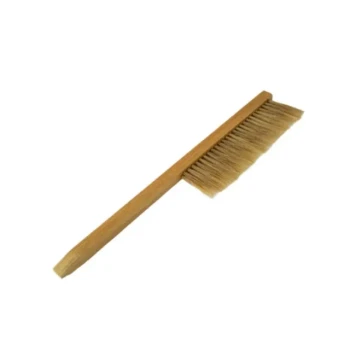
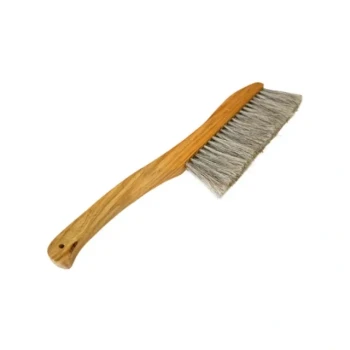
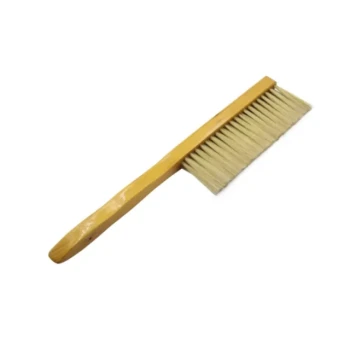
Fine-bristled brushes are the primary tool for the actual extraction of royal jelly from the hive cells. The physical structure of a queen cell is narrow and difficult to access with standard broad tools.
These brushes are designed to reach into these confined spaces to ensure maximum recovery of the valuable substance. They allow the harvester to sweep the cell clean, ensuring minimal residue is left behind, which directly impacts the commercial yield of the harvest.
Preserving Biochemical Integrity
Minimizing Impurities
The "Deep Need" behind using these specialized tools is the preservation of the jelly's complex biochemical composition. Royal jelly contains sensitive components, such as 10-HDA (royal jelly acid) and Major Royal Jelly Proteins (MRJPs).
By using tools specifically designed for the task—tweezers for larvae and brushes for extraction—harvesters introduce fewer impurities. This "clean" extraction is vital for maintaining the product's integrity and biological activity from the hive to the consumer.
Protecting Against Oxidation and Heat
While the tools aid in physical extraction, they also support speed and efficiency, which are critical for limiting exposure to environmental factors. Royal jelly is highly susceptible to degradation from light, oxygen, and temperature fluctuations.
Efficient tool usage minimizes the time the jelly is exposed to open air before it can be transferred to cold storage. This rapid processing helps inhibit the decomposition of chemical components and maintains the jelly's viscosity.
Understanding the Trade-offs
The Acidity Factor
It is critical to note that while stainless steel tweezers are standard for larvae removal, royal jelly itself has a pH of approximately 3.5. This high acidity can react with certain metals, potentially leading to ion contamination or oxidation.
Tool Material Selection
While stainless steel is used for the brief contact required to remove larvae, supplementary tools used for prolonged contact—such as spatulas or storage containers—are often made of chemically inert materials like wood or glass.
When selecting your toolset, ensure that any metal tools (like tweezers) are high-grade stainless steel to resist corrosion. However, for scooping or storing the jelly after extraction, inert materials are preferable to strictly avoid altering the jelly's chemical stability.
Making the Right Choice for Your Goal
Depending on your specific harvesting priorities, your focus on tool selection may shift.
- If your primary focus is Commercial Yield: Prioritize high-quality fine-bristled brushes, as their ability to navigate narrow cells determines the total volume of product recovered.
- If your primary focus is Product Purity: Prioritize precision stainless steel tweezers, as their accuracy in larvae removal prevents biological contamination and ensures a cleaner end product.
Mastering the use of these tools is the first line of defense in protecting the delicate molecular structure of royal jelly.
Summary Table:
| Tool Type | Primary Function | Key Benefit |
|---|---|---|
| Fine-Bristled Brushes | Extraction from hive cells | Maximizes yield in narrow queen cell geometries |
| Stainless Steel Tweezers | Precise removal of larvae | Prevents biological contamination and maintains purity |
| Inert Spatulas (Wood/Glass) | Handling and collection | Avoids chemical reactions with acidic (pH 3.5) jelly |
| Cold Storage Units | Post-harvest preservation | Protects sensitive 10-HDA and MRJPs from degradation |
Elevate Your Apiary’s Commercial Yield with HONESTBEE
Precision harvesting requires professional-grade equipment. At HONESTBEE, we specialize in supporting commercial apiaries and distributors by providing a comprehensive wholesale range of beekeeping tools, from high-precision larvae tweezers and extraction brushes to advanced honey-filling machinery.
Our mission is to help you maintain the biochemical stability and purity of your royal jelly through superior hardware and specialized industry consumables. Whether you are scaling up your production or seeking high-quality honey-themed cultural merchandise, our portfolio is designed to meet your specific commercial needs.
Ready to optimize your harvest? Contact us today to explore our wholesale solutions and discover how we can enhance your apiary's efficiency.
References
- Elisabeth Jeini Hermi Toar, Joice J.I. Rompas. Developing Pollinating Insects Bees Honey Apis cerana by applying the Doolittle Method (Queen Rearing). DOI: 10.36378/juatika.v7i1.4106
This article is also based on technical information from HonestBee Knowledge Base .
Related Products
- Plastic Chinese Queen Grafting Tool for Bee Queen Rearing
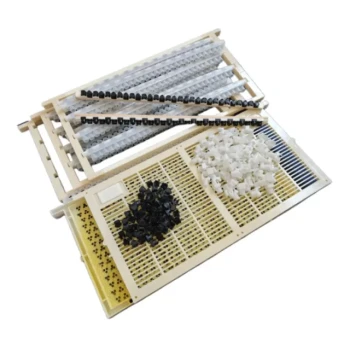
- No Grafting Queen Rearing Kit: System for Royal Jelly Production and Queen Rearing
- Wooden Bee Brush with Double-Row Horsehair Bristles
- Classic Wooden Bee Brush with Double-Row Boar Bristles
- Plastic Handle Single Row Artificial Fiber Bee Brush
People Also Ask
- Why is it necessary for migratory beekeeping enterprises to utilize professional queen bee rearing tools? Boost Resilience
- What specialized tools and frame configurations are needed for larval grafting during queen rearing, and how are queen cells properly spaced? Master the essentials for efficient queen production
- What are the benefits of using a queen grafting tool for queen rearing? Master Precision for Superior Bee Genetics
- What is grafting in queen rearing? Take Control of Your Apiary's Genetics
- What are the steps involved in using a queen grafting tool? A Guide to Successful Queen Rearing