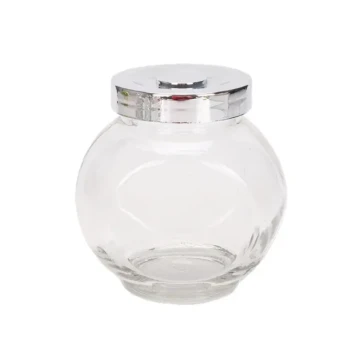
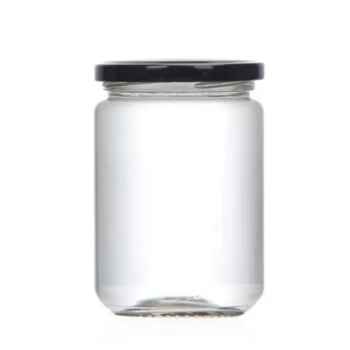
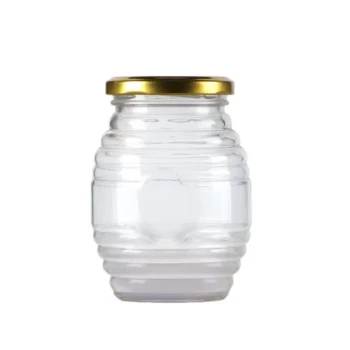
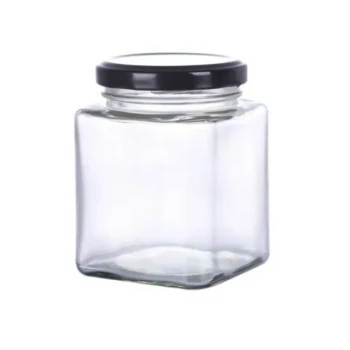
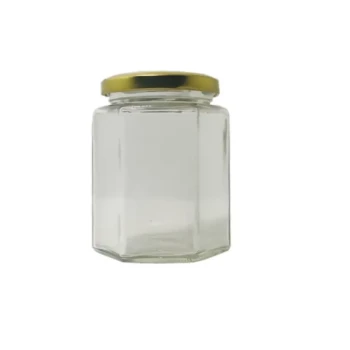
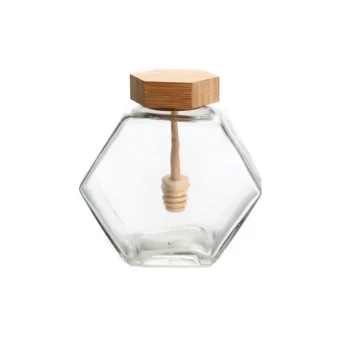
Glass jars are the preferred vessel for long-term honey preservation primarily due to their superior chemical inertness. Because honey contains acidic components, it can react with lesser materials, but glass remains neutral and prevents the migration of container impurities into the sample. This ensures the sample remains chemically identical to its original state prior to laboratory analysis.
The use of glass is a scientific necessity, not just an aesthetic choice. It provides a non-reactive barrier that isolates the honey from moisture and oxidation, ensuring that critical quality indicators like Hydroxymethylfurfural (HMF) content and enzyme activity reflect the honey's true age and origin, rather than container contamination.
The Science of Chemical Stability
Neutralizing Acidic Reactions
Honey is naturally acidic. Many plastic or metallic containers can degrade or leach substances when in contact with these acids over long periods.
Glass is chemically inert. It does not react with the weak acids found in honey, effectively eliminating the risk of foreign impurities migrating into the sample.
Preserving Key Indicators
For researchers and analysts, the goal is to measure the honey, not the container's impact on it.
Glass containers maintain the stability of physicochemical indicators. Specifically, they stabilize Hydroxymethylfurfural (HMF) content and enzyme activity, which are the standard metrics used to determine honey freshness and quality.
Combating Environmental Degradation
Preventing Moisture Absorption
Honey is highly hygroscopic, meaning it naturally attracts and holds water molecules from the surrounding air.
If honey absorbs atmospheric moisture, it can begin to ferment or spoil. High-quality glass jars, particularly those with screw-caps, provide an airtight seal that locks out environmental moisture, keeping water content stable (typically between 16% and 18%).
Blocking Oxidation and Volatile Loss
Long-term storage requires protection against the loss of volatile components, which are responsible for honey's specific aroma and flavor profile.
Glass creates a non-porous barrier. This prevents the "breathing" effect seen in some plastics, thereby retaining the honey's original taste and preventing oxidative degradation that can occur during cold storage.
Ensuring Analytical Accuracy
Protecting Microscopic Evidence
For botanical origin identification, scientists analyze the pollen grains suspended in the honey.
By preventing oxidation and chemical reactions, glass jars maintain the original state of these delicate pollen grains. This ensures that subsequent microscopic analysis is accurate and reproducible.
Isolating Variables
In scientific studies, it is vital to know that any changes in pH or acidity are internal to the honey.
Using sterile glass ensures that measured fluctuations are caused solely by the internal physical and chemical evolution of the honey, rather than external contamination.
Understanding the Trade-offs
The Issue of Light Sensitivity
While glass is chemically superior, standard clear glass offers no protection against light.
The primary reference notes that glass maintains stability when kept in light-protected environments. Exposure to UV light can degrade enzymes and increase HMF levels even in a glass jar. Therefore, glass jars must be stored in the dark or amber glass should be used.
Physical Fragility
Glass is heavy and brittle. While it protects the chemistry of the sample perfectly, the physical security of the sample requires careful handling to prevent breakage during transport or freezing.
Making the Right Choice for Your Goal
Whether you are a researcher or a producer, selecting the right storage affects your data.
- If your primary focus is Laboratory Analysis: Prioritize sterile, wide-mouth glass jars to prevent chemical interference with acidity and HMF levels.
- If your primary focus is Botanical Identification: Ensure the jar has a high-quality airtight seal to prevent moisture from degrading pollen grains and volatile aromatics.
- If your primary focus is Long-Term Storage: Combine glass containers with a dark environment to mitigate the lack of UV protection inherent in clear glass.
Glass provides the only "blank slate" environment that allows honey to age naturally without external interference.
Summary Table:
| Feature | Glass Jar Benefit | Impact on Honey Quality |
|---|---|---|
| Chemical Reactivity | Completely Inert | Prevents leaching/contamination from acidic honey |
| Moisture Control | Non-porous & Airtight | Stops fermentation by blocking hygroscopic absorption |
| Stability Indicators | Maintains HMF & Enzymes | Ensures accurate freshness and quality analysis |
| Volatile Retention | Barrier to Oxygen | Preserves original aroma, flavor, and pollen grains |
| Analytical Integrity | Isolated Variables | Guarantees changes are internal, not from the container |
Elevate Your Honey Quality with HONESTBEE
At HONESTBEE, we understand that the integrity of your honey is your most valuable asset. Whether you are a commercial apiary or a distributor, our comprehensive wholesale offerings provide the professional-grade tools you need to maintain peak product quality.
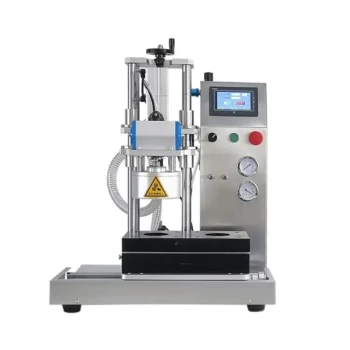
From high-precision honey-filling machines designed for sterile glass packaging to a wide array of beekeeping equipment and consumables, we empower your business to deliver a premium product to the market. Let us help you protect your honey’s botanical origin and chemical stability with our specialized hardware and industry expertise.
Ready to scale your production? Contact us today to explore our wholesale solutions!
References
- Ralitsa Balkanska, Rositsa Shumkova. Determination and assessment of some physicochemical parameters of Bulgaria sunflower and polyfloral honey. DOI: 10.61308/hueb9052
This article is also based on technical information from HonestBee Knowledge Base .
Related Products
- Classic Drum Shaped Glass Honey Jar with Airtight Lid
- Classic Round Glass Honey Jar with Lid
- Classic Glass Honey Jar with Metal Lug Cap for Beehive Storage
- Modern Square Glass Honey Jar with Twist Off Lid
- Hexagonal Glass Honey Jars with Metal Lug Caps Elegant Versatile Packaging
People Also Ask
- What is the best utensil to store honey? Preserve Purity with the Right Container
- How does the appearance of glass jar packaging affect the sales and perception of honey? Boost Your Premium Brand Value
- Why is a glass jar preferred for packaging honey? Ultimate Protection for Purity & Flavor
- What is the aesthetic appeal of using glass jars for honey? Elevate Your Brand with Premium Packaging
- What are the advantages of glass containers for honey? Elevate Quality and Market Value with Premium Packaging