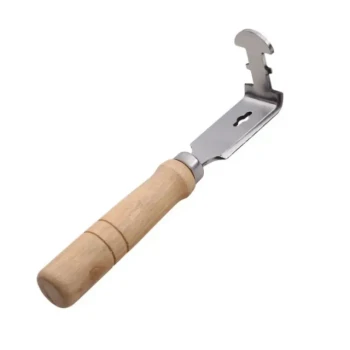
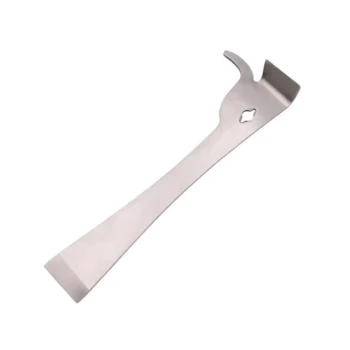
Glass plates and specialized scrapers constitute the industry standard for bee venom collection primarily due to their chemical inertness and specific physical properties. This combination allows liquid venom to dry rapidly into solid flakes without undergoing chemical changes, facilitating easy removal while maintaining the highest levels of purity and yield.
Core Insight The choice of glass is not merely about convenience; it is a chemical necessity. Glass provides a non-reactive, non-absorbent surface that preserves delicate active components like melittin and apamin, while its hardness prevents stinger penetration, ensuring the bees survive the collection process.
The Principles of Preservation and Purity
The collection of bee venom is a delicate process that requires balancing chemical stability with physical recovery. The materials used must not interact with the biological product.
Chemical Inertness
Glass is selected primarily because it is chemically inert. Bee venom contains complex, biologically active components such as melittin and apamin.
A reactive surface would degrade these compounds. High-purity glass ensures that the venom does not undergo chemical reactions during deposition, preserving its potency and biological activity.
Rapid Crystallization
The physical structure of glass is flat and non-absorbent. When liquid venom is discharged onto the plate, it distributes uniformly and dries quickly.
This rapid drying process converts the liquid into pale white solid flakes or crystals. Because the glass does not absorb the liquid, the entire volume of discharged venom remains on the surface for collection.
Mechanical Recovery via Scraping
Once the venom has crystallized, it must be harvested without re-introducing moisture or chemicals.
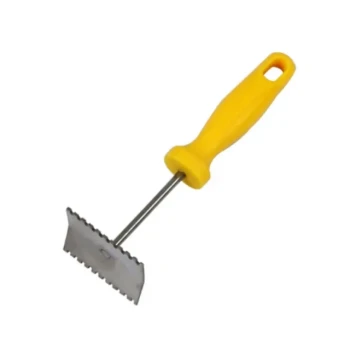
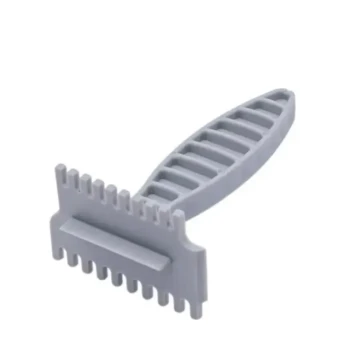
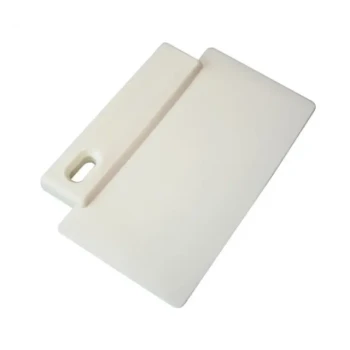
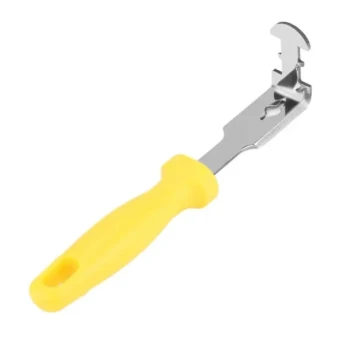
Specialized scrapers are used to physically detach the dried venom from the smooth glass surface. This mechanical method minimizes material loss and prevents contamination that might occur if solvents or other transfer materials were used.
Ethical Collection and Bee Safety
Beyond product quality, the choice of material dictates the impact on the bee colony.
Hardness Prevents Stinger Loss
Glass surfaces are hard and impenetrable. Unlike softer materials (such as fabrics or silicone) that might snag a stinger, glass prevents the barbed stingers from penetrating the substrate.
Ensuring Bee Survival
Because the stinger does not penetrate the plate, the bee can successfully retract it after discharging venom.
This is a critical distinction from early collection methods or soft collection surfaces. It allows the bees to survive the process, making the practice sustainable and ethically sound.
Operational Trade-offs and Safety Risks
While glass and scrapers offer the best quality product, the physical collection method introduces specific operational hazards that must be managed.
Airborne Irritants
The scraping process converts the dried venom into a fine dust. This dust is highly irritative to the human respiratory system and skin.
Operators must strictly use personal protective equipment to guard against the potent effects of dry venom dust during the scraping phase.
Safety Radius Requirements
Because the collection process involves agitating bees to induce stinging, the collection site becomes hazardous.
Precautions must extend beyond the immediate handler. Safety measures are required for people who may be several hundred meters away from the collection site to prevent accidental stings from agitated colonies.
Making the Right Choice for Your Goal
When setting up a collection protocol, understanding why these materials are used helps in selecting the specific type of equipment.
- If your primary focus is Chemical Purity: Ensure you utilize high-purity glass substrates to prevent any reaction with complex peptides like melittin.
- If your primary focus is Colony Sustainability: Verify the surface hardness of the glass to guarantee stingers cannot penetrate, ensuring bee survival.
- If your primary focus is Yield: Prioritize high-transparency, perfectly flat plates to maximize the uniform drying and subsequent scraping recovery of the crystals.
By leveraging the inertness of glass and the precision of mechanical scraping, you ensure a harvest that is biologically potent, highly pure, and sustainable for the colony.
Summary Table:
| Feature | Benefit of Glass Plates | Benefit of Specialized Scrapers |
|---|---|---|
| Material Interaction | Chemically inert; preserves melittin and apamin. | Mechanical removal; no chemical solvents needed. |
| Product Form | Non-absorbent surface for rapid crystallization. | Efficiently harvests dry flakes with minimal loss. |
| Bee Welfare | Hard surface prevents stinger penetration and loss. | N/A (Focuses on harvesting processed venom). |
| Quality Control | Ensures pale white, high-potency crystals. | Prevents contamination during the recovery phase. |
Elevate Your Bee Venom Production with HONESTBEE
Maximize your harvest quality and protect your colony with professional-grade equipment. HONESTBEE specializes in serving commercial apiaries and distributors with high-performance bee venom collectors, hive-making machinery, and essential industry consumables.
Whether you are scaling your extraction operations or seeking reliable wholesale tools, our comprehensive portfolio delivers the durability and precision you need to succeed.
Ready to optimize your apiary’s output? Contact HONESTBEE today for specialized solutions and see how our expertise adds value to your business.
References
- Sawsan El-Sayied Ali, Yasser A. Attia. Exploring bee venom and silver nanoparticles for controlling foulbrood pathogen and enhancing lifespan of honeybees. DOI: 10.1038/s41598-024-67515-7
This article is also based on technical information from HonestBee Knowledge Base .
Related Products
- Full Set Beekeeping Electronic Bee Venom Collector Machine Device for Bee Venom Collecting
- Stainless Steel Scraper for Metal Queen Bee Excluders
- Lightweight Durable Plastic Queen Excluder Scraper for Beekeeping
- Professional Dual Action Queen Excluder Scraper for Beekeeping
- Professional Long-Handled Silicone Honey Scraper for Beekeeping
People Also Ask
- How does the glass plate integrated into a bee venom collector contribute to maintaining quality and purity?
- What is the function of specialized collection equipment in the production process of bee venom? Expert Guide
- What is the significance of using specialized bee venom collection devices in commercial beekeeping operations?
- Why are bee venom collection devices typically mounted on specialized wooden carrier boards? Maximize Yield & Purity.
- How does a dedicated bee venom collection device operate? Extract Pure Venom Safely Without Harming Your Bees