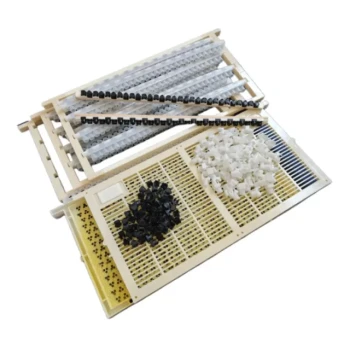
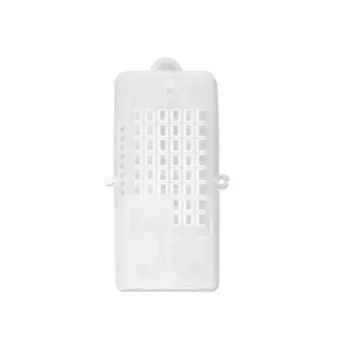
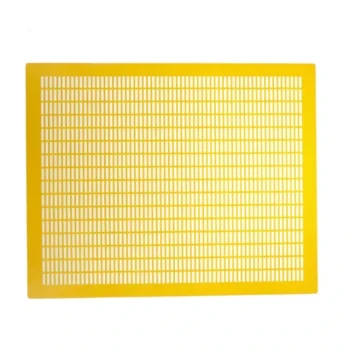
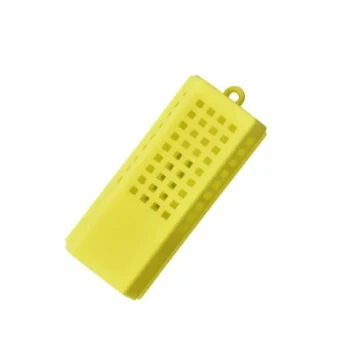
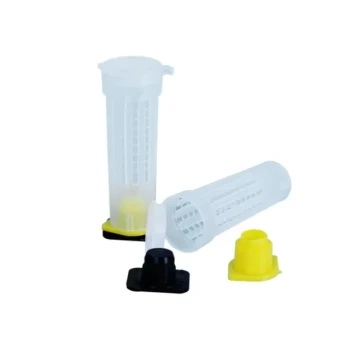
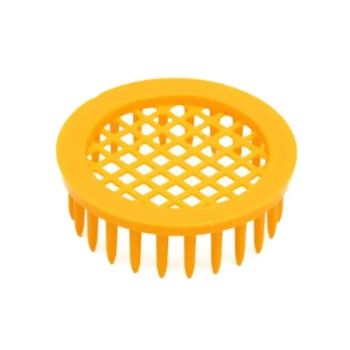
Grid-based isolation devices serve as a critical experimental control in beehive studies. These tools, such as queen oviposition controllers, act as physical one-way barriers that prevent honeybees from contacting or consuming liquid solutions while still allowing the necessary circulation of air and heat.
To accurately study hive thermodynamics, researchers must separate environmental factors from biological activity. Grid-based devices isolate the physics of evaporation from the biological variable of bee consumption.
Separating Physics from Biology
The Problem of Biological Interference
In a natural hive environment, honeybees are active agents. They do not merely observe moisture; they actively process it through consumption and manipulation.
If researchers attempt to measure evaporation without a barrier, it is impossible to distinguish between liquid lost to the air (evaporation) and liquid removed by the bees (consumption).
The Function of the Barrier
Grid-based devices solve this by establishing a physical one-way barrier.
The grid structure is designed to be restrictive enough to block the passage of bees. This effectively eliminates the variable of active biological processing behavior.
Preserving Thermodynamic Conditions
While blocking the bees, the device must not block the hive's climate.
The grid design allows for the continued circulation of air and heat within the hive. This ensures that the solutions are still subject to the hive's ambient temperature and airflow, maintaining the conditions necessary for evaporation to occur naturally.
Scientific Isolation of Variables
Isolating Pure Physical Evaporation
The primary goal of using a queen oviposition controller in this context is to isolate pure physical evaporation.
By removing bee interaction, the data reflects only the physical laws governing moisture loss.
Focus on Environment and Geometry
With biological interference removed, researchers can focus on specific physical variables.
The remaining factors influencing the evaporation rate are strictly limited to the environmental conditions (temperature/humidity) and the cell geometry of the comb or test vessel.
Understanding the Trade-offs
Balancing Exclusion with Circulation
The effectiveness of these devices relies on a precise balance.
The grid must be fine enough to exclude insects but open enough to prevent creating a micro-climate that differs from the rest of the hive.
If the grid restricts airflow too severely, the evaporation data will be skewed, rendering the simulation of "hive conditions" inaccurate.
Making the Right Choice for Your Goal
When designing an experiment involving hive moisture, the use of isolation devices depends on which variable you intend to measure.
- If your primary focus is Hive Thermodynamics: Use grid-based isolation to measure how heat, airflow, and cell depth affect moisture loss without bee interference.
- If your primary focus is Colony Resource Management: Do not use isolation devices, as you need to observe how the bees actively consume or manipulate water and nectar.
Success in hive studies relies on rigorously distinguishing between the passive laws of physics and the active behaviors of biology.
Summary Table:
| Feature | Function | Benefit |
|---|---|---|
| Biological Barrier | Prevents bees from contacting liquid | Eliminates consumption as a variable |
| Airflow Circulation | Grid design allows air/heat movement | Maintains natural hive thermodynamics |
| Variable Isolation | Focuses on physical laws of evaporation | Accurate data on climate & cell geometry |
| Experimental Control | Separates biology from physics | Enables precise scientific hive modeling |
Scale Your Apiary Operations with HONESTBEE
Precision in beekeeping research and production requires the highest quality equipment. HONESTBEE caters to commercial apiaries and distributors with a comprehensive wholesale offering designed to streamline your operations.
We provide a full spectrum of industry-leading solutions, including:
- Specialized Hardware: Hive-making machines and automated honey-filling systems.
- Precision Tools: Professional-grade queen controllers and hive management equipment.
- Essential Consumables: A wide array of high-quality supplies for commercial scale beekeeping.
- Cultural Merchandise: Unique honey-themed products to expand your market reach.
Whether you are conducting rigorous hive studies or scaling a commercial distribution network, HONESTBEE delivers the machinery and tools you need to succeed.
Ready to elevate your business? Contact us today to discuss wholesale opportunities!
References
- Shunhua Yang, Kun Dong. Impact of Comb Cell Diameter on Nectar Evaporation Efficiency in Honey Bees. DOI: 10.3390/insects16010071
This article is also based on technical information from HonestBee Knowledge Base .
Related Products
- Queen Bee Artificial Insemination Instrument Equipment for Instrumental Insemination
- Portable Queen Bee Incubator with 12V Car Adapter for Safe Transport
- Premium Nicot Style Cell Bar Holder and Queen Cell Cup Holder System
- JZBZ Style Push-In Cell Protector for Professional Queen Rearing Kits
- No Grafting Queen Rearing Kit: System for Royal Jelly Production and Queen Rearing
People Also Ask
- Why is maintaining sanitary conditions important during artificial insemination? Protect Your Queen from Fatal Infections
- Why are artificial insemination instruments critical in bee hybridization? Master Genetic Control & Pure Breeding
- What is the core value of bee artificial insemination instruments in breed improvement? Achieve Precise Genetic Control
- Why is professional bee artificial insemination equipment considered a core tool for genetic control in honeybee breeding? Ensure 100% Purity
- Why is high-purity CO2 used for queen bee artificial insemination? Unlock Precision Breeding & Faster Egg-Laying