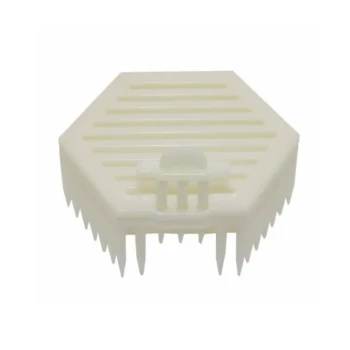
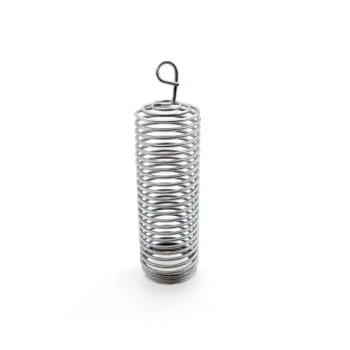
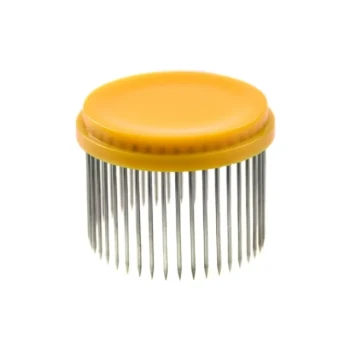
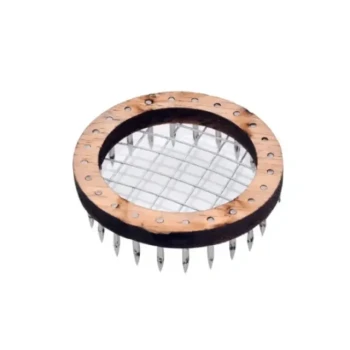
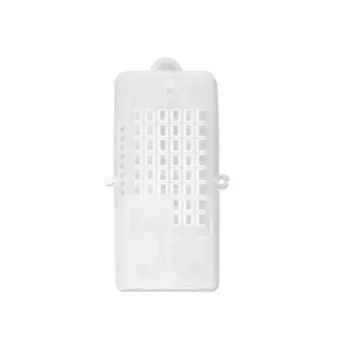
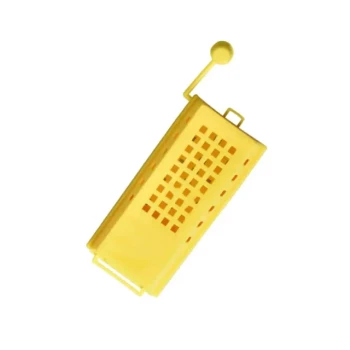
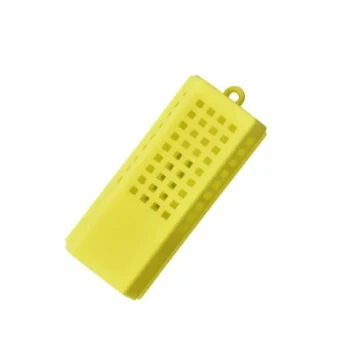
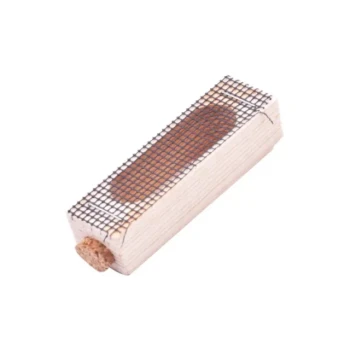
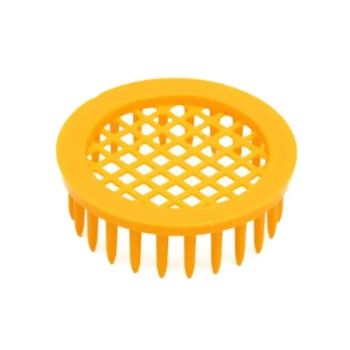
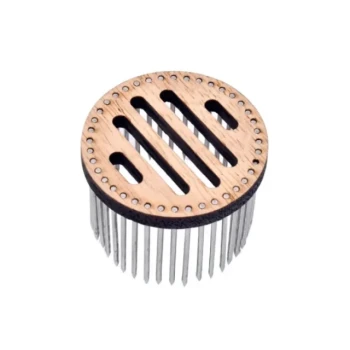
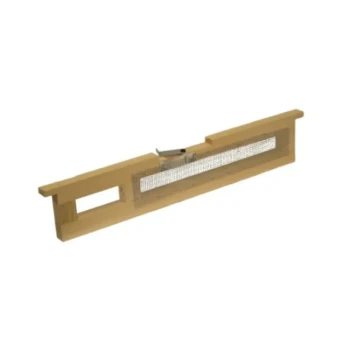
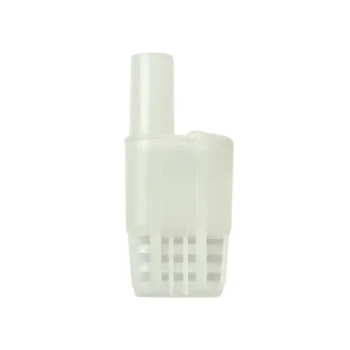
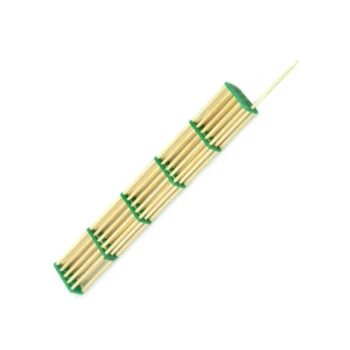
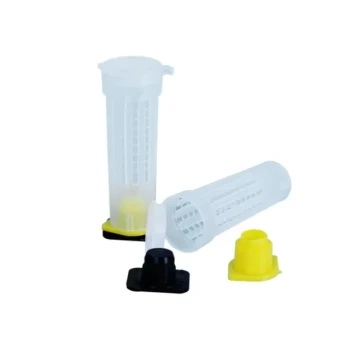
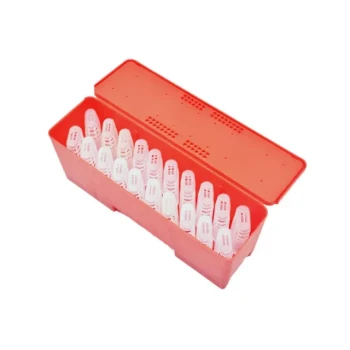
Hemi-spherical cages function as a critical protective barrier used to safeguard developing queen cells within a colony. Their primary purpose is to physically isolate the cells to prevent worker bees from damaging them and, most importantly, to stop an early-emerging queen from destroying her unhatched sisters. This isolation allows beekeepers to stockpile and protect a batch of virgin queens until they can be successfully transferred to individual mating nuclei.
The core value of the hemi-spherical cage is that it neutralizes the natural instinct of the first-emerged queen to eliminate her rivals, thereby ensuring the survival of the entire production batch.
The Biological Necessity of Isolation
Preventing Fratricide Among Queens
In a natural setting, the first virgin queen to emerge from her cell views other developing queens as rivals. Her instinct is to immediately locate unhatched queen cells and destroy them to ensure her dominance.
The Role of the Cage
The hemi-spherical cage acts as a physical shield. It encloses the capped queen cell, making it impossible for a newly hatched queen to access and kill those that are still developing.
Protection from Worker Bees
Beyond queen-on-queen aggression, these cages also protect the cells from the general population of the colony. In certain conditions, worker bees may attempt to tear down or damage queen cells; the cage prevents this destruction.
Operational Advantages for Beekeepers
Batch Synchronization
Queen rearing often involves producing queens in large batches. However, individual queens may emerge at slightly different times.
Safe Storage Buffer
By using these cages, a beekeeper can safely hold a large number of virgin queens within a single queenless colony. This creates a "storage buffer," allowing the beekeeper to wait until all queens have emerged before moving them.
Simplified Management
This isolation stage serves as a bridge between the nursery colony and the mating nucleus. It allows the beekeeper to manage the timing of the transfer without the risk of losing stock to aggression or accidents.
Understanding the Trade-offs
Isolation vs. Maturation
While these cages are excellent for protection, they are temporary holding devices, not habitats. They do not provide the environment necessary for the queen's full sexual maturation or mating flights.
The Necessity of Transfer
A queen cannot stay in a hemi-spherical cage indefinitely. To become a productive layer, she must eventually be moved to a specialized mating box or nucleus.
Dependency on the Colony
Even though the queen is isolated inside the cage, she is still dependent on the external colony for temperature regulation and humidity. The cage protects her body, but the colony environment sustains her life.
Making the Right Choice for Your Goal
When integrating hemi-spherical cages into your apiary workflow, consider your specific objectives:
- If your primary focus is maximizing yield: Use these cages to ensure 100% of your reared cells result in live virgin queens, eliminating losses due to early emergence.
- If your primary focus is workflow efficiency: Utilize the cages to batch your transfers, moving all virgin queens to mating nuclei in a single operation rather than one by one.
Using these cages effectively transforms queen rearing from a risky biological race into a controlled, manageable process.
Summary Table:
| Feature | Purpose | Key Benefit |
|---|---|---|
| Physical Shield | Isolates capped queen cells | Prevents early-emerged queens from killing sisters |
| Worker Protection | Blocks access by colony workers | Prevents tearing down of cells under stress |
| Batch Syncing | Creates a temporary storage buffer | Allows uniform transfer of all queens at once |
| Yield Control | Eliminates biological risk/aggression | Ensures 100% survival of the production batch |
Maximize Your Apiary Productivity with HONESTBEE
At HONESTBEE, we understand that queen rearing is the heart of a successful operation. Whether you are running a large-scale commercial apiary or acting as a regional distributor, your success depends on precision and reliable equipment.
We provide a comprehensive wholesale offering designed for industry professionals, including:
- Specialized Hardware: From precision hive-making to honey-filling machines.
- Beekeeping Essentials: A full spectrum of professional-grade tools, cages, and machinery.
- Industry Consumables: Durable, high-quality supplies for every stage of the honey production cycle.
Ready to scale your production and secure your queen batches? Contact us today to discover how HONESTBEE's wholesale solutions can streamline your workflow and boost your bottom line.
References
- Ahmed M. Hassan, E. Tharwat. EFFECT OF GENOTYPE, WEIGHT OF HONEYBEE VIRGLN QUEENS AND BROOD STATUS ON SOME PARAMETERS USED FOR JUDGING THE QUEENS FROM THEIR INTRODUCTION UNTIL EGG-LAYING. DOI: 10.21608/ejarc.2004.225645
This article is also based on technical information from HonestBee Knowledge Base .
Related Products
- Hexagonal Direct Comb Introduction Queen Bee Cage
- Professional Queen Bee Introduction and Transport Cage
- Durable Galvanized Steel Spring Queen Bee Cage
- Professional Round Push-In Queen Cage with Metal Tines
- Wood and Mesh Push-In Queen Cage
People Also Ask
- What is the technical purpose of using an introduction cage? Ensure Safe Queen Bee Integration and Colony Acceptance
- How does the introduction cage method differ from standard cage insertion for queen bees? Best Acceptance Strategies
- What is the mechanism of action for using temporary queen bee cages? Master Successful Queen Introduction
- Why are specialized queen bee cages used for the banking of mated queen bees? Maximize Commercial Apiary Storage Efficiency
- What is the importance of specialized queen introduction cages and tools? Secure High-Value Genetics & Scalability.