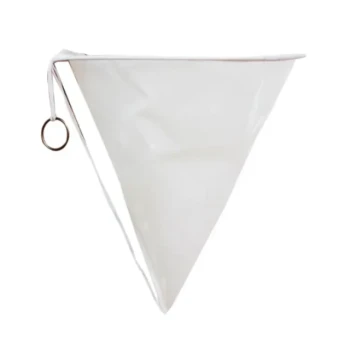
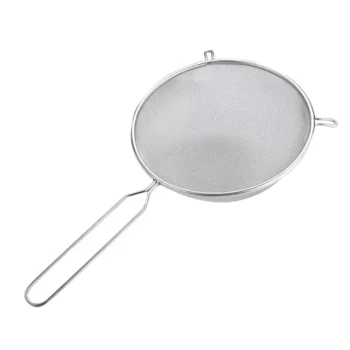
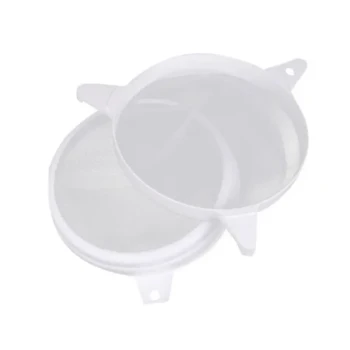
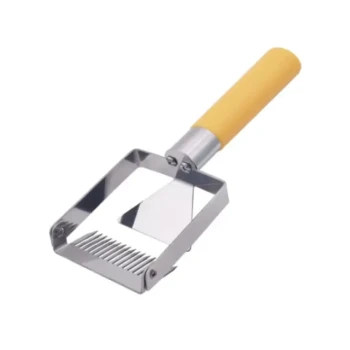
High-precision filtration is the fundamental quality control step that transforms raw honey from a hive product into a consumable food source. It serves the immediate function of physically removing harvesting debris—specifically propolis residues, beeswax fragments, and bee parts—to ensure the honey is hygienic, visually clear, and texturally smooth.
By balancing rigorous purification with the preservation of natural nutrients, high-precision filtration ensures honey meets commercial hygiene standards without stripping away the biological components that define its quality.
The Mechanics of Purification
Removing Harvesting Debris
Raw honey naturally contains physical contaminants collected during the extraction process.
High-precision tools use fine-pore meshes to mechanically separate these solids from the liquid nectar. This is essential for removing beeswax fragments, insect remains, and forest debris that are inherent to the hive environment.
Enhancing Visual Clarity
The immediate impact of filtration is aesthetic.
Unfiltered honey often appears cloudy due to suspended particles. Precision filtration removes these impurities to produce a clear, attractive appearance that consumers associate with high-quality honey.
Optimizing Texture
Beyond how it looks, filtration dictates how the honey feels.
By removing grainy residues like propolis and wax, the process ensures the final product has a smooth, consistent texture. This mouthfeel is a primary driver of consumer satisfaction and perceived product value.
Stability and Marketability
Preventing Abnormal Crystallization
Filtration plays a technical role in the product's shelf stability.
Solid impurities left in the honey can act as "nucleation sites," which accelerate the hardening process. By removing these suspended particles, filtration helps prevent abnormal crystallization, maintaining the liquid state longer.
Meeting Commercial Hygiene Standards
For honey to be sold commercially, it must meet strict food safety regulations.
Filtration ensures compliance with standards—such as EU Council Directives—that prohibit foreign matter. This step transforms the harvest into a standardized, hygienic product suitable for premium consumer markets.
Understanding the Trade-offs
The Balance of Mesh Size
While purity is the goal, there is a critical limit to how "fine" the filtration should be.
If the filtration mesh is too tight (ultra-filtration), it may strip the honey of natural pollen grains. This is undesirable because pollen provides nutritional value and is used to verify the honey's botanical origin (authenticity).
Retention of Nutritional Integrity
True high-precision filtration is calibrated, not absolute.
The equipment is designed to remove foreign contaminants while retaining the natural nutritional components. The objective is to clean the honey, not to sterilize it into a simple sugar syrup.
Making the Right Choice for Your Goal
When selecting filtration protocols for honey processing, align your tools with your end-market requirements:
- If your primary focus is Commercial Appeal: Prioritize filtration systems that maximize visual clarity and smoothness to ensure high-value placement in premium markets.
- If your primary focus is Product Authenticity: Ensure your mesh sizes are calibrated to remove debris (approx. 1 mm) but sufficiently open to retain natural pollen for botanical verification.
High-precision filtration is the vital link that ensures safety and elegance while respecting the natural complexity of the raw harvest.
Summary Table:
| Filtration Benefit | Impact on Honey Quality | Technical Detail |
|---|---|---|
| Debris Removal | Ensures hygiene and food safety | Removes beeswax, propolis, and bee parts |
| Visual Clarity | Increases consumer appeal | Eliminates cloudiness for a clear appearance |
| Texture Optimization | Creates a premium mouthfeel | Removes grainy residues for smooth consistency |
| Shelf Stability | Prevents rapid crystallization | Reduces nucleation sites that cause hardening |
| Nutrient Retention | Maintains product authenticity | Calibrated mesh sizes preserve natural pollen |
Elevate Your Honey Production with HONESTBEE
At HONESTBEE, we understand that high-precision processing is the difference between a raw harvest and a premium commercial product. We specialize in empowering commercial apiaries and distributors with the professional-grade tools needed to scale efficiently.
From high-precision filtration systems and honey-filling machines to durable hive-making equipment, our comprehensive wholesale offering covers the full spectrum of beekeeping hardware and essential consumables. Whether you are looking to enhance product clarity or streamline your entire extraction line, our team provides the specialized machinery and industry expertise to grow your business.
Ready to optimize your honey processing? Contact us today to explore our wholesale solutions
References
- Muhammad Natsir, Wilsa Wilsa. The business potential of Trigona Peunawa Samudra honey in the form of simple patent rights as an effort to develop university economic independence. DOI: 10.52626/jg.v7i1.309
This article is also based on technical information from HonestBee Knowledge Base .
Related Products
- Professional Cone-Shaped Honey Filter with Reinforced Steel Ring
- Professional Stainless Steel Honey Filter with Support Handle
- Precision Honey Refractometer Instrument for Quality Assessment
- Professional Stainless Steel Honey Filtering Machine with Water Bath Heating for Beekeeping
- Honey Concentrating and Filtering Dehumidifier Machine 2T Capacity for Honey
People Also Ask
- What role do professional honey filters play in enhancing the purity of raw honey? Achieve Market-Ready Clarity
- What role does a honey filter play in ensuring purity? Achieve Clean, Market-Ready Honey
- What is the role of a honey filter in ensuring honey purity? Enhance Clarity, Stability, and Shelf Life
- What are some cost-effective methods for filtering extracted honey? Low-Cost Filtration Hacks for Clear Honey
- What filter size for honey? A Beekeeper's Guide to Straining for Clarity and Quality