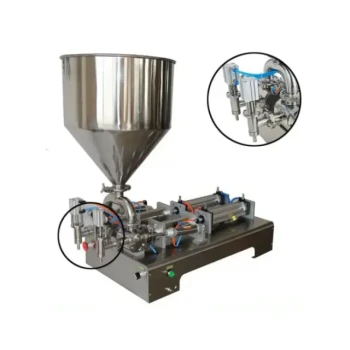
Entering formal retail channels requires more than just high-quality honey; it demands rigorous adherence to packaging standards. High-precision honey filling machines are essential because they ensure uniform product specifications and absolute hygiene safety through precise metering control and automated processes. Without this technology, producers cannot meet the strict product standardization and quality traceability requirements mandated by supermarkets and commercial distributors.
The Bottom Line: These machines bridge the gap between apiary production and mass retail by guaranteeing that every unit complies with strict weight specifications and food safety regulations, minimizing waste while enabling necessary commercial traceability.
Achieving Commercial Standardization
Precise Metering Control
Supermarkets require that the physical contents of a package match the label exactly. High-precision machines utilize advanced flow control or weighing sensors to ensure consistency in filling volumes. This eliminates the errors and variances inherent in manual filling, ensuring every unit meets trade standards.
Reducing Raw Material Waste
In a high-volume commercial environment, overfilling containers "just to be safe" results in significant profit loss. Automated systems provide accurate metering to strictly limit net content to the required specifications. This significantly reduces overflow loss and raw material waste, protecting margins during large-scale production.
Handling Varying Viscosities
Retail lines often require product diversity, from pure honey to blends with nuts or honeycomb. High-precision machines are engineered to handle these varying viscosities while maintaining accurate dosage. This versatility allows producers to expand their product lines without sacrificing packaging consistency.
Maintaining Hygiene and Food Safety
Closed-Environment Packaging
Hygiene is the primary gatekeeper for entering formal retail. Automatic filling machines operate in a closed environment, minimizing the contact between the honey and surrounding air. This significantly reduces the risk of secondary contamination from microbes or foreign particles associated with manual handling.
Moisture and Quality Preservation
Honey is hygroscopic, meaning it absorbs moisture from the air, which can spoil the product. Automated sealing processes limit air exposure, preventing moisture absorption. This helps maintain biochemical indicators, such as Hydroxymethylfurfural (HMF) levels, within the optimal ranges required by high-end markets and health certifications.
Cleanliness and Presentation
Retailers demand shelf-ready products that look professional. Machines equipped with no-drip filling nozzles ensure a clean, airtight seal without sticky residue on the bottle neck. This prevents contamination at the seal and ensures the aesthetic quality necessary for commercial appeal.
Understanding the Operational Trade-offs
Maintenance and Calibration Requirements
While these machines offer precision, they introduce technical complexity. Sensors and heating systems require regular calibration to maintain accuracy, particularly when switching between honey types. Neglecting maintenance can lead to filling drift, negating the benefits of automation.
Capital Investment vs. Volume
High-precision equipment represents a significant upfront cost. For smaller operations not yet targeting supermarkets, the return on investment may take time to realize. The efficiency gains are most pronounced when production scales up to meet continuous commercial distribution demands.
Making the Right Choice for Your Goal
To determine if high-precision automation is the right step for your operation, consider your immediate business objectives:
- If your primary focus is entering supermarkets: You must invest in high-precision machinery to ensure the standardization, traceability, and hygiene certifications retailers mandate.
- If your primary focus is maximizing profit margins: You should prioritize this technology to eliminate raw material waste and overflow loss caused by manual overfilling.
- If your primary focus is product diversity: Look for machines capable of handling varying viscosities to ensure consistent packaging for premium products like honeycomb blends.
Ultimately, high-precision filling is not just about speed; it is the fundamental compliance tool that transforms raw honey into a tradable commercial asset.
Summary Table:
| Key Feature | Benefit for Retail | Impact on Business |
|---|---|---|
| Precise Metering | Uniform product specifications | Eliminates raw material waste and ensures compliance |
| Closed-Environment | Superior hygiene and safety | Reduces contamination risks and meets food regulations |
| No-Drip Nozzles | Clean and professional presentation | Enhances shelf appeal and prevents seal contamination |
| Advanced Sensors | Handling varying viscosities | Allows product diversification (e.g., honey with nuts) |
| Automated Sealing | Moisture preservation | Maintains biochemical quality and extends shelf life |
Scale Your Honey Production for Global Markets with HONESTBEE
Transitioning from local apiary production to formal retail requires industrial-grade precision and reliability. HONESTBEE specializes in empowering commercial apiaries and distributors with the high-performance tools needed to succeed in the competitive retail landscape.
Our comprehensive portfolio includes:
- Advanced Honey-Filling Machines: High-precision, no-drip technology to ensure every bottle meets trade standards.
- Commercial Machinery: Everything from hive-making equipment to specialized honey processing lines.
- Industry Consumables: A full spectrum of beekeeping tools and essential hardware.
- Cultural Merchandise: Honey-themed products to enhance your brand's market presence.
Whether you are scaling your operation or looking for a reliable wholesale partner, HONESTBEE provides the machinery and expertise to turn your raw honey into a premium commercial asset.
Ready to upgrade your production line? Contact us today to explore our wholesale solutions!
References
- A. A. Popa, Cristina Bianca Pocol. Categorization of Beekeepers from the North-West Region of Romania. DOI: 10.15835/buasvmcn-hort:7095
This article is also based on technical information from HonestBee Knowledge Base .
Related Products
- Precision Durable Efficient HONESTBEE Rotary Honey Filling Machine
- Commercial Rotary Honey Filling Machine for Production
- Precision Automated Packaging Turntable Honey Spoon Filling Sealing Packing Machine
- Fully Automatic Honey Filling Packaging Machine for Processing Line
- Automatic Honey Filling and Filtering Machine for Beekeeping Bottle Filling
People Also Ask
- How do honey filling and processing machines aid native bee product conservation? Boost Value with HONESTBEE Technology
- How do honey filling machines work? Achieve Precision & Speed for Your Apiary
- How do high-precision honey filling machines ensure quality? Optimize Your Commercial Production with HONESTBEE
- What is a key feature of the new generation of the honey filling machine? The Advanced Electronic Control Unit
- What are the common types of bottling machines used for honey? Choosing the Right Solution for Your Apiary