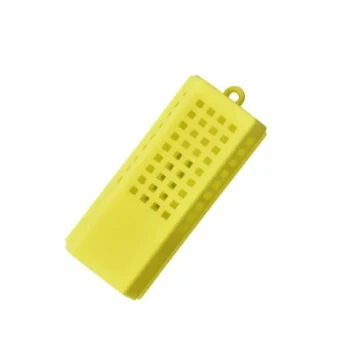
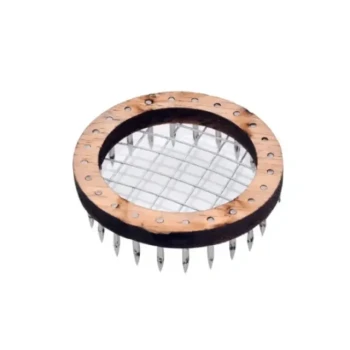
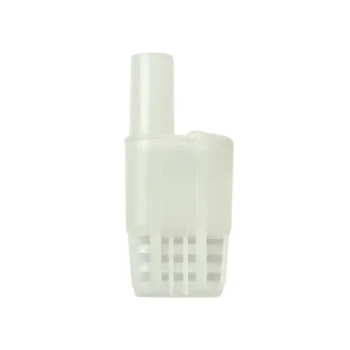
Honey bee hoarding cages are typically equipped with preset 5ml syringe insert holes to create a controlled feeding interface that maximizes data accuracy. This specific design allows researchers to administer liquid diets—such as sucrose or vitamin solutions—cleanly and precisely, ensuring that the bees have free access to food without compromising the experimental environment.
The core value of this system lies in eliminating "non-consumptive loss." By preventing splashing or evaporation, the syringe design ensures that any reduction in feed weight is due strictly to bee consumption, guaranteeing the integrity of average daily intake calculations.
The Mechanics of Accurate Data Collection
Preventing Non-Consumptive Loss
In nutritional studies, accuracy is paramount. Standard open feeders can lead to splashing, where liquid is spilled rather than eaten.
The 5ml syringe insert creates a sealed delivery mechanism. This prevents the liquid from spilling into the cage, ensuring that food loss is not mistaken for food consumption during data analysis.
Enhancing Weighing Precision
Researchers typically calculate intake by weighing the feeder before and after a set period.
Because the syringe system prevents external leaks, the weighing method becomes highly reliable. The difference in mass directly correlates to the volume ingested by the bees, allowing for precise tracking of average daily intake.
Operational Efficiency in Research
Loss-Free Replenishment
Experiments often require long-term observation, necessitating the refilling of food sources.
The preset holes allow for loss-free replenishment of fluids. Researchers can swap or refill the 5ml syringes without opening the cage, minimizing stress on the bees and preventing escape.
Unrestricted Feeding Access
While the system is restrictive regarding spillage, it is permissive regarding access.
The design enables bees to feed freely at their own pace. This supports naturalistic feeding behaviors within the constraints of a laboratory setting, ensuring the data reflects physiological reality rather than stress-induced starvation.
Understanding the Trade-offs
Volume Limitations
The reliance on a 5ml syringe standardizes the cage but limits the total volume of food available at one time.
For high-consumption studies or larger clusters of bees, this necessitates more frequent monitoring and refilling compared to larger, bulk-feeding gravity reservoirs.
Maintenance and Clogging
Precision equipment requires diligent maintenance.
Syringe tips can occasionally become clogged with crystallized sucrose or propolis. Researchers must ensure the tips remain clear to maintain the "free feeding" standard, as a blockage will skew intake data downward falsely.
Making the Right Choice for Your Experiment
To maximize the utility of hoarding cages with syringe inserts, consider your specific research goals:
- If your primary focus is quantitative analysis: Rely on the syringe system to eliminate splashing variables, ensuring your weight-based data reflects true consumption.
- If your primary focus is experimental workflow: Utilize the external access provided by the syringe holes to replenish vitamin or sugar solutions without disturbing the hive dynamic inside the cage.
The 5ml syringe insert is not merely a feeding port; it is a calibration tool that transforms a simple cage into a precision scientific instrument.
Summary Table:
| Feature | Benefit in Research | Impact on Data Accuracy |
|---|---|---|
| Sealed Interface | Prevents splashing and evaporation | Eliminates non-consumptive loss variables |
| Standardized Size | Fits common 5ml laboratory syringes | Enables high-precision weighing and tracking |
| External Access | Loss-free replenishment without cage opening | Minimizes bee stress and prevents escapes |
| Gravity-Fed Flow | Provides unrestricted feeding access | Reflects natural physiological consumption |
| Controlled Port | Simplifies experimental maintenance | Ensures consistent daily intake calculations |
Elevate Your Research and Wholesale Inventory with HONESTBEE
At HONESTBEE, we understand that precision is the backbone of successful beekeeping and scientific research. We specialize in supplying commercial apiaries and distributors with high-performance beekeeping tools, from advanced honey-filling machines to specialized hoarding cages and laboratory equipment.
Whether you are scaling up a commercial operation or providing top-tier supplies to the industry, our comprehensive wholesale offering includes everything from hardware to honey-themed cultural merchandise. Partner with us for reliable quality and industry-leading expertise.
Ready to optimize your supply chain? Contact us today to explore our full spectrum of professional beekeeping machinery and consumables!
References
- Andrew F. Brown, Peter Neumann. Towards holistic colony feeding: Effects of vitamin supplementation on summer and winter honey bee workers, Apis mellifera L. DOI: 10.1371/journal.pone.0328626
This article is also based on technical information from HonestBee Knowledge Base .
Related Products
- Classic Glass Honey Jar with Metal Lug Cap for Beehive Storage
- Langstroth Honey Bee Box Hive Boxes for Different Depths
- Food Grade Plastic Honey Bucket Pail for Beekeeping
- Hexagonal Direct Comb Introduction Queen Bee Cage
- Professional Queen Cage with Sliding Gate and Feeder Plug
People Also Ask
- What are the benefits of glass jars regarding strength and safety for storing honey? Ensure Purity and Long-Term Quality
- What are the advantages of using glass jars for honey storage? Ensure Purity and Premium Appeal for Your Product
- What are the benefits of using high-transparency Glass Jars for honey? Elevate Purity and Premium Branding
- What is the aesthetic appeal of using glass jars for honey? Elevate Your Brand with Premium Packaging
- Which container is best for storing honey? Preserve Purity & Flavor with the Right Choice