Identification labels are the cornerstone of precision apiary management. Applied to queen bees shortly after emergence, these markers serve as a unique identifier that transforms a queen from a generic insect into a trackable asset. They enable technical personnel to link specific biological metrics—such as birth weight and honey yield—to an individual queen, ensuring that breeding decisions are based on accurate, longitudinal data rather than guesswork.
The primary function of an identification label is to validate the specific data points required for selecting and breeding high-productivity bee populations.
The Role of Data in Genetic Selection
Recording Individual Metrics
To manage a colony effectively, you must move beyond colony-level observation to individual tracking. Labels allow you to record the specific birth weight and post-mating weight of a queen.
Linking Yield to Genetics
The ultimate measure of a queen's success is the honey yield of her offspring. By tagging the queen, you create a permanent link between the colony's output and the queen's genetic line.
Enabling High-Productivity Breeding
This comprehensive data collection is the engine of improvement. It provides the statistical evidence necessary to select superior queens, supporting the propagation of high-productivity bee populations.
Operational Monitoring and Colony Health
Rapid Visual Location
Beyond data, labels solve a practical logistical problem. A marked thorax allows you to locate the queen instantly among thousands of worker bees during routine inspections.
Verifying Identity and Supersedure
Labels act as a security seal for your breeding data. If you inspect a hive and find an unmarked queen, you immediately know the original queen has been superseded (replaced) by the workers.
Tracking Age and Longevity
Using international standard marking tools helps you track the exact age of a queen. This allows for accurate assessment of her longevity and helps determine when she is approaching the end of her productive lifespan.
Operational Considerations
The Requirement for Precision
While necessary, labeling is a delicate process. The marker must be applied strictly to the thorax to avoid interfering with the queen's movement or sensory abilities.
Avoiding False Data
Without labels, "natural events" like swarming or supersedure can go unnoticed. This leads to corrupted data, where the performance of a new, inferior queen is mistakenly attributed to the original high-value breeder.
Optimizing Your Management Strategy
To get the most out of your apiary, align your labeling strategy with your specific management objectives:
- If your primary focus is Genetic Improvement: Prioritize recording birth and post-mating weights to identify the most robust queens for breeding.
- If your primary focus is Colony Maintenance: Use standardized markers to instantly verify queen age and detect unauthorized supersedure during inspections.
Effective labeling turns the chaotic environment of a hive into a controlled, measurable system.
Summary Table:
| Key Benefit | Operational Impact | Strategic Value |
|---|---|---|
| Data Accuracy | Records birth weight & post-mating weight | Enables selection of superior genetic lines |
| Yield Tracking | Links honey output to specific queens | Facilitates high-productivity breeding |
| Visual Location | Rapidly find queen during inspections | Reduces hive disturbance and labor time |
| Security | Detects unauthorized supersedure | Prevents data corruption from unplanned replacements |
| Longevity | Tracks age via international color standards | Optimized queen replacement scheduling |
Maximize Your Apiary Potential with HONESTBEE
Precision beekeeping starts with the right tools. At HONESTBEE, we empower commercial apiaries and distributors with high-quality, professional-grade equipment designed for efficiency and scale. From precision queen marking tools to advanced honey-filling machines and specialized hardware, our comprehensive wholesale offering ensures your operation runs like clockwork.
Ready to upgrade your commercial beekeeping operations? Contact HONESTBEE today to discover how our full spectrum of tools and industry consumables can drive your productivity and growth.
References
- Francisco de Assis Balbino Uchôa, José da Silva Sousa. EFFECT OF WEIGHT OF AFRICANIZED QUEENS (Apis mellifera L.) AT BIRTH IN HONEY PRODUCTION IN SEMI-ARID PIAUIENSE. DOI: 10.30969/acsa.v8i2.172
This article is also based on technical information from HonestBee Knowledge Base .
Related Products
- Queen Bee Marking Pen POSCA Queen Marking Pens for Beekeeping Bee Markers
- Queen Bee Marking Pen UNI Medium Point for Queen and Bee Marking
- Plastic Long Marker Device for Catching and Marking Bees Queen Bee Marking Tube and Cage
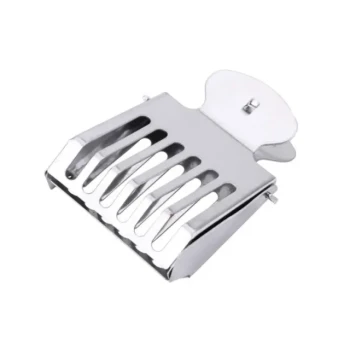
- Heavy Duty Stainless Steel Queen Bee Catcher Clip
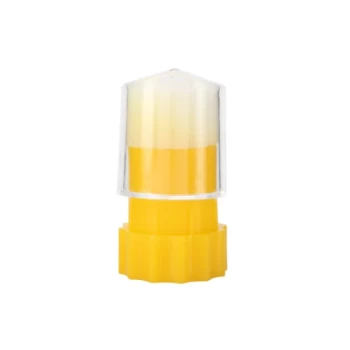
- Queen Bee Marking Tube Cage Bottle Catcher Holder with Clear Plastic Plunger Marker
People Also Ask
- What role do specialized marking pens and color-coding systems play in honeybee tracking? Enhance Research Precision
- Why are specialized marking pens used for stingless bee queens? Essential Tools for Large-Scale Breeding Success
- How should a new paint pen be primed before marking a queen bee? Essential Tips for Safe & Clear Markings
- How should a queen bee marking pen tip be properly primed? Master the Art of Safe Queen Marking
- What specifications are required for a high-quality queen bee marking pen? Ensure Safety and Precision for Your Colony