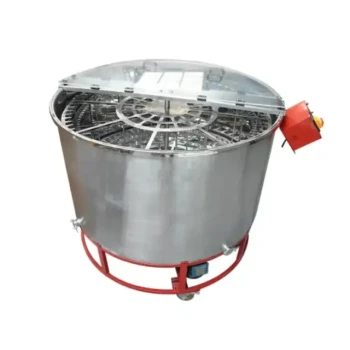
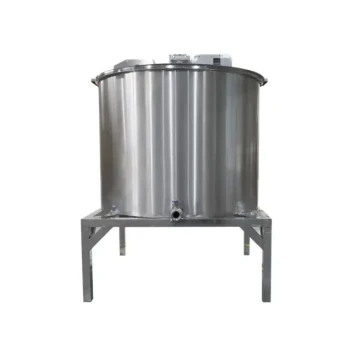
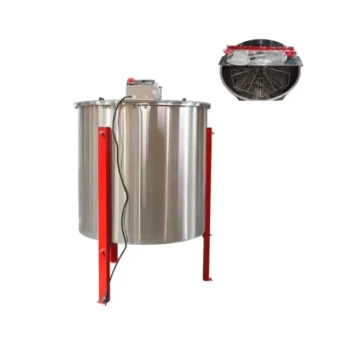
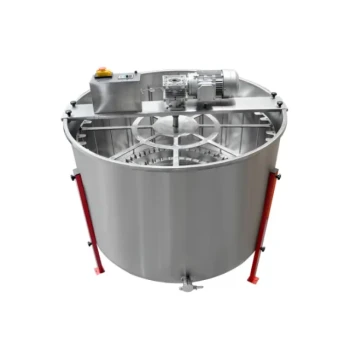
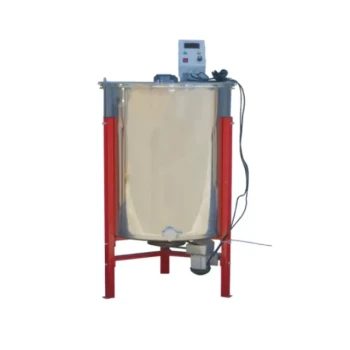
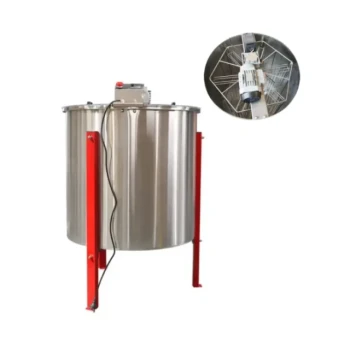
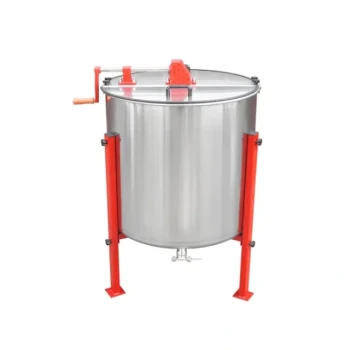
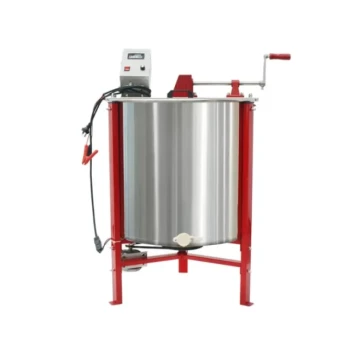
For commercial operations managing 300 to 500 colonies, industrial honey extractors are a necessity because they utilize high-efficiency centrifugal force to achieve mass honey extraction without destroying the honeycomb. This capability is critical for maximizing recovery rates during short nectar flows and ensuring frames can be immediately returned to hives for reuse.
Industrial extractors transform harvesting from a manual bottleneck into a scalable, high-speed process. By preserving drawn comb and automating volume processing, these machines allow colonies to channel energy into nectar foraging rather than wax rebuilding, directly increasing commercial profitability.
Maximizing Yield During Critical Windows
Capitalizing on Short Nectar Flows
Commercial beekeeping relies on timing. High-throughput processing capabilities are essential to harvest maximum volumes of honey during brief, intense periods of nectar availability.
Rapid Frame Turnaround
Industrial extractors allow frames to be emptied and returned to the colonies quickly. This speed ensures that the bees always have empty space available to store fresh nectar, preventing the colony from becoming "honey-bound" and slowing production.
The Biology of Efficiency: Comb Preservation
Utilizing Centrifugal Force
Unlike crushing methods, industrial extractors use centrifugal force to spin honey out of the frames. This separates the mature honey efficiently while leaving the delicate wax comb structure intact.
Conserving Bee Energy
Bees consume significant amounts of honey and energy to secrete wax and build honeycomb. By returning intact combs to the hive, you eliminate the need for bees to rebuild, allowing them to focus entirely on productivity and honey storage.
Operational Scalability and Quality
Reducing Labor Intensity
Managing 300 to 500 colonies creates a volume of work that is unsustainable with manual tools. Automated extractors significantly reduce physical labor intensity, allowing a smaller team to process a larger harvest efficiently.
Maintaining Biological Integrity
Modernized extraction tools are designed to minimize secondary contamination. They help preserve the biological activity of the raw honey, ensuring the final product maintains the quality standards required for high-end markets.
Understanding the Trade-offs
Equipment Investment vs. Labor Costs
While industrial extractors represent a significant upfront equipment investment, this cost is offset by the drastic reduction in manual labor required per pound of honey produced.
Complexity and Infrastructure
Moving to industrial machinery requires a shift in infrastructure. You must account for the need for power supplies, maintenance of motorized components, and adequate facility space, unlike simpler manual setups.
Making the Right Choice for Your Goal
To determine if an industrial extractor fits your current business phase, consider your primary objectives:
- If your primary focus is Maximum Yield: Prioritize machines with high rotational speeds and capacity to ensure frames are returned to hives immediately during peak flow.
- If your primary focus is Product Quality: Look for equipment designed specifically to preserve biological activity and reduce contamination risks during the extraction process.
Investing in industrial extraction is not just about speed; it is about building the hardware infrastructure necessary to stabilize and scale a commercial apiary.
Summary Table:
| Feature | Manual Extraction | Industrial Extraction |
|---|---|---|
| Processing Speed | Slow, labor-intensive | High-throughput automation |
| Comb Preservation | Risk of damage | Intact via centrifugal force |
| Labor Requirement | High per unit of honey | Minimal per unit of honey |
| Nectar Flow Utilization | Low (bottlenecks common) | Maximized during peak windows |
| Honey Quality | Variable handling | High biological integrity |
Scale Your Honey Production with HONESTBEE
Transitioning from 300 to 500 colonies requires more than just bees—it requires a robust industrial infrastructure. HONESTBEE specializes in empowering commercial apiaries and distributors with high-performance honey-filling machines, automated extractors, and specialized hive-making hardware.
Our comprehensive wholesale range covers every essential consumable and heavy-duty machine needed to maximize your yield and preserve honey quality. Let us help you eliminate labor bottlenecks and stabilize your scaling operations.
Ready to upgrade your commercial output? Contact our equipment experts today to find the perfect machinery for your apiary.
References
- E. V Prushkivska, A. O Krasnoshtan. Economic and social factors in the formation of an industrial apiary business project. DOI: 10.33271/ebdut/87.201
This article is also based on technical information from HonestBee Knowledge Base .
Related Products
- HONESTBEE 72 Frame Industrial Electric Honey Extractor for Beekeeping
- Commercial Electric 12 Frame Honey Extractor Spinner Motorized Honey Extractor
- 32 Frame Commercial Electric Honey Extractor for Beekeeping and Honey Production
- 8-Frame Electric Self-Reversing Honey Extractor Spinner for Commercial Honey Extraction Equipment
- 24 Frame Honey Extractor Commercial Radial Honey Frame Extraction Machine
People Also Ask
- What is the importance of balancing honeycomb frames within a honey extractor? Ensure Stability and Protect Machinery
- How is honey separated from the frames after they are uncapped? Efficient Extraction Methods for High Yields
- What are the main benefits of using a honey extractor? Maximize Yields and Protect Your Honeycomb
- What are the recommended methods for removing honey from the honeycomb? Top Extraction Techniques for Maximum Efficiency
- How do manual honey extractors compare to electric honey extractors? Choosing the Right Tool for Your Apiary Growth