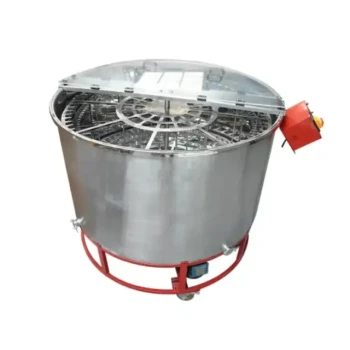
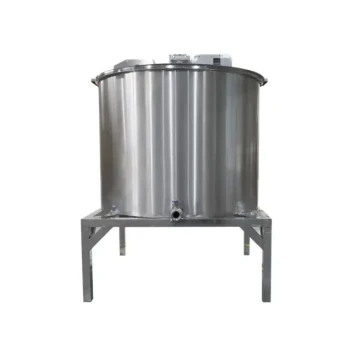
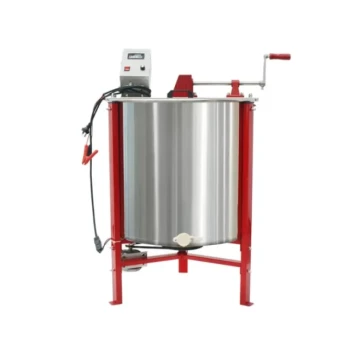
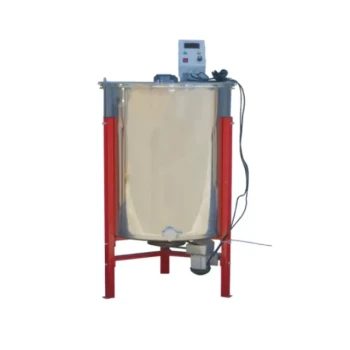
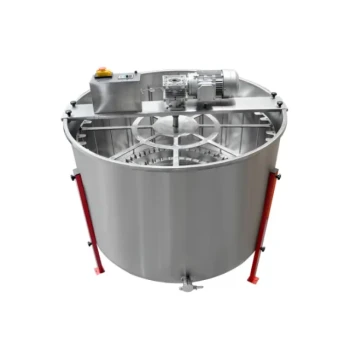
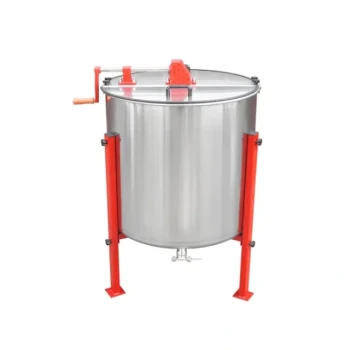
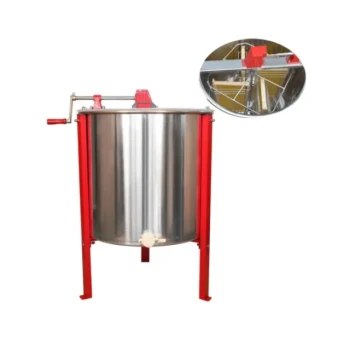
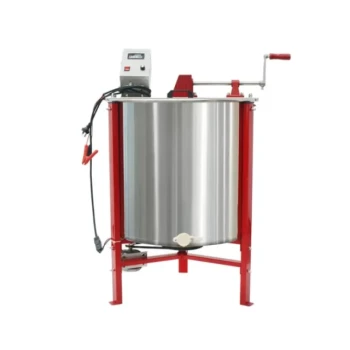
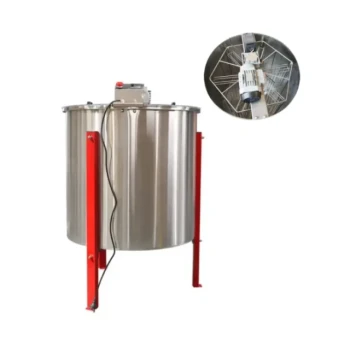
Mechanized Honey Extractors are the keystone technology for high-volume apiary operations. They function by utilizing strong centrifugal force to spin honey out of uncapped combs without destroying the wax infrastructure. This capability distinguishes industrial production from hobbyist methods, as it prioritizes the reuse of biological resources rather than their consumption.
By preserving the physical integrity of the honeycomb, mechanized extractors allow beekeepers to immediately recycle empty combs back into the hive. This eliminates the biological energy cost bees would otherwise spend on rebuilding wax, converting that potential energy directly into increased honey yield.
The Mechanics of Non-Destructive Extraction
Utilizing Centrifugal Force
Unlike traditional crush-and-strain methods, mechanized extractors spin the frames at high speeds. This generates sufficient force to pull the viscous honey out of the cells while leaving the delicate wax walls intact.
Preserving Comb Integrity
The primary value of this machinery is structural preservation. Because the comb is not destroyed during harvest, the "furniture" of the hive remains available for immediate reuse.
Seamless Integration with Standardization
These machines rely on Standardized Honey Frames. Uniform frame specifications ensure compatibility with large-scale extractors, allowing for the simultaneous processing of dozens or hundreds of frames without mechanical jamming or imbalance.
The Biological & Economic Multiplier
Reducing Energy Expenditure
Bees consume significant amounts of honey to secrete wax. By returning intact combs to the hive, you remove the need for bees to secrete new wax, drastically reducing their energy expenditure.
Increasing Collection Frequency
When bees are provided with empty, drawn comb, they can immediately begin filling cells with nectar. This shortens the turnaround time between harvests, allowing for multiple extraction cycles within a single flowering season.
Scalability and Labor Reduction
Mechanization shifts the labor burden from manual extraction to machine monitoring. This standardization reduces the cost per unit of honey processed and enables the management of extensive bee populations across diverse regions.
Understanding the Trade-offs
Dependence on Standardization
Mechanized extraction requires strict adherence to hardware standards. If your operation uses non-standard or warped frames, they will not fit automated uncappers or large-scale centrifugal drums, leading to breakages or system failures.
Capital Intensity
While efficient, these systems represent a significant upfront investment in "biological management tools." The economic redundancy required to purchase and maintain this equipment depends on achieving a high volume of product consistency and minimizing loss.
Making the Right Choice for Your Goal
To determine if mechanized extraction fits your operational scale, consider your primary objectives:
- If your primary focus is Maximizing Yield: Invest in extractors that prioritize high-capacity throughput to return drawn combs to the hive as quickly as possible during peak flow.
- If your primary focus is Operational Efficiency: Ensure your frames and hives are strictly standardized to guarantee compatibility with automated uncapping and extraction lines.
Mechanization is not just about speed; it is about respecting the biological energy of the colony to secure a sustainable, scalable harvest.
Summary Table:
| Feature | Mechanized Extraction | Traditional Crush-and-Strain |
|---|---|---|
| Core Mechanism | Centrifugal force | Physical crushing |
| Comb Integrity | Preserved & reusable | Destroyed |
| Bee Energy Cost | Minimal (recycles wax) | High (requires wax rebuilding) |
| Production Scale | Industrial / Large-scale | Small / Hobbyist |
| Harvest Frequency | Multiple cycles per season | Limited by comb construction |
| Standardization | Requires standard frames | Flexible/Non-standard |
Scale Your Honey Production with HONESTBEE
Are you looking to transition from manual labor to high-volume industrial efficiency? HONESTBEE specializes in empowering commercial apiaries and distributors with the industry's most reliable honey extraction technology.
Our comprehensive wholesale offering includes everything from high-capacity mechanized extractors and automated honey-filling machines to specialized hive-making equipment. By partnering with us, you gain access to professional-grade tools designed to preserve your biological resources and maximize your seasonal yield.
Ready to optimize your apiary’s performance? Contact HONESTBEE Today for Wholesale Solutions
References
- William F. Tchuenbou, Marc K. Kouam. Health, Socio- Technical, and Economic Constraints of Beekeeping in Bamboutos, Western Highlands of Cameroon. DOI: 10.55529/ijaap.51.1.13
This article is also based on technical information from HonestBee Knowledge Base .
Related Products
- Commercial Electric 12 Frame Honey Extractor Spinner Motorized Honey Extractor
- HONESTBEE 72 Frame Industrial Electric Honey Extractor for Beekeeping
- 32 Frame Commercial Electric Honey Extractor for Beekeeping and Honey Production
- HONESTBEE 6 Frame Three Use Electric Honey Extractor for Beekeeping
- Stainless Steel Manual 8 Frame Radial Honey Extractor Machine for Beehives
People Also Ask
- Who are commercial honey extractors designed for? Scaling Your Industrial Beekeeping Success
- What is a commercial honey extractor? The Essential High-Volume Solution for Large Apiaries
- How is honey extracted commercially? Maximize Your Apiary's Efficiency and Honey Yield
- What are commercial honey extractors used for? Boost Your Apiary's Efficiency & Profitability
- What are the advantages of motorized extractors? Boost Honey Production and Save Time