Modern beekeeping tools are the catalyst that transforms subsistence farming into a scalable commercial industry. By integrating standardized hives and automated filling machines, livelihood projects can empower landless individuals to generate high-value income while requiring minimal land ownership.
Core Takeaway Investing in industrial-grade beekeeping assets is not merely about increasing honey volume; it is a strategic intervention that standardizes production, ensures market-ready quality, and incentivizes ecological conservation through sustainable economic returns.
Transforming Labor into Livelihood
Empowering the Landless
Beekeeping is distinct because it is a low-land-dependency industry. Unlike traditional crops that require vast acreage, beekeeping allows individuals who do not own land to participate in the economy.
Providing modern equipment turns this potential into reality. It creates immediate employment opportunities for vulnerable populations by offering them the means to produce high-value goods without the barrier of property ownership.
Creating High-Value Production Centers
Modern tools transform ecological restoration areas into active economic hubs. Rather than simply being conserved land, these areas become high-value production centers.
This shift enhances regional economic stability. It integrates conservation efforts with tangible financial outputs, proving that environmental restoration can support human livelihoods.
The Strategic Value of Standardization
Scientific Colony Management
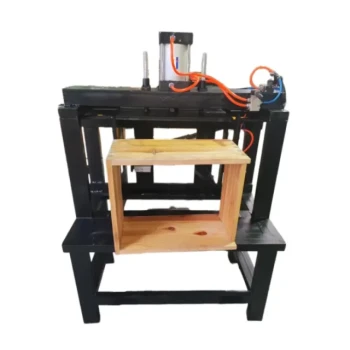
Industrial-grade hive-making machines produce uniform, standardized hives. This is not just about aesthetics; it provides scientific housing that supports the health and management of bee colonies.
Standardization is the foundation of industrialization. Without uniform hives, it is impossible to implement large-scale management techniques or efficient mechanized collection methods.
Global Market Compliance
Standardization at the production front end is a critical hardware guarantee. It ensures that the output is consistent enough to meet international export requirements.
To compete globally, reliability is key. Standardized equipment ensures that every unit of honey produced meets a baseline consistency that manual, ad-hoc methods cannot achieve.
Market Access Through Automation
Precision and Hygiene
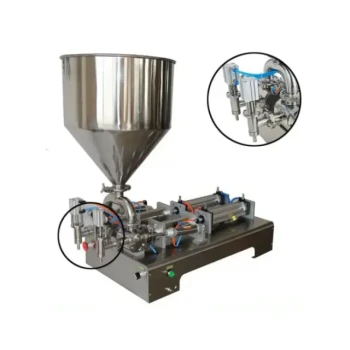
Automated honey-filling machines are essential for isolating secondary pollution. They ensure the product remains uncontaminated during the packaging process, which is vital for food safety standards.
These machines achieve high-precision quantitative packaging. This guarantees accurate net weights and consistency in product appearance, which are non-negotiable requirements for retail shelves.
Efficiency and Competitiveness
Automation reduces labor costs and minimizes product loss during dispensing. This efficiency directly improves the market competitiveness of the final product.
By streamlining final processing, these assets allow projects to achieve economic self-sufficiency. They bridge the gap between a raw agricultural product and a shelf-ready commercial good.
The Economic-Ecological Loop
Conservation Through Commerce
Processing equipment transforms primary agricultural products into goods with high market value. This creates sustainable economic returns that justify the initial investment.
This profitability creates a feedback loop. When beekeepers see financial value, they are incentivized to invest resources into protecting honeybees and their pollination environments.
Enhancing Food Security
The deployment of these tools supports increased natural crop pollination rates. This benefits the surrounding agriculture, enhancing regional food security beyond just the honey produced.
Understanding the Trade-offs
The Necessity of Industrialization
The transition to modern tools represents a shift away from traditional, low-input methods. While this creates value, it creates a dependency on capital-intensive hardware.
Projects must recognize that manual processing is no longer sufficient for entering large-scale retail markets. The "trade-off" is that to gain market access and consistency, you must accept the upfront complexity and cost of industrial-grade machinery. Without this hardware guarantee, projects risk remaining at a subsistence level, unable to compete in international trade channels.
Making the Right Choice for Your Goal
Modernize your project based on your specific livelihood targets:
- If your primary focus is Employment Generation: Prioritize standardized hives and protective gear to maximize the number of landless individuals who can manage colonies safely.
- If your primary focus is Market Access: Prioritize automated filling and packaging machines to ensure the hygiene, precision, and shelf appeal required for retail and export.
Equipping livelihood projects with modern assets turns ecological potential into sustainable economic power.
Summary Table:
| Key Asset | Primary Benefit | Target Outcome |
|---|---|---|
| Standardized Hives | Scientific colony management & uniformity | Industrial-scale production efficiency |
| Filling Machines | Hygiene control & precision packaging | Global market compliance & retail readiness |
| Hive-Making Gear | Low-land-dependency employment | Economic empowerment for vulnerable groups |
| Processing Tools | High-value product transformation | Sustainable ecological-economic loop |
Empower Your Beekeeping Initiatives with HONESTBEE
At HONESTBEE, we specialize in equipping commercial apiaries, distributors, and livelihood projects with the industrial-grade hardware needed to succeed. From precision hive-making and honey-filling machines to a full spectrum of specialized beekeeping tools and industry consumables, we provide the essential infrastructure to turn ecological potential into a thriving commercial industry.
Our value to you:
- Wholesale Excellence: Comprehensive supply of durable, standardized machinery.
- Market Readiness: Equipment designed to meet international food safety and export standards.
- End-to-End Support: Everything from hardware to honey-themed cultural merchandise.
Ready to modernize your production and maximize social impact? Contact us today to discuss your project needs!
References
- Zekiros Fikadu. The Contribution of Managed Honey Bees to Crop Pollination, Food Security, and Economic Stability: Case of Ethiopia. DOI: 10.2174/1874331501913010175
This article is also based on technical information from HonestBee Knowledge Base .
Related Products
- Precision Durable Efficient HONESTBEE Rotary Honey Filling Machine
- Automatic Honey Filling and Filtering Machine for Beekeeping Bottle Filling
- Economy Small Honey Filling Machine Honey Bottle Filler Packaging Machine
- Small Honey Filling Machine Sachet Packing Equipment Single Nozzle
- Fully Automatic Honey Filling Packaging Machine for Processing Line
People Also Ask
- How do honey filling and processing machines aid native bee product conservation? Boost Value with HONESTBEE Technology
- What is a key feature of the new generation of the honey filling machine? The Advanced Electronic Control Unit
- How do high-precision honey filling machines ensure quality? Optimize Your Commercial Production with HONESTBEE
- How do honey filling machines work? Achieve Precision & Speed for Your Apiary
- What are the common types of bottling machines used for honey? Choosing the Right Solution for Your Apiary