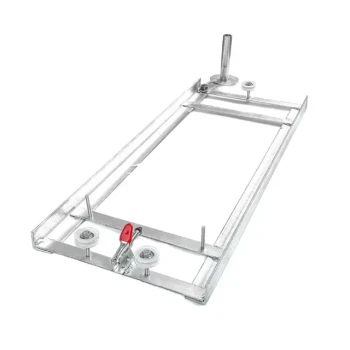
Movable hive frames with clear markings are essential tools for enabling continuous, high-precision monitoring of honeybee brood development without disrupting the colony's internal structure. By providing a standardized visual grid, these frames allow beekeepers to photographically record specific zones of egg-laying and capping to calculate exact survival rates from the egg stage to the pre-pupae stage.
This hardware transforms beekeeping from a subjective observation into a quantitative science, allowing for the precise measurement of how different mating strategies impact the speed of colony proliferation during the critical spring buildup.
The Mechanics of Precision Monitoring
Non-Invasive Observation
The primary advantage of these frames is the ability to observe the hive continuously without dismantling it.
Traditional inspection methods often stress the colony and alter its behavior. Movable frames allow researchers to gather data on brood activity while maintaining the integrity of the overall hive structure.
Standardized Visual Data
The clear markings on the frames serve as a fixed reference point for photographic recording.
This standardization eliminates the variability found in natural comb construction. It ensures that observations made on Day 1 align perfectly with observations made on Day 10, enabling accurate tracking of specific cells over time.
Quantifying Colony Health and Growth
Calculating Conversion Rates
The ultimate goal of using this hardware is to derive specific biological metrics, specifically the conversion rate.
Beekeepers use the markings to track exactly how many eggs successfully develop into pre-pupae. This provides a hard data point for colony viability that visual estimates cannot match.
Evaluating Mating Strategies
Spring is a critical time for colony proliferation, which is heavily influenced by queen genetics and mating methods.
By quantifying the speed of proliferation via these frames, breeders can objectively compare different mating methods. This data reveals which genetic lines produce the fastest, most robust spring growth.
Understanding the Trade-offs and Data Integrity
Isolating Variables
While movable frames track brood development, accurate analysis requires understanding the context of the whole colony.
As noted in broader research, data accuracy depends on distinguishing between genetic traits and environmental factors. For example, a drop in brood survival could be genetic, or it could be due to low worker bee density affecting hygienic tasks.
The Necessity of Holistic Data
Relying solely on frame markings can lead to "tunnel vision."
To ensure the data derived from the frames is valid, it must be correlated with colony strength (measured by counting bee spaces). Without normalizing for the number of worker bees available to clean and nurse the brood, the raw conversion rates from the marked frames may be misleading.
Making the Right Choice for Your Goal
Whether you are a researcher or a commercial beekeeper, the utility of this hardware depends on your specific objectives.
- If your primary focus is Genetic Breeding: Use marked frames to calculate precise egg-to-pupae conversion rates to objectively select superior queen lines.
- If your primary focus is Colony Management: Use the frames to monitor spring buildup speed, but cross-reference this with total bee space counts to ensure the colony has the population density to support that growth.
By standardizing your hardware, you remove subjective bias and gain the ability to make data-driven decisions for colony expansion.
Summary Table:
| Feature | Traditional Inspection | Marked Movable Frames |
|---|---|---|
| Data Type | Subjective / Visual Estimate | Quantitative / Photographic |
| Colony Stress | High (Dismantling Required) | Low (Non-Invasive) |
| Tracking Accuracy | Variable cell location | Fixed reference points |
| Key Metric | General health observation | Egg-to-pre-pupae conversion rate |
| Primary Use | Routine maintenance | Genetic breeding & research |
Elevate Your Apiary with Professional-Grade Hardware
At HONESTBEE, we understand that data-driven beekeeping starts with precision equipment. Whether you are a commercial apiary focusing on genetic breeding or a distributor looking to supply high-quality tools, our comprehensive wholesale offering has you covered.
We provide everything from specialized hive-making machinery and honey-filling equipment to essential consumables and marked monitoring hardware designed for maximum durability. Our products empower you to optimize spring buildup, calculate precise colony conversion rates, and achieve robust proliferation.
Ready to scale your beekeeping operations? Contact us today to explore our full spectrum of beekeeping tools and industry-leading machinery!
References
- N. Salem, Salem Bozryda. Impact of Outcross Mating on Brood Rearing Activity and Honey Production of Local Honey Bees in Libya. DOI: 10.21608/ejarc.2024.346003
This article is also based on technical information from HonestBee Knowledge Base .
Related Products
- Wooden Bee Hive Frames for Beekeeping and Wholesale
- Plastic Bee Frame Beekeeping Hive Frames for Wholesale
- Professional Grade Foldable Beehive Handles
- Heavy-Duty Stainless Steel Clip-On Frame Perch
- Assembled Wooden Bee Frames with Plastic Foundation for Durability and Convenience by HONESTBEE
People Also Ask
- How do wooden and plastic hive frames compare in terms of durability? Wood vs. Plastic Longevity & Repairability
- How does balancing the number of frames impact hive productivity? Optimize Your Apiary's Biological Output
- What are the main considerations when choosing between wooden and plastic bee hive frames? Optimize Your Apiary's Efficiency
- How should beehive frames be maintained to prolong their lifespan? 5 Pro Tips for Durable Beekeeping Equipment
- What are frames and combs used for in beekeeping? The Foundation of Modern Hive Management