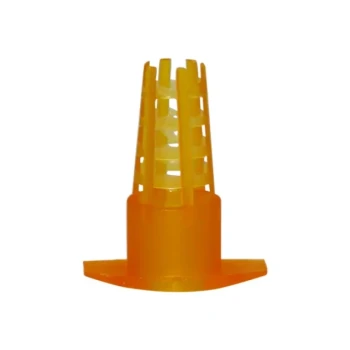
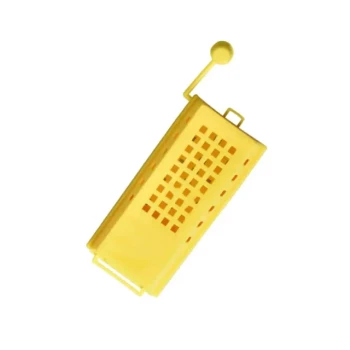
Plastic queen-starter cells function as standardized biological reaction vessels that enable precise scientific control over the rearing process. In laboratory settings, these cells are essential because they facilitate the transfer of larvae from the hive to a controlled environment, securely contain precisely formulated artificial diets, and allow for independent, real-time monitoring of each larva’s growth, metamorphosis, and survival.
Plastic queen-starter cells transform variable biological processes into controlled experiments. By providing a uniform environment for isolation and observation, they allow researchers to decouple larval development from the unpredictable variables of a natural colony.
Establishing Scientific Control
Standardization of the Environment
In a laboratory context, consistency is paramount. Plastic cells serve as standardized biological reaction vessels, ensuring that every larva occupies an identical physical space.
This uniformity eliminates structural variables that might otherwise skew data, providing a consistent baseline for experimentation.
Precision in Nutrition
Unlike natural wax cells, which are subject to nurse bee intervention, plastic cells are structurally designed to contain precisely formulated artificial diets.
This allows researchers to administer exact nutrient profiles to specific larvae without the risk of absorption into the cell wall or contamination from the hive environment.
Enhancing Observation and Data Collection
Individualized Monitoring
The primary advantage of these cells in a lab is the ability to perform independent, real-time monitoring for every subject.
Researchers can track specific metrics—such as growth rates, metamorphosis stages, and survival—on a per-larva basis.
Seamless Transfer
The structural design facilitates the safe transfer of larvae from the volatile environment of the colony to the controlled conditions of the laboratory.
Serving as robust carriers during grafting, they protect the fragile larvae during the transition between natural and artificial settings.
Operational Advantages
Material Stability
Plastic offers superior material stability compared to wax, which can degrade or interact with chemical agents.
These cells are durable and easy to clean, making them reusable assets that support high-throughput, large-scale research or commercial production.
Ease of Handling
Plastic cups are designed to be easily identifiable and manipulated.
This simplifies the logistics of locating, handling, and moving developing queens without causing physical stress to the organism.
Understanding the Trade-offs
Biological Fidelity vs. Control
While plastic cells offer control, they create an artificial environment that separates the larva from the colony's social and pheromonal context.
Researchers must account for the fact that excluding nurse bee interactions to control diet may remove beneficial, albeit variable, biological inputs found in a natural hive.
Acceptance Factors
Although designed to mimic the natural shape of queen cells, plastic is a synthetic material.
In scenarios involving nurse bees (such as initial graft acceptance before lab transfer), there can be subtle variations in acceptance rates compared to natural wax, though proper design minimizes this issue.
Making the Right Choice for Your Goal
To determine if plastic starter cells are appropriate for your specific application, consider your primary objective:
- If your primary focus is strictly controlled research: Use plastic cells to isolate variables, control diet intake precisely, and enable granular data collection on individual development.
- If your primary focus is large-scale propagation: Leverage plastic cells for their durability, reusability, and ability to standardize the production workflow for consistent survival rates.
By stabilizing the physical and nutritional environment, plastic queen-starter cells allow you to move from observing nature to analyzing it with rigorous scientific precision.
Summary Table:
| Key Feature | Laboratory Advantage | Practical Benefit |
|---|---|---|
| Standardization | Uniform vessel dimensions | Eliminates structural variables in experiments |
| Nutritional Control | Non-porous material | Enables precise delivery of artificial diets |
| Observation | Individual isolation | Facilitates real-time monitoring of metamorphosis |
| Durability | Material stability | Supports high-throughput reuse and easy cleaning |
| Handling | Robust structure | Simplifies safe transfer from hive to laboratory |
Elevate Your Queen Rearing Operations with HONESTBEE
Whether you are managing a high-output commercial apiary or a specialized research facility, the right tools are the foundation of success. HONESTBEE specializes in providing commercial apiaries and distributors with a comprehensive wholesale selection of professional beekeeping equipment.
Our portfolio ranges from high-precision plastic queen-starter cells and grafting tools to advanced honey-filling machines and specialized hardware. We empower our partners by delivering durable, standardized, and cost-effective solutions tailored to the demands of large-scale production.
Ready to optimize your production workflow or expand your distribution inventory?
Contact us today to explore our full spectrum of beekeeping machinery and essential industry consumables. Let HONESTBEE be your partner in industrial-grade beekeeping excellence.
References
- Daiana Antonia Tavares, Luc Belzunces. Exposure of larvae to thiamethoxam affects the survival and physiology of the honey bee at post-embryonic stages. DOI: 10.1016/j.envpol.2017.05.092
This article is also based on technical information from HonestBee Knowledge Base .
Related Products
- JZBZ Type Wide Base Plastic Queen Cell Cups for Base Mounting and Queen Rearing
- Clear Black Plain Polystyrene Queen Bee Grafting Cell Cups No Lug for Bee Queen Cup
- Durable Plastic Push In Queen Bee Cage
- 10-Cell Silicone Beeswax Bee Queen Cups Forming Mold
- Professional Plastic Queen Excluder for Modern Beekeeping
People Also Ask
- What is the primary function of commercial plastic queen cell cups? Driving Efficiency in Mass Queen Rearing
- What are the primary advantages of using plastic queen cell cups? The Industrial Choice for High-Efficiency Apiaries
- What technical advantages do commercial plastic queen cell cups offer? Scale Your Queen Rearing for Maximum Efficiency
- What is the function of standardized plastic Queen Cell Cups? Boost Efficiency in Commercial Larval Grafting
- Why are standardized plastic queen cell cups preferred? Boost Commercial Queen Rearing Efficiency