Standardized 9-frame honey supers are the industry-leading metric for productivity because they provide a consistent, physical unit of measurement for both honey yield and colony health. Since a single fully capped frame typically weighs approximately 1.5kg, this standard allows commercial beekeepers to calculate total output rapidly without the logistical complexity of weighing individual hives. This quantification is essential for distributors and wholesalers to maintain accurate inventory forecasts and assess the ROI of specific management practices.
The 9-frame honey super functions as a universal data point, converting complex biological activity into measurable units for honey yield and population strength. By utilizing this standard, businesses can eliminate variables and make objective comparisons across different apiaries and seasons.
The Technical Precision of Standardized Units
The 1.5kg Weight Benchmark
The primary reason for using the 9-frame super as a measurement unit is the consistent density of honey within a standard frame. A fully filled frame provides a reliable estimate of 1.5kg of honey, allowing for high-speed yield assessments across large-scale commercial operations. This mathematical shortcut replaces labor-intensive weighing processes with a fast, visual count that informs supply chain logistics.
Algorithmic Population Estimation
Beyond honey yield, standard frames serve as the basis for calculating colony biomass and population density. Experts utilize specific algorithms, such as estimating that one frame fully covered by bees represents roughly 2,000 adult bees. For larval development, a double-sided brood frame is estimated to contain approximately 4,000 brood cells, providing a quantitative baseline for colony growth.
Standardizing Internal Hive Space
Using a fixed number of frames ensures that the initial colony strength and resource capacity are consistent across an entire fleet of hives. This standardization is critical for isolating external variables, such as floral phenology or weather patterns, from internal colony performance. It allows professional managers to accurately observe how external factors influence foraging dynamics without the interference of varying hive sizes.
Quantifying Health and Treatment Efficacy
Measuring Colony Vigor After Treatment
Standard frames are utilized to objectively measure the effectiveness of health treatments, such as organic acid applications. By counting the number of frames covered by bees before and after treatment, beekeepers can quantitatively assess colony vitality. This data-driven approach ensures that investments in hive health are yielding tangible results in population maintenance.
Grid-Based Brood Analysis
Professional beekeeping technicians often use a grid-based measurement tool applied directly to standard frames, typically featuring 25 square centimeter cells. This allows for the precise statistical counting of capped worker bee larvae, converting brood area into a specific count of future offspring. Such precision is vital for distributors evaluating the impact of different artificial bee bread formulas or nutritional supplements.
Monitoring Pollen and Resource Storage
The 9-frame system also facilitates the tracking of pollen storage levels, which are essential for long-term colony sustainability. By quantifying resource storage in "frame units," managers can determine if a colony has the necessary strength to survive winter or prepare for a major nectar flow. This level of detail supports a scientific evaluation of feeding strategies and colony expansion rates.
Understanding the Trade-offs
The Risk of Visual Estimation Errors
While the 9-frame count is efficient, it relies heavily on the accuracy of the observer and the consistency of the comb. Variations in wax thickness or the degree of honey capping can lead to slight discrepancies in the 1.5kg weight estimate. Over-reliance on visual checks without periodic weight calibrations can result in skewed data for large-scale yield forecasting.
Environmental Influence on Density
Honey weight can fluctuate based on moisture content and the specific floral source, which may affect the "1.5kg per frame" rule of thumb. In regions with high humidity, honey may be less dense, potentially leading to an overestimation of the final processed weight. Professional wholesalers must account for these regional environmental factors when interpreting frame-based data.
Applying These Metrics to Your Operations
Selecting the Right Measurement Focus
Integrating standardized measurement units into your procurement and management strategy ensures rapid response times and efficient order fulfillment. By using a full-spectrum sourcing approach for standardized equipment, you can guarantee that all data collected across your supply chain is comparable and actionable.
- If your primary focus is Scalability and Trade: Utilize the 1.5kg-per-frame metric to streamline inventory forecasting and ensure ultra-fast delivery of yield estimates to your partners.
- If your primary focus is Product Quality and Research: Implement grid-based brood counting and frame-coverage algorithms to objectively verify the efficacy of your supplements and treatments.
Standardizing your measurement units is the first step toward achieving professional-grade precision and long-term profitability in the honey trade.
Summary Table:
| Metric Category | Measurement Unit | Estimated Value / Business Significance |
|---|---|---|
| Honey Yield | Per Capped Frame | ~1.5kg of honey; simplifies inventory forecasting |
| Adult Population | Frame Coverage | ~2,000 adult bees; assesses colony biomass |
| Brood Development | Double-sided Frame | ~4,000 brood cells; predicts future colony strength |
| Health Assessment | Grid-based Counting | 25 $cm^2$ cells; quantifies treatment & supplement efficacy |
| Resource Storage | Frame Units | Tracks pollen levels; essential for wintering strategy |
Scale Your Apiary Efficiency with HONESTBEE
Standardized data requires standardized equipment. HONESTBEE serves commercial apiaries, distributors, and B2B resellers with a comprehensive one-stop sourcing solution. We provide everything from premium beekeeping tools and essential consumables to advanced hive-making and honey-filling machinery.
Why Partner with HONESTBEE?
- Comprehensive Portfolio: Full-spectrum hardware and honey-themed merchandise.
- Rapid Fulfillment: Ultra-fast delivery and efficient order processing to keep your supply chain moving.
- Professional Expertise: Deep industry knowledge to support your OEM/ODM needs and profit margins.
- Exceptional Service: Dedicated support with rapid response times.
Ready to enhance your wholesale offering? Contact our expert team today!
References
- Laura Narciso, Cinzia Marianelli. Effects of natural treatments on the varroa mite infestation levels and overall health of honey bee (Apis mellifera) colonies. DOI: 10.1371/journal.pone.0302846
This article is also based on technical information from HonestBee Knowledge Base .
Related Products
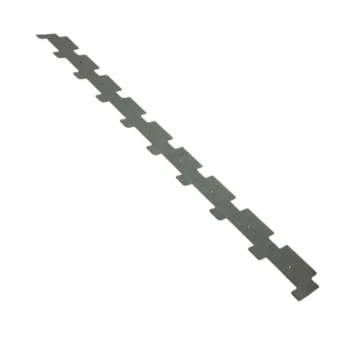
- Heavy Duty Castellated Iron Frame Spacer for Honey Supers
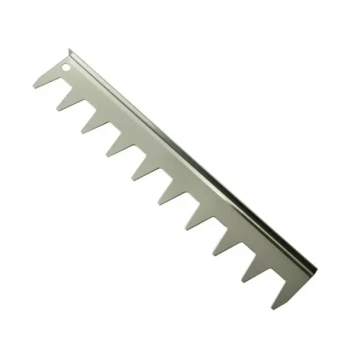
- Stainless Steel 9 Frame Hive Spacer Durable Precise for Commercial Beekeeping
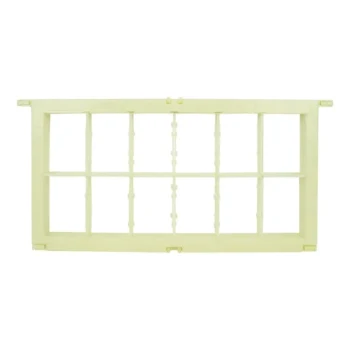
- Professional Sectional Comb Honey Frame with 250g Cassette System for Beekeeping
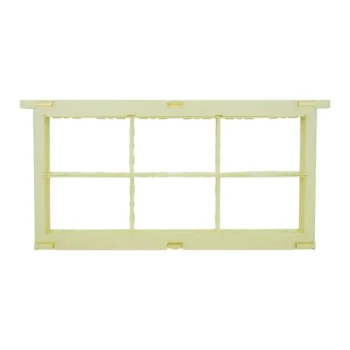
- Professional 500g Sectional Comb Honey Frame System for Beekeeping
- Heart-Shaped Comb Honey Frame and Honeycomb Cassette
People Also Ask
- What are honey super frames and what foundation options are available? Choose the Best Support for Your Bees
- What are the reasons and drawbacks of using nine frames in a ten-frame honey super? Boost Extraction Speed Today
- What are honey super frames and how many are needed per box? A Beekeeper's Essential Guide
- What are honey super frames and their foundation options? Choose the Best Support for Your Hive's Honey Production
- Why might a beekeeper use fewer than the standard number of frames in a honey super? Boost Extraction Efficiency