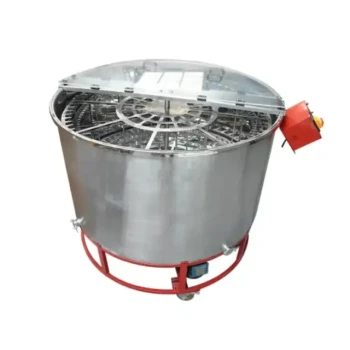
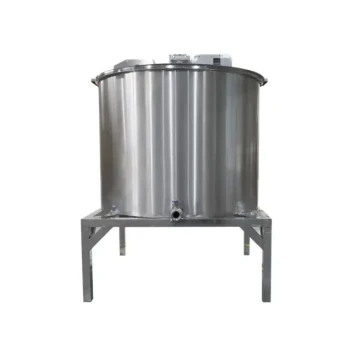
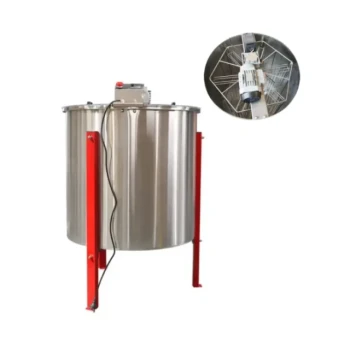
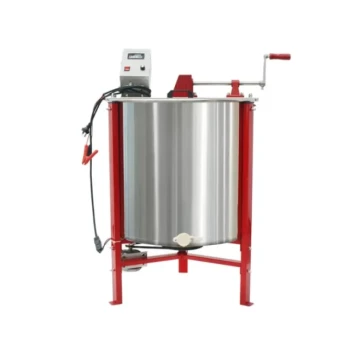
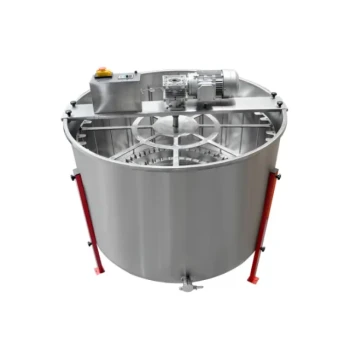
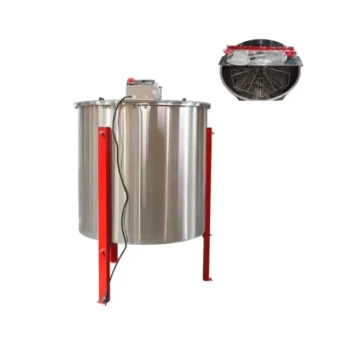
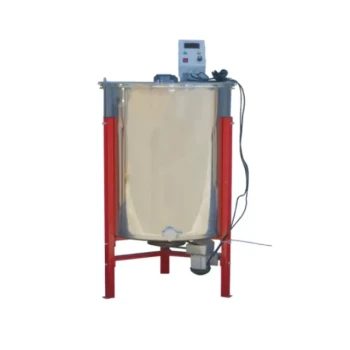
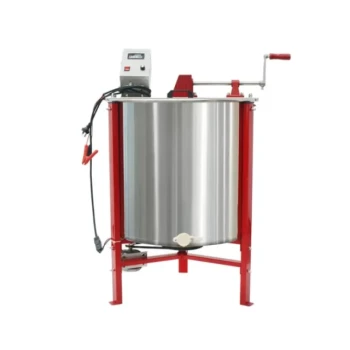
Commercial scalability relies on automation. Large-scale apiaries prefer electric honey extractors because they utilize powerful motors to provide consistent, stable, and high-speed rotation. This significantly increases extraction efficiency, ensures thorough honey removal to minimize waste, and drastically reduces the physical labor intensity required to maintain a continuous production rhythm.
The Core Insight Manual extraction creates a production bottleneck due to physical fatigue and inconsistent speeds. Electric extractors solve this by utilizing motor-driven precision to maximize honey yield and protect the wax combs, transforming honey harvesting from a labor-intensive chore into a streamlined industrial process.
The Mechanics of Efficiency
Consistent High-Speed Rotation
Unlike manual hand-cranking, which is subject to human variance, electric extractors utilize motors to maintain a stable rotation speed. This consistency is critical for processing large volumes of frames without interruptions or fluctuations in force.
Maximizing Honey Yield
The high-frequency centrifugal force generated by electric motors ensures that honey is separated from the comb more thoroughly than manual methods allow. In a commercial context, maximizing the amount of honey removed from every single frame directly correlates to increased total output and minimized product waste.
Continuous Production Rhythm
Electric models allow for a continuous workflow that manual models cannot support. By automating the spinning process, the equipment maintains a steady pace of production that does not degrade over the course of a long workday due to operator exhaustion.
optimizing Workflow and Labor
Reducing Physical Labor Intensity
The primary bottleneck in manual extraction is physical effort; hand-cranking hundreds of frames is exhausting and unsustainable for commercial operations. Electric drive systems eliminate this labor requirement, allowing staff to focus on other tasks rather than generating mechanical force.
Enabling Multitasking
Because the extraction process is automated, beekeepers can uncap the next batch of frames while the current batch is spinning. This parallel processing significantly shortens the overall processing cycle, allowing for higher throughput per hour.
Asset Preservation and Sustainability
Precise Speed Control
Commercial operations view honeycomb as a vital asset, not just a container. Electric extractors offer precise speed control, which allows for the extraction of honey without destroying the structural integrity of the beeswax combs.
Accelerating Hive Regeneration
By preserving the combs through controlled electric extraction, apiaries can return intact frames to the hive immediately. This saves the bees the immense energy expenditure required to rebuild wax structures, allowing them to focus immediately on honey production.
Understanding the Trade-offs
Higher Initial Investment and Complexity
Electric extractors represent a significantly higher capital expenditure compared to manual equipment. They also introduce mechanical complexity, requiring motors and electronic controls that may require specialized maintenance or repair, unlike the simple mechanical gears of a manual extractor.
Infrastructure Dependency
These units require a reliable power source, which limits their portability. While manual extractors can be used in remote field locations, electric industrial-grade equipment generally restricts operations to a facility with access to electricity.
Making the Right Choice for Your Goal
To determine if upgrading to electric extraction is the right move for your operation, consider your specific production targets:
- If your primary focus is Commercial Scalability: Prioritize electric extractors to remove labor bottlenecks and ensure a continuous, high-volume production rhythm.
- If your primary focus is Maximizing Yield per Frame: Choose electric equipment for its ability to generate the sustained high speeds necessary to extract every possible drop of honey.
- If your primary focus is Hive Health and Turnover: Select electric models with precise speed controls to preserve drawn comb, allowing for immediate reuse and faster colony recovery.
Ultimately, the shift to electric extraction is not just about speed; it is about establishing a standardized, efficient system that maximizes both human labor and biological resources.
Summary Table:
| Feature | Electric Honey Extractors | Manual Honey Extractors |
|---|---|---|
| Production Speed | High & Consistent | Low & Variable |
| Labor Intensity | Minimal (Automated) | High (Manual Cranking) |
| Honey Yield | Maximum (High Centrifugal Force) | Moderate (Human-limited) |
| Comb Preservation | Superior (Precise Speed Control) | Variable (Risk of Damage) |
| Workflow | Continuous / Parallel Tasks | Serial / Intermittent |
| Ideal Scale | Industrial & Commercial | Hobbyist & Small-scale |
Scale Your Honey Production with HONESTBEE
Transitioning from manual to electric extraction is the most critical step toward industrializing your apiary. At HONESTBEE, we specialize in empowering commercial apiaries and distributors with the high-performance tools needed to dominate the market.
Why partner with us?
- Comprehensive Wholesale Offering: Access a full spectrum of industrial beekeeping machinery, from high-capacity electric extractors to automated honey-filling and hive-making machines.
- Operational Efficiency: Our equipment is designed to minimize labor intensity while maximizing honey yield and preserving valuable beeswax assets.
- Industry Expertise: We provide essential consumables and specialized hardware tailored to the needs of large-scale beekeeping operations.
Ready to eliminate production bottlenecks and enhance your workflow? Contact us today to discuss your wholesale equipment needs and see how HONESTBEE can transform your harvesting season into a streamlined success.
References
- Adil Koray Yıldız, Servet Arslan. Yozgat İli Arıcılık İşletmelerinin Teknik ve Sosyo-Ekonomik Durumunun İncelenmesi. DOI: 10.24925/turjaf.v10i5.846-852.4931
This article is also based on technical information from HonestBee Knowledge Base .
Related Products
- HONESTBEE 72 Frame Industrial Electric Honey Extractor for Beekeeping
- Commercial Electric 12 Frame Honey Extractor Spinner Motorized Honey Extractor
- 32 Frame Commercial Electric Honey Extractor for Beekeeping and Honey Production
- Electric 4 Frame Tangential Honey Extractor
- electric honey extractor honey centrifuge 3 frame honey extractor stainless steel honey frame extractor
People Also Ask
- What is the importance of balancing honeycomb frames within a honey extractor? Ensure Stability and Protect Machinery
- How is honey separated from the frames after they are uncapped? Efficient Extraction Methods for High Yields
- What are the main benefits of using a honey extractor? Maximize Yields and Protect Your Honeycomb
- What are the recommended methods for removing honey from the honeycomb? Top Extraction Techniques for Maximum Efficiency
- How do manual honey extractors compare to electric honey extractors? Choosing the Right Tool for Your Apiary Growth