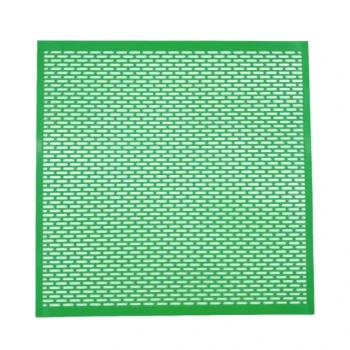
The selection of a 1 micrometer pore size polytetrafluoroethylene (PTFE) membrane is primarily dictated by its ability to survive harsh chemical processing while providing an optically "quiet" background for analysis. It serves as the bridge between aggressive sample preparation and sensitive detection techniques like Scanning Electron Microscopy (SEM), Infrared Spectroscopy (IR), and Raman Spectroscopy.
The core value of this specific PTFE membrane lies in its dual-nature: it acts as a chemically inert shield during digestion and a flat, non-interfering stage during spectral analysis.
The Critical Role of Chemical Stability
Withstanding Aggressive Environments
Sample preparation often requires breaking down organic matrices to isolate particles. This process frequently utilizes strong oxidizing digestion solutions.
Inertness is Key
PTFE is selected because of its excellent chemical stability. Unlike cellulose or other filter materials, PTFE does not degrade or react when exposed to these harsh oxidizers, preserving the integrity of the filter for the subsequent analysis.
Particle Retention and Physical Structure
Precision in Collection
The specific choice of a 1 micrometer pore size is not arbitrary. It is fine enough to ensure the complete collection of particles with very small diameters.
Preventing Data Loss
By using this specific pore size, analysts prevent the loss of micro-scale particles that would otherwise pass through a coarser filter. This ensures the final sample is truly representative of the original material.
Optical Suitability for Spectroscopy
A Low-Background Canvas
For spectroscopic techniques like IR and Raman, the substrate must not generate its own signal. PTFE provides low-background optical characteristics, ensuring that the resulting spectrum represents the sample, not the filter.
Stability for Direct Imaging
Techniques such as Scanning Electron Microscopy (SEM) require a stable, uniform surface. The PTFE membrane offers a flat surface, which is critical for maintaining focus and achieving high-resolution imaging without topographic interference.
Critical Considerations for Analysis
The Necessity of Flatness
While PTFE is chemically robust, its utility in this context relies heavily on its physical geometry. If a membrane lacks a flat topography, it becomes unsuitable for SEM, regardless of its chemical resistance.
The Pore Size Balance
The 1 micrometer limit acts as a specific threshold. While it ensures complete collection, it implies a physical limit on flow; particles smaller than this may still escape, and the filtration process is defined strictly by this cutoff.
Making the Right Choice for Your Goal
To maximize the quality of your spectroscopic data, consider how the membrane properties align with your specific analytical needs:
- If your primary focus is Chemical Digestion: Rely on PTFE specifically for its ability to withstand strong oxidizing environments without dissolving or contaminating the sample.
- If your primary focus is Spectroscopic Clarity: Prioritize the membrane for its flat, low-background nature to ensure noise-free results in IR, Raman, or SEM applications.
By utilizing this specific PTFE configuration, you ensure that the physical collection medium does not become the limiting factor in your analysis.
Summary Table:
| Feature | 1μm PTFE Membrane Benefit |
|---|---|
| Chemical Stability | Resistant to strong oxidizing digestion solutions; no degradation. |
| Pore Size (1μm) | Ensures complete collection of micro-scale particles without data loss. |
| Optical Background | Low-interference signal for clear Infrared (IR) and Raman spectra. |
| Surface Geometry | Flat topography essential for high-resolution SEM imaging focus. |
| Material Inertness | Prevents sample contamination during aggressive sample preparation. |
Elevate Your Analytical Precision with HONESTBEE
At HONESTBEE, we understand that the quality of your tools dictates the quality of your results—whether in a high-tech lab or a commercial apiary. While this guide highlights the technical necessity of PTFE membranes for precision analysis, we apply that same standard of excellence to our full spectrum of beekeeping machinery and equipment.
We provide commercial apiaries and distributors with everything from honey-filling machines and hive-making hardware to essential industry consumables. Partner with HONESTBEE for wholesale solutions that bring industrial-grade reliability to your operations.
Ready to scale your production? Contact us today to explore our comprehensive beekeeping tool catalog!
References
- P. Mühlschlegel, R. Sieber. Lack of evidence for microplastic contamination in honey. DOI: 10.1080/19440049.2017.1347281
This article is also based on technical information from HonestBee Knowledge Base .
Related Products
- Heavy-Duty Ergonomic Grip Galvanized Pollen Shovel
- Solar Beeswax Melter Easy Solar Wax Melter for Beeswax
- Nylon Honey Strainer Square Filter Cloth for Honey Filters
- HONESTBEE AC Powered Wire Embedder with Alligator Clips
- Honey Bee Lifecycle Model: A Detailed Honeycomb Display of Bee Development
People Also Ask
- For what reasons do beekeepers collect bee pollen? Boost Hive Health and Unlock New Revenue Streams
- Why should commercial apiaries focus on the collection of diversified bee products? Maximize Your Hive’s Profit Potential
- How do bee pollen collection tools affect the quality of bee pollen used in functional dairy ice cream production?
- How does a specialized pollen collector facilitate the harvesting of diverse bee products? Automate High-Value Yields
- What is the impact of pollen collectors and associated equipment on the cost structure of pollen production? Maximize ROI