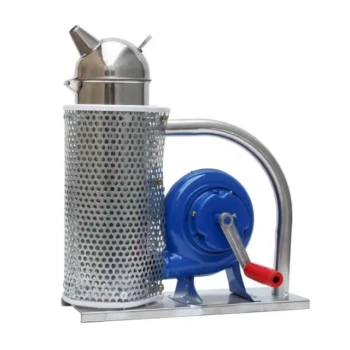
A professional bee smoker is the primary mechanism for biological control in the apiary. It functions by dispensing cool, concentrated smoke that triggers a natural gorging response in bees while simultaneously masking their chemical alarm signals. This creates a temporary state of docility, allowing beekeepers to perform essential maintenance without triggering a defensive swarm.
Core Insight: By disrupting alarm pheromones and inducing a feeding instinct, the smoker transforms a defensive colony into a manageable one. It serves as a critical safety barrier that protects both the operator from stings and the colony from stress-induced losses during inspections.
The Mechanics of Colony Control
To understand why the smoker is essential, one must understand how it manipulates bee behavior to ensure safety.
Triggering the Survival Instinct
The primary reference notes that smoke triggers a natural emergency response. When bees detect smoke, they interpret it as a sign of a potential forest fire.
This prompts them to consume honey rapidly to prepare for potential evacuation. Gorged with honey, bees become physically slower and biologically more docile, significantly reducing their inclination to sting.
Disrupting Chemical Communication
Honeybees rely heavily on pheromones to communicate threats. When a guard bee stings, it releases an alarm pheromone (often smelling like bananas) that signals other bees to attack.
A professional smoker produces thick, cool smoke that effectively masks these chemical signals. By blocking the transmission of the alarm pheromone, the smoker prevents a localized defensive reaction from escalating into a full-colony attack.
Enabling High-Frequency Management
A smoker is not just for safety; it is an operational prerequisite for the complex tasks required in professional beekeeping.
Facilitating Hive Inspections
Regular monitoring is critical for hive health. The smoker allows the beekeeper to open the hive and manipulate frames without causing chaos.
This intervention makes inspections easier for both the human and the insect, reducing the likelihood of the beekeeper receiving stings and minimizing the stress placed on the colony during the intrusion.
Queen and Harvest Management
The primary reference highlights that smokers provide a necessary safety barrier during high-frequency tasks.
Procedures such as queen cell management and honey harvesting require precision and time. The sedation provided by the smoker allows the beekeeper to focus on these delicate technical adjustments rather than defending against aggressive bees.
Understanding the Trade-offs
While essential, the use of a smoker involves operational nuances that must be respected to avoid negative outcomes.
The Importance of "Cool" Smoke
Not all smoke is beneficial. A professional smoker is designed to produce cool smoke.
If the fuel burns too hot or the bellows are worked too aggressively, the smoke can singe the bees' wings or bodies. This injures the colony and can actually provoke the aggression you are trying to prevent.
Risk of Over-Smoking
Using too much smoke can yield diminishing returns. Excessive smoke can confuse the colony to the point of panic rather than sedation.
Furthermore, during honey harvesting, over-smoking poses a quality control risk. Smoke particles can be absorbed by the wax and honey, potentially tainting the flavor profile of the final product.
Making the Right Choice for Your Goal
Selecting and using a smoker depends on your specific objectives in the apiary.
- If your primary focus is Personnel Safety: Prioritize a large-chamber smoker that produces a high volume of cool smoke to ensure maximum pheromone masking during deep hive inspections.
- If your primary focus is Honey Quality: Use the smoker sparingly and only on the periphery of the hive during harvest to prevent flavor contamination while maintaining basic docile behavior.
- If your primary focus is Colony Health: Ensure your fuel source is clean and natural to avoid introducing toxic chemicals into the hive environment while calming the bees.
Ultimately, the professional smoker is the standard for responsible beekeeping, balancing human safety with the biological preservation of the colony.
Summary Table:
| Feature | Mechanism | Benefit to Beekeeper |
|---|---|---|
| Pheromone Masking | Blocks alarm signals (isopentyl acetate) | Prevents colony-wide defensive attacks |
| Survival Instinct | Triggers honey gorging response | Makes bees physically slower and more docile |
| Cool Smoke Design | Maintains low-temperature output | Prevents injury to bees and avoids provocation |
| Operational Ease | Facilitates frame manipulation | Reduces colony stress and inspection time |
Elevate Your Apiary with HONESTBEE
Maximize the productivity and safety of your commercial beekeeping operations with professional-grade equipment. At HONESTBEE, we specialize in supporting commercial apiaries and distributors with a comprehensive wholesale portfolio. From precision-engineered bee smokers that ensure cool, consistent output to honey-filling machines and specialized hive-making hardware, we provide the tools you need to scale your business.
Whether you are looking to source high-quality industry consumables or honey-themed cultural merchandise, our team is ready to deliver global-standard solutions tailored to your needs.
Ready to upgrade your equipment? Contact us today to discuss our wholesale offerings and discover how we can strengthen your supply chain.
References
- Ahlam Ahmed Hassan, Dalia M. Nasr El Batran. An Economic Study of a Honeybee Breeding Project. DOI: 10.32861/jac.94.553.565
This article is also based on technical information from HonestBee Knowledge Base .
Related Products
- Professional Bee Smoker with Elongated Spout and Durable Bellows for Beekeeping
- Professional Replacement Bee Smoker Bellows for Beekeeping Equipment
- Heavy-Duty Bee Smoker with Durable Plastic Bellows for Beekeeping
- Premium Traditional Copper Bee Smoker with Bellows
- Stainless Steel Honey Bee Smoker Hive and Honeycomb Smoker for Beekeeping
People Also Ask
- What roles do bee smokers and precision tools play in honey harvesting? Master Safety and Quality Control
- Why is the use of professional bee smokers and specialized fuel essential? Protect Honey Purity & Colony Safety
- Why is a professional bee smoker considered an essential tool for hive management and safety? Master Colony Control.
- Why is a professional bee smoker essential for hive maintenance? Master Colony Control & Safety
- Why is a professional Smoker essential during routine apiary inspections? Enhance Safety and Operational Efficiency