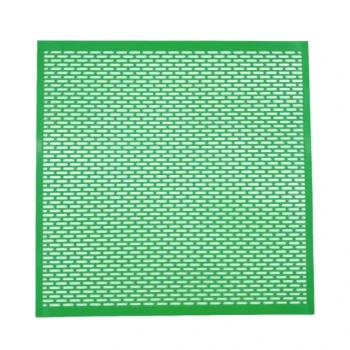
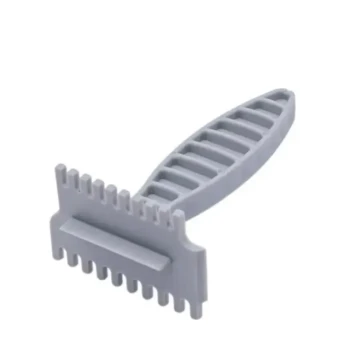
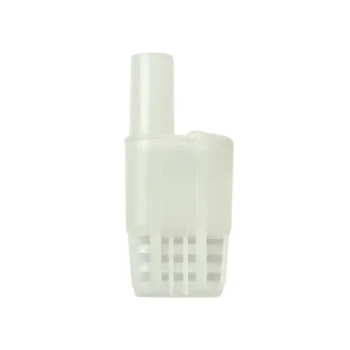
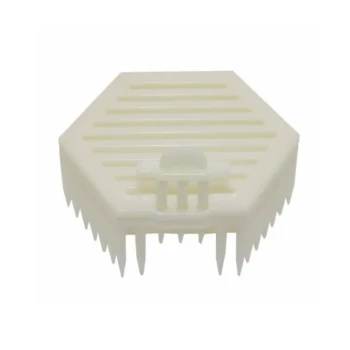
A queen excluder cage restricts the queen bee to a specific, empty comb for a strictly limited duration, usually around 12 hours. By physically confining the queen to this single frame while allowing worker bees to pass through, researchers ensure that all eggs laid on that comb are generated within a synchronized window. This precise timing is the fundamental requirement for rearing a cohort of bees that are chronologically identical.
The primary purpose of the queen excluder cage is to standardize the "start time" of development. By compressing the egg-laying window, researchers eliminate experimental bias caused by variations in physiological age.
The Mechanics of Synchronization
Controlling the Time Variable
In a natural hive setting, a queen lays eggs continuously across various frames, creating a brood with a wide range of ages.
To conduct controlled experiments, you must force a zero-hour start time. By confining the queen to a single comb for a set period (e.g., 12 hours), you ensure that every larva on that frame is the same age, within that narrow margin of error.
The Role of the Grid Structure
The cage utilizes a specific physical grid size. This grid is large enough to allow worker bees to enter and exit freely, ensuring they can tend to the queen and the comb.
However, the grid is too small for the larger queen to pass through. This effectively creates a permeable prison that maintains the social structure of the hive while strictly controlling the queen's movement and output.
Why Consistent Age is Critical
Eliminating Physiological Bias
Honeybees undergo rapid physiological changes as they age. A bee that is one day old differs significantly from a bee that is three days old in terms of hormone levels, gland development, and behavior.
The queen excluder cage removes this variable. It ensures that any difference observed in your experimental results is due to your test variables, not because some bees were physically older or more developed than others.
Standardizing Sample Populations
For experiments requiring large quantities of worker bees, statistical significance relies on standardization.
Using an excluder cage allows for the mass production of standardized worker bee samples. This creates a uniform baseline, which is essential when comparing sensitive metrics like fat body development or pesticide resistance.
Common Points of Confusion: Laying vs. Emergence
The Limit of the Queen Excluder
It is important to understand that the queen excluder cage only synchronizes the egg-laying phase.
Once the eggs are laid, the frame is usually removed or marked. The queen excluder does not prevent other bees from interacting with the brood later in development; its sole job is to synchronize the chronological clock.
Isolation Cages for Emergence
While the queen excluder manages the beginning of the lifecycle, researchers often use isolation cages with metal mesh at the end of the pupal stage.
These are distinct from queen excluder cages. They are placed over capped brood to prevent newly emerged workers from mixing with the rest of the colony, ensuring the final collection samples are strictly young, non-flying bees (typically within a 24-hour emergence window).
Ensuring Data Integrity in Your Experiment
To achieve the highest level of experimental rigor, you must control the age of your samples from the moment of conception.
- If your primary focus is reducing experimental error: Use the queen excluder cage to limit the egg-laying window to 12 hours or less, minimizing the chronological gap between the oldest and youngest bee in your sample.
- If your primary focus is physiological consistency: Combine the use of a queen excluder cage (for laying) with an isolation cage (for emergence) to guarantee that age-related traits, such as fat body retention, are uniform across your cohort.
Mastering the use of the queen excluder cage is the first and most critical step in establishing a reliable baseline for apicultural research.
Summary Table:
| Feature | Queen Excluder Cage (Egg Laying) | Isolation Mesh Cage (Emergence) |
|---|---|---|
| Primary Goal | Synchronize egg-laying start time | Prevent mixing of newly emerged bees |
| Mechanism | Confines queen; workers pass freely | Total isolation of the brood frame |
| Time Window | Usually restricted to 12-24 hours | 24-hour emergence window |
| Key Outcome | Eliminates chronological age bias | Ensures samples are non-flying/young |
Elevate Your Research with Precision Beekeeping Equipment
At HONESTBEE, we understand that data integrity starts with the right tools. Whether you are managing a commercial apiary or supplying research-grade materials as a distributor, we provide the full spectrum of high-quality beekeeping hardware needed for professional success.
Why choose HONESTBEE?
- Comprehensive Wholesale: From specialized queen excluder cages to honey-filling machines.
- Built for Professionals: Our equipment is designed to meet the rigorous demands of industrial beekeeping and scientific study.
- End-to-End Solutions: We supply everything from essential consumables to sophisticated hive-making machinery.
Ready to scale your operation or refine your research methodology? Contact us today to discuss your wholesale needs and let us help you achieve superior results.
References
- Patrycja Skowronek, Aneta Strachecka. Cannabidiol (CBD) Supports the Honeybee Worker Organism by Activating the Antioxidant System. DOI: 10.3390/antiox12020279
This article is also based on technical information from HonestBee Knowledge Base .
Related Products
- Professional Bamboo Queen Isolation Cage
- Professional Queen Catcher and Introduction Queen Cage
- Durable Galvanized Steel Spring Queen Bee Cage
- Premium Wood Framed Metal Wire Queen Bee Excluder
- Professional Queen Cage with Sliding Gate and Feeder Plug
People Also Ask
- Why are specialized queen bee cages used for the banking of mated queen bees? Maximize Commercial Apiary Storage Efficiency
- What is the mechanism of action for using temporary queen bee cages? Master Successful Queen Introduction
- How does the side ventilation design of a queen bee cage impact the safety of the queen during long-distance transport?
- What should you do if the queen is still in the cage and the worker bees have not accepted her? Protect Your Colony from Queen Rejection
- What technical precaution must be taken regarding the mesh or grill side of a queen bee cage? Ensure Queen Survival