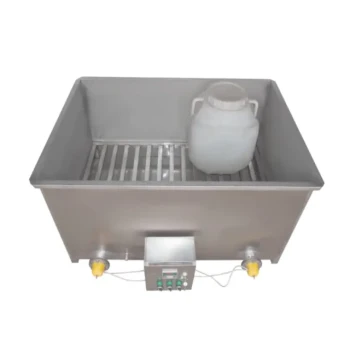
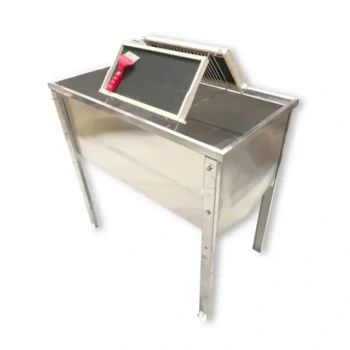
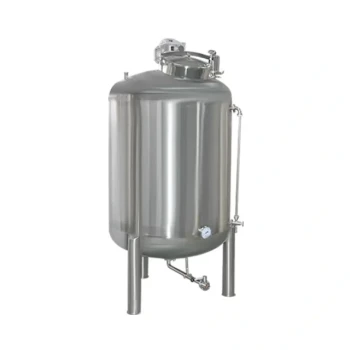
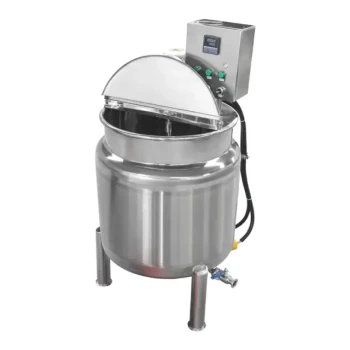
Industrial-grade stirring and dissolving tanks are the cornerstone of high-quality bee syrup production. These specialized units provide the mechanical power and thermal precision required to transform crystalline sugar into a stable 67% to 68% concentration syrup while preventing the formation of toxic byproducts.
Core Takeaway: An industrial tank ensures a uniform, high-concentration substrate that is safe for bee consumption and optimized for enzymatic reactions. By controlling temperature and mechanical shear, manufacturers can guarantee a standardized product that prevents colony mortality and meets global trade requirements.
Achieving Optimal Syrup Concentration
The Mechanics of High-Concentration Dissolution
Industrial tanks are engineered to dissolve massive quantities of crystalline sugar into water at precise temperatures between 75°C and 80°C. Using powerful mechanical stirring, these units create a high-concentration raw syrup with a dry matter content of 67% to 68%.
Maintaining Substrate Uniformity
Constant, high-efficiency stirring ensures that the sugar solution remains completely homogeneous. This uniformity is critical for subsequent enzymatic reactions, as it provides a consistent substrate for the production of inverted sugar syrup.
Preventing Crystal Deposition
In a commercial feeding environment, inconsistent syrup can lead to crystal deposition in feeders. Industrial-grade equipment ensures thorough dissolution, guaranteeing that bees have a stable intake of nutrients without mechanical blockages in delivery systems.
Protecting Colony Health through Precision Control
Mitigating Hydroxymethylfurfural (HMF) Risks
Overheating sugar solutions can lead to the degradation of sugars and the production of Hydroxymethylfurfural (HMF), a compound toxic to bees. Industrial tanks utilize precision temperature control to ensure that heat levels never reach the threshold where HMF becomes lethal.
Thermal Stability for Enzymatic Hydrolysis
During the production of inverted syrup, the solution must be maintained at a critical point of approximately 38°C. Industrial-grade temperature-controlled devices allow for regular intermittent stirring, ensuring sucrose is fully hydrolyzed into glucose and fructose without thermal damage.
Ensuring Feed Digestibility
Properly managed thermal and mechanical processes result in a feed that is highly digestible. By avoiding HMF and ensuring full hydrolysis, manufacturers prevent intestinal metabolic disorders and increased mortality rates within bee colonies.
Operational Advantages for Large-Scale Distribution
Standardizing Quality for Global Markets
For distributors and wholesalers, consistency is the primary metric of value. Industrial tanks transform primary agricultural products into standardized commodities that meet rigorous safety and compliance requirements for international trade.
Streamlining Efficient Order Fulfillment
The automated nature of industrial mixing and filling equipment allows for rapid response times and high-volume output. This efficiency is essential for B2B resellers who require ultra-fast delivery to meet seasonal demand in the beekeeping industry.
Enhancing Nutrient Distribution
Beyond sugar, these tanks are used to integrate soybean flour, yeast, and micronutrients into supplemental feeds. The mechanical shear ensures that essential amino acids are distributed evenly, so every bee receives a consistent ratio of nutrients.
Understanding the Trade-offs
Equipment Investment vs. Product Safety
While the initial capital expenditure for industrial-grade tanks is significant, the trade-off is the elimination of batch-to-batch variability. Manual or sub-standard heating methods significantly increase the risk of HMF contamination, which can lead to total colony loss for end-users.
Energy Consumption and Throughput
Maintaining high temperatures for rapid dissolution requires significant energy. However, the high-efficiency heat exchange in industrial units actually reduces the cost per liter compared to smaller, inefficient setups by maximizing the volume of syrup produced per heating cycle.
Making the Right Choice for Your Goal
How to Apply This to Your Project
Selecting the right equipment depends on your position in the supply chain and your specific production targets.
- If your primary focus is product safety and colony longevity: Prioritize tanks with integrated HMF monitoring and high-precision thermal sensors to ensure the syrup remains non-toxic.
- If your primary focus is B2B scalability and rapid fulfillment: Invest in automated, high-capacity stirring units that can maintain a 68% concentration consistently across multiple shifts.
- If your primary focus is nutrient-enriched supplemental feed: Choose tanks with high-shear mechanical agitators to prevent the stratification of dense additives like brewer's yeast or soy flour.
By utilizing industrial-grade equipment, you move from simple sugar mixing to a scientifically controlled manufacturing process that protects both your profit margins and the health of the colonies you serve.
Summary Table:
| Key Feature | Functional Benefit | Impact on Production |
|---|---|---|
| Precision Heating | Prevents HMF formation (toxicity) | Ensures colony health & safety |
| High-Shear Stirring | Maintains 67-68% concentration | Prevents crystal deposition & blockages |
| Thermal Stability | Optimized enzymatic hydrolysis | Enhances syrup digestibility |
| Industrial Capacity | High-volume automated output | Enables rapid B2B order fulfillment |
Scale Your Beekeeping Business with HONESTBEE
Are you a distributor, wholesaler, or B2B reseller looking to enhance your supply chain? HONESTBEE is your premier partner for one-stop sourcing in the beekeeping industry. From industrial-grade syrup tanks and hive-making machinery to honey-filling equipment and essential consumables, we provide a comprehensive full-spectrum product portfolio designed for commercial success.
Why Partner with Us?
- Professional Expertise: Deep industry knowledge to help you select the right equipment.
- Supply Reliability: Consistent quality that protects your brand reputation and profit margins.
- Rapid Fulfillment: Ultra-fast delivery and dedicated customer service to meet seasonal demands.
Ready to upgrade your inventory with premium trading services? Contact our expert team today to discuss wholesale opportunities and OEM/ODM support!
References
- Л. М. Хомічак, І. Г. Гріненко. ІНВЕРТНИЙ СИРОП ДЛЯ ПІДГОДІВЛІ БДЖІЛ. DOI: 10.31073/foodresources2024-23-21
This article is also based on technical information from HonestBee Knowledge Base .
Related Products
- Heavy Duty Stainless Steel Honey Processing Machine Decrystallizing Tank
- Modern Honeycomb Pattern Wooden Honey Dipper for Stirring and Drizzling
- Stainless Steel Uncapping Tank with Stand and Strainer
- Professional Honey Storage Tank with Agitation System
- Stainless Steel Honey Storage and Settling Tank with Double Strainer
People Also Ask
- What are the features of the processing tanks offered? Engineered for Purity and Efficiency
- What types of stainless steel processing tanks are used for honey? Essential Equipment for Quality Honey Production
- What design options are available for honey processing tanks? Optimize Efficiency with Custom Geometries
- What types of stainless steel are used for honey processing? Ensure Food Safety with 304 & 316 Grade Equipment
- Why is industrial-grade stainless steel processing equipment required for honey harvesting? Ensure Purity & Compliance