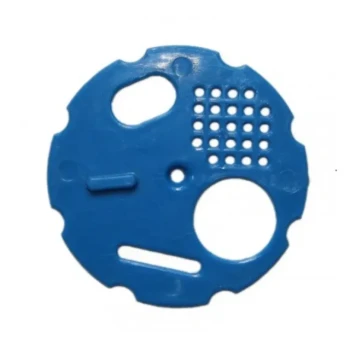
Cypress wood is the superior choice for beehive disc lids primarily due to its distinct biological compatibility with honeybees. Unlike Pine, which releases volatile chemical scents that can trigger a colony to abandon the hive, Cypress provides a neutral, non-intrusive environment that directly supports higher occupancy rates and long-term colony stability.
The preference for Cypress over Pine is not merely a structural choice, but a biological necessity. Honeybees are highly sensitive to olfactory cues; the volatile compounds found in Pine acts as a repellent, whereas Cypress fosters the secure, neutral atmosphere required for a thriving colony.
The Critical Role of Olfactory Compatibility
Honeybee Sensitivity
Honeybees rely heavily on their sense of smell to regulate colony life. They are highly sensitive to the chemical environment within the hive.
The Impact of Material Scents
The materials used in hive construction are never passive; they interact with the colony. If a wood emits strong chemical signals, it interferes with the bees' natural pheromones and communication.
The Risks of Using Pine
Release of Volatile Substances
Pine wood naturally contains resins and sap that release volatile chemical substances.
The Abandonment Phenomenon
These airborne compounds from Pine can be offensive or confusing to honeybees. Consequently, colonies housed in Pine-sealed environments are significantly more likely to abandon the hive entirely in search of a better location.
The Cypress Advantage
Creating a Neutral Environment
Cypress wood is biologically preferred because it is neutral and attractive to bees. It does not off-gas the aggressive volatiles found in Pine.
Ensuring Hive Occupancy
By removing the stress of foreign chemical scents, Cypress helps ensure high hive occupancy rates. It promotes a stable environment where the colony can focus on production rather than relocation.
Understanding the Trade-offs
The Cost of Wrong Materials
A common pitfall in hive manufacturing is selecting wood based on availability or cost rather than biological impact.
Long-Term Viability vs. Short-Term Savings
While Pine may be readily available, using it for sealing applications like disc lids introduces a high risk of colony failure. The trade-off for using the "wrong" wood is not just structural degradation, but the total loss of the bee colony itself.
Making the Right Choice for Your Goal
When selecting materials for beehive components, prioritize biological reception over physical convenience.
- If your primary focus is Colony Retention: Choose Cypress wood to minimize olfactory disruption and maximize the likelihood of the bees staying in the hive.
- If your primary focus is Risk Mitigation: Strictly avoid Pine for internal sealing components to prevent the release of volatile chemicals that trigger abandonment.
Success in beekeeping begins with respect for the biology of the bee; choosing Cypress is a fundamental step toward a stable, productive hive.
Summary Table:
| Feature | Cypress Wood | Pine Wood |
|---|---|---|
| Scent Profile | Neutral and non-intrusive | Releases volatile chemical scents |
| Bee Sensitivity | Compatible with pheromones | Triggers olfactory stress |
| Colony Impact | High occupancy and stability | High risk of hive abandonment |
| Primary Benefit | Biologically preferred environment | Low material cost/high availability |
| Best Use Case | Long-term colony retention | General external construction |
Secure Your Apiary’s Future with HONESTBEE
Choosing the right materials is the difference between a thriving colony and a total loss. At HONESTBEE, we specialize in providing high-quality beekeeping tools and machinery designed with bee biology in mind.
Whether you are a commercial apiary looking for reliable components like Cypress disc lids or a distributor seeking a comprehensive wholesale partner for hive-making and honey-filling machines, we deliver the precision you need. From essential consumables to specialized hardware, we empower your business to achieve maximum productivity and colony health.
Ready to upgrade your equipment and maximize occupancy rates? Contact us today to discuss our wholesale solutions!
References
- Jane E. Francis. EXPERIMENTS WITH AN OLD CERAMIC BEEHIVE. DOI: 10.1111/j.1468-0092.2012.00383.x
This article is also based on technical information from HonestBee Knowledge Base .
Related Products
- Beehive Entrance Discs Plastic Bee Entrance Disc for Bee Hives
- Multi-Functional Rotary Hive Entrance Disc for Beekeeping
- Steel Round Disc Entrance Reducer for Flexzion Bee Hive Nuc Box Gate
- Inner Beehive Cover for Beekeeping Bee Hive Inner Cover
- Acrylic Lid Beekeeping Honey Extractor for Beekeepers
People Also Ask
- What is the best entrance for a bee hive? Maximize Colony Health & Honey Production
- What happens if you block the entrance to a bee hive? Avoid This Dangerous Mistake
- How does entrance configuration vary seasonally for beekeepers? A Guide to Year-Round Hive Health
- Why adjust beehive entrance size for humidity? Boost Honey Ripening and Varroa Control in Commercial Apiaries
- How big should a beehive entrance be? Optimize for Colony Health & Honey Production