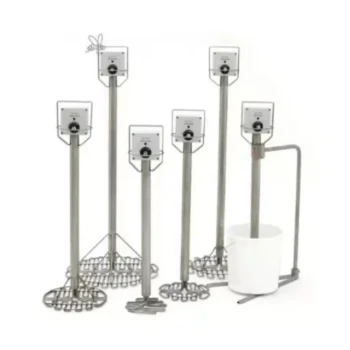
High-precision constant temperature heating equipment is essential for preserving the biological integrity of honey during processing. It maintains a stable thermal environment that prevents the degradation of heat-sensitive enzymes like diastase and invertase, which suffer significant activity loss as temperatures rise between 50°C and 75°C.
Core Insight: Honey is a biologically active substance where the margin between effective processing and quality degradation is microscopic. Precision equipment serves as the critical buffer against thermal stress, ensuring that necessary treatments (like liquefaction) do not inadvertently destroy the product's nutritional value or create toxic byproducts.
Preserving Enzymatic Activity
The Thermal Sensitivity of Enzymes
The primary reason for high-precision heating is the fragility of honey's key enzymes: diastase and invertase.
These enzymes are the markers of "raw" and high-quality honey. Research confirms that their activity drops sharply when exposed to temperatures ranging from 50°C to 75°C.
Eliminating Temperature Gradients
Standard heating methods often create uneven heat distribution, or "hot spots."
High-precision equipment provides a stable and uniform thermal field. This ensures that every milliliter of the sample receives the exact same thermal dose, preventing localized overheating that would denature enzymes in specific portions of the batch.
Ensuring Chemical Safety and Compliance
Controlling HMF Levels
Thermal processing inevitably risks the formation of 5-Hydroxymethylfurfural (HMF), a compound formed by the breakdown of sugars.
High levels of HMF are considered indicators of poor quality or adulteration. Deviations in temperature exceeding just 15°C, or excessive heating duration, significantly increase HMF levels.
Meeting Regulatory Standards
High-precision control limits thermal stress to strict parameters.
This prevents the generation of byproducts with mutagenic and cytotoxic potential. By keeping the process tight, producers ensure the final product complies with international regulatory limits for bee product safety.
Managing Texture and Physical Stability
Inhibiting Fermentation
Industrial-grade thermal treatment requires specific temperatures to inhibit the growth of osmophilic yeasts.
If the temperature is too low, these yeasts survive and cause fermentation, spoiling the honey. Precision ensures the lethal threshold for yeast is met without exceeding the limit that damages the honey.
Controlling Granulation
Precise thermal processing regulates the physical state of the honey.
By carefully managing the moisture content and crystal structure, equipment prevents excessive granulation (crystallization). This ensures the honey remains chemically stable and retains its commercial appeal during storage.
Ensuring Homogeneity
In complex processing, such as creating honey gels with apple pulp or pectin, constant temperature stirring devices are vital.
They facilitate molecular-level blending. This results in a smooth gel matrix and prevents localized overheating, which could lead to excessive Maillard reactions (browning) or nutrient degradation.
Understanding the Trade-offs: Special Applications
High-Temperature Functional Processing
While most honey processing aims to minimize heat, certain industrial applications require high temperatures to alter the chemical structure intentionally.
For example, to induce oxidative polymerization in isomaltose, equipment must maintain temperatures between 180°C and 200°C.
The Risk of Imprecision
At these extreme temperatures, the margin for error is non-existent.
Precision is required to induce the specific chemical changes that promote Granulocyte Colony-Stimulating Factor (G-CSF) secretion. Without exact control, the product would simply burn rather than developing these enhanced functional values.
Making the Right Choice for Your Goal
To select the correct thermal processing strategy, you must define your end-product requirements:
- If your primary focus is Standard Quality Honey: Prioritize equipment that maintains strict uniformity below 50°C to preserve diastase and invertase activity.
- If your primary focus is Regulatory Compliance: Ensure your system has fail-safes to prevent deviations >15°C to keep HMF levels within international safety limits.
- If your primary focus is Functional Food Ingredients: You require industrial-grade systems capable of sustaining extreme temperatures (180°C-200°C) to induce specific chemical polymerization.
Precision heating is not just about applying heat; it is about applying control to preserve the delicate balance between preservation and degradation.
Summary Table:
| Feature | Impact of High-Precision Control | Risk of Poor Control |
|---|---|---|
| Enzymatic Activity | Preserves diastase and invertase (raw honey markers) | Activity loss at 50°C - 75°C |
| Chemical Safety | Limits HMF formation to meet safety standards | Increased HMF and cytotoxic byproducts |
| Texture Control | Uniform liquefaction and inhibited granulation | Localized overheating and crystallization |
| Microbial Safety | Effectively inhibits osmophilic yeasts | Fermentation and product spoilage |
| Functional Processing | Enables specific chemical changes (180°C-200°C) | Product burning and nutrient destruction |
Elevate Your Honey Processing with HONESTBEE
At HONESTBEE, we understand that in professional beekeeping, precision is the difference between a premium harvest and a degraded product. We provide commercial apiaries and distributors with high-performance honey-filling machines, specialized hive-making machinery, and a complete spectrum of beekeeping tools designed to maintain the highest biological standards.
Whether you are scaling your production or seeking reliable industry consumables, our expert team is ready to supply the hardware and expertise you need to succeed. Ensure your honey meets international regulatory standards and retains its nutritional integrity.
🐝 Contact HONESTBEE Today for Wholesale Solutions
References
- Wissam Al-Rubaie. The influence of storage conditions and heating on diastase, invertase activity and hydroxymethylfurfural in Iraqi honey. DOI: 10.52113/mjas04/9.2/32
This article is also based on technical information from HonestBee Knowledge Base .
Related Products
- Professional Thermostatic Conical Honey Melter
- Heavy Duty Stainless Steel Honey Processing Machine Decrystallizing Tank
- Double Wall Honey Heating Stirring Homogenizer Mixing Machine with Various Capacity
- 0.5T Capacity Honey Dehumidifier Dryer with Vacuum Heating and Thickening Filtering Machine
- Electric Double Wall Honey Filtering Machine Purifier Equipment for Honey Processing Plant
People Also Ask
- What is melter honey used for? A Low-Cost Ingredient for Bakers and Brewers
- How does a honey melter address the issue of crystallized honey in storage? Restore Flow and Quality Efficiently
- How do you melt a bucket of honey? Safely Reliquefy Crystallized Honey Without Damage
- When is a honey melter necessary? Optimize Your Facility's Workflow for Crystallized Honey
- How to heat a bucket of honey? Safely Restore Liquid Honey While Preserving Quality