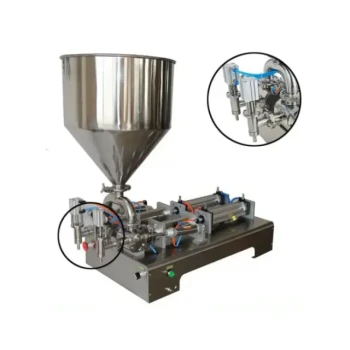
High-precision filling and packaging equipment is the technological prerequisite for transforming bulk honey into a viable commercial product. By utilizing automated weighing or flow-meter technologies, this machinery ensures precise dispensing, leak-free operation, and superior sealing—capabilities that are strictly required to meet the food safety and traceability standards of high-end global markets.
Transforming honey from a raw agricultural ingredient into a high-value retail commodity requires more than just good beekeeping; it demands industrial-grade packaging infrastructure. This equipment provides the necessary airtight seals to prevent spoilage while ensuring the consistency and traceability that premium consumers and regulators demand.
Ensuring Product Integrity and Safety
Preventing Spoilage Through Superior Sealing
Honey is hygroscopic, meaning it naturally absorbs moisture from the air. Specialized packaging equipment ensures airtight sealing, which is critical to preventing moisture ingress.
Without this barrier, honey—particularly varieties like stingless bee honey which already has high water content—is prone to fermentation and spoilage. Automated sealing significantly extends shelf life, allowing the product to survive the logistics of export and retail storage.
Guaranteeing Hygiene and Sterility
High-end markets demand absolute purity. Automated systems eliminate the contamination risks associated with manual bottling.
By executing the filling process in sterile or high-hygiene conditions, these machines prevent secondary contamination. This is a baseline requirement for entering formal retail channels like supermarkets or the hospitality sector.
Standardization and Operational Efficiency
Eliminating Waste and Ensuring Accuracy
Manual filling is inefficient and prone to "give-away" (overfilling) or material loss through dripping. Precision filling machines utilize flow-meter technologies to dispense exact weights consistently.
This eliminates product waste caused by dripping and ensures every unit meets the weight declared on the label. This consistency is vital for maintaining profit margins and complying with Weights and Measures regulations.
Meeting Retail Entry Requirements
Formal retail channels usually require standardized packaging across specific volumes, such as 330ml to 1500ml. Automated equipment facilitates rapid switching between these specifications.
This flexibility allows producers to service different market segments—from small boutique jars to larger family packs—without sacrificing production speed or uniformity.
Unlocking High-Value Markets
Enabling Global Traceability
To participate in global export trade, products must be traceable to their origin. Complementary labeling equipment documents critical data, including geographical indications and bee species origins.
This data does more than satisfy regulators; it validates the product's authenticity. It provides the technical support necessary to market regional honey as a premium, specific commodity rather than a generic bulk sweetener.
Elevating Brand Perception
High-quality packaging is the physical infrastructure of your brand image. A professionally packaged product justifies a premium price point.
Consumers in high-end markets associate precise fill levels, clean labels, and secure seals with quality. This equipment allows beekeepers to convert ecological value into significant economic returns by presenting a polished, shelf-ready product.
Understanding the Trade-offs
Capital Intensity vs. Production Volume
While critical for high-end markets, this equipment represents a significant capital expenditure. The ROI depends heavily on volume; for very small, local apiaries, the cost of high-precision automation may outweigh the efficiency gains.
Complexity and Maintenance
Moving from manual to automated packaging introduces technical complexity. Operators require training to manage flow meters and calibration. If the equipment is not maintained correctly, calibration errors can occur, negating the accuracy benefits the machinery provides.
Making the Right Choice for Your Goal
The decision to invest in high-precision equipment depends on your specific market trajectory.
- If your primary focus is Global Export: You must prioritize equipment with advanced traceability labeling and hermetic sealing capabilities to meet international food safety and customs regulations.
- If your primary focus is Domestic Retail (Supermarkets): Focus on machines that offer flexible volume adjustments (330ml-1500ml) and high-speed flow meters to ensure the standardized consistency retailers require.
Ultimately, high-precision equipment is not just a production tool; it is the gateway that allows raw honey to exit the farm and enter the premium global marketplace.
Summary Table:
| Key Feature | Benefit for Commercialization | Impact on High-End Markets |
|---|---|---|
| Airtight Sealing | Prevents moisture ingress and fermentation | Extends shelf life for global export |
| Flow-Meter Tech | Eliminates overfilling and product waste | Ensures regulatory weight compliance |
| Automated Filling | Minimizes manual contact and contamination | Meets strict food safety/hygiene standards |
| Integrated Labeling | Enables batch and origin tracking | Validates authenticity and brand premium |
| Flexible Specs | Rapid switching between 330ml-1500ml | Services diverse retail segments efficiently |
Scale Your Honey Business with HONESTBEE Precision Solutions
Transitioning from raw beekeeping to high-end retail requires industrial-grade reliability. HONESTBEE empowers commercial apiaries and distributors with the specialized infrastructure needed to dominate the global market.
Our comprehensive wholesale portfolio includes:
- Advanced Machinery: High-precision honey-filling and specialized hive-making machines.
- Quality Tools: A full spectrum of beekeeping hardware and equipment.
- Industry Consumables: Essential supplies for seamless daily operations.
- Cultural Merchandise: Honey-themed goods to diversify your brand.
Let us help you convert ecological value into economic success. Contact HONESTBEE today to equip your facility with the tools for premium commercialization!
References
- T. Senchuk, Vitaliia Didenko. SUSTAINABLE DEVELOPMENT OF THE UKRAINIAN BEEKEEPING INDUSTRY. DOI: 10.30525/2256-0742/2022-8-5-170-175
This article is also based on technical information from HonestBee Knowledge Base .
Related Products
- Precision Durable Efficient HONESTBEE Rotary Honey Filling Machine
- Commercial Rotary Honey Filling Machine for Production
- Precision Automated Packaging Turntable Honey Spoon Filling Sealing Packing Machine
- Double Nozzle Small Honey Filling Machine Honey Sachet Packing Packaging Equipment
- Fully Automatic Honey Filling Packaging Machine for Processing Line
People Also Ask
- What are the common types of bottling machines used for honey? Choosing the Right Solution for Your Apiary
- What is a key feature of the new generation of the honey filling machine? The Advanced Electronic Control Unit
- How do honey filling and processing machines aid native bee product conservation? Boost Value with HONESTBEE Technology
- How do high-precision honey filling machines ensure quality? Optimize Your Commercial Production with HONESTBEE
- What quality control role does professional honey filling equipment perform? Ensure Consistency and Product Stability