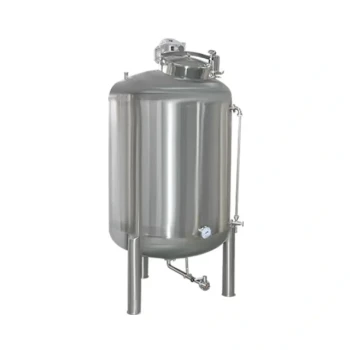
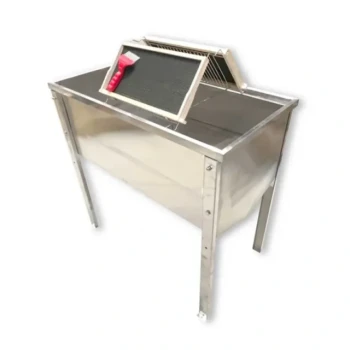
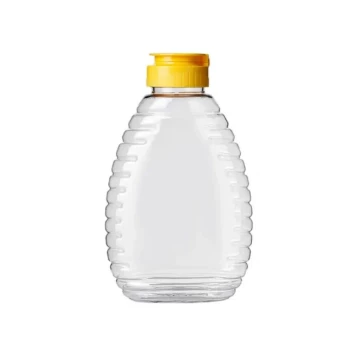
Allowing honey to settle is a critical mechanical refinement step that ensures a professional-grade finish. By letting honey rest in large collection containers—typically overnight—producers utilize natural gravity and buoyancy to separate unwanted elements from the pure liquid. This passive process clarifies the honey, ensuring the final packaged product is free from visual defects that could deter consumers.
Core Insight: The settling process leverages natural buoyancy to purge honey of trapped air and fine particulates. This simple gravity-based filtration creates a visually clear, high-quality product by allowing impurities to form a skimmable layer at the surface.
The Mechanics of Natural Refinement
Utilizing Buoyancy and Sedimentation
The primary purpose of the settling tank is to allow physics to do the work of filtration. Honey is dense, but air bubbles and organic debris are generally lighter.
During the resting period, these lighter elements slowly migrate upward. This is essential because mechanical extraction often whips significant amounts of air into the honey, which can cause cloudiness if bottled immediately.
Formation of the "Scum" Layer
As the honey sits, fine air bubbles, wax particles, and other tiny impurities congregate at the very top of the container.
This accumulation forms a distinct foam or "scum" layer. Because this layer is isolated at the surface, it can be easily skimmed off in one piece, leaving the bulk of the honey below pristine and ready for packaging.
Achieving Visual Clarity
For liquid honey, clarity is a key indicator of quality for the consumer.
Bypassing the settling stage results in suspended bubbles that make the honey look hazy or unfiltered. A proper settle ensures the honey in the jar is transparent and vibrant.
Operational Considerations and Trade-offs
Preventing Moisture Absorption
While settling is necessary for clarity, the honey must be protected during this time. Honey is hygroscopic, meaning it naturally attracts and absorbs moisture from the air.
If the settling container is not airtight or the room is humid, the honey's water content may rise. This can degrade quality and eventually lead to fermentation and spoilage.
Hygiene and Contamination Risks
Large settling tanks must be meticulously cleaned and constructed of food-grade materials.
Because the honey is sitting static, any introduction of bacteria or foreign matter during this stage can contaminate the entire batch. Using sterilized, airtight containers prevents external microbial contamination during this vulnerable holding period.
Timing and Temperature
Settling is a balance between viscosity and time.
If the honey is too cold, it will be too thick for bubbles to rise effectively. However, applying too much heat to lower viscosity can damage the honey’s enzymes and flavor profile.
Ensuring Quality in the Final Pack
If your primary focus is Visual Appeal:
Ensure you allow a minimum overnight settling period to let all micro-bubbles rise, then meticulously skim the surface foam before opening the bottom valve to bottle.
If your primary focus is Shelf Stability:
Utilize airtight lids on your settling tanks to prevent the honey from absorbing atmospheric moisture, which guards against fermentation during storage.
By respecting the settling phase, you transform raw extraction into a refined, stable product that meets high market standards.
Summary Table:
| Key Factor | Benefit to Honey Quality | Mechanism Involved |
|---|---|---|
| Buoyancy | Removes air bubbles and wax particles | Lighter impurities rise to the surface for easy skimming. |
| Gravity | Ensures visual transparency | Eliminates haziness caused by suspended mechanical debris. |
| Air-Tight Sealing | Prevents fermentation | Blocks moisture absorption (hygroscopy) during the resting period. |
| Temperature Control | Faster refinement | Lowers viscosity to allow faster movement of particles without damaging enzymes. |
Elevate Your Honey Production with HONESTBEE Professional Equipment
Transitioning from raw extraction to market-ready honey requires precision. HONESTBEE empowers commercial apiaries and distributors with the high-capacity machinery and essential consumables needed to scale operations effectively. From industrial-grade settling tanks and honey-filling machines to specialized hive-making hardware and honey-themed cultural merchandise, we provide the full spectrum of tools to refine your harvest.
Maximize your apiary's efficiency and product appeal—Contact HONESTBEE Today to explore our wholesale solutions!
References
- A. Adekunle, Oluwatosin Emmanuel Obembe. PARTICIPATORY ASSESSMENT OF HONEY EXTRACTION METHODS IN THE SAVANNA BELT OF NIGERIA. DOI: 10.1081/fri-120014689
This article is also based on technical information from HonestBee Knowledge Base .
Related Products
- Stainless Steel Honey Storage and Settling Tank with Double Strainer
- Heavy Duty Stainless Steel Honey Processing Machine Decrystallizing Tank
- Stainless Steel Honey Storage Tank with Lid for Honey
- Professional Honey Storage Tank with Agitation System
- Stainless Steel Uncapping Tank with Stand and Strainer
People Also Ask
- What economic role do honey storage tanks play? Boost Your Revenue Through Strategic Inventory Management
- What roles do industrial honey storage tanks and filtration meshes play in processing? Ensure Purity & Consistency
- What is the purpose of a honey storage tank? Streamline Your Honey Processing for Quality & Efficiency
- What role do settling tanks play in honey production? Achieve Pure, High-Clarity Honey Naturally
- Why are large settling tanks used in the honey clarification process? Achieve Natural Purity & Batch Consistency