The application of dry heat sterilization or gamma radiation is a critical protocol designed to rigorously eliminate environmental microorganisms that adhere to harvesting and processing tools. This step is necessary to prevent external contamination from skewing the results of scientific studies regarding honey's natural characteristics.
Core Insight By completely neutralizing external contaminants on tools, these sterilization methods ensure that any biological activity or chemical byproducts observed in honey—such as specific amino acids—are the direct result of the honey's internal ecosystem (specifically sugar-tolerant yeasts) rather than accidental environmental pollution.
Preserving Experimental Integrity
When the goal is to study the natural properties of honey, standard cleaning methods are insufficient.
Controlling Experimental Variables
In scientific research, the introduction of a single foreign variable can invalidate an entire study.
Tools used for harvesting and processing are potential carriers of environmental microorganisms.
Applying dry heat or gamma radiation provides a level of sterility that strictly controls these variables.
Isolating Internal Microorganisms
Honey possesses a unique internal ecosystem driven by sugar-tolerant yeasts.
Researchers need to observe how these specific yeasts behave and ferment naturally.
Sterilization ensures that the fermentation observed is intrinsic to the honey, not a reaction caused by foreign bacteria introduced by a spatula or extractor.
Validating Chemical Analysis
The fermentation process produces specific chemical markers, such as free amino acids.
To accurately attribute these amino acids to the honey's natural fermentation, the processing environment must be sterile.
If tools are not treated with radiation or dry heat, researchers cannot prove whether the chemical profile is a result of the honey itself or external contamination.
Ensuring Industrial Purity
While the primary driver for such rigorous methods is often research, the principles apply to high-level industrial processing standards.
Managing Critical Risk Nodes
In the context of HACCP (Hazard Analysis and Critical Control Points), machinery is identified as a critical risk node.
Extraction and bottling equipment come into direct contact with the product.
Sterilization acts as a firewall at these specific nodes.
Preventing Cross-Contamination
Honey moves through a long transition from the apiary to the final bottle.
Sterilizing equipment prevents residues and impurities from accumulating and transferring between batches.
This maintains the purity and safety of the final commercial product.
Understanding the Trade-offs
While effective, these sterilization methods introduce logistical and material challenges that must be managed.
Accessibility and Cost
Gamma radiation requires specialized facilities and is generally not accessible for small-scale producers.
It is a high-cost solution reserved for strict research environments or large-scale industrial sterilization.
Material Compatibility
Dry heat sterilization requires subjecting tools to high temperatures for extended periods.
Not all processing equipment can withstand this heat without warping or degrading.
Operators must select tools made of heat-resistant materials, such as high-grade stainless steel or borosilicate glass.
Making the Right Choice for Your Goal
The necessity of these methods depends entirely on your objective.
- If your primary focus is Scientific Research: You must use dry heat or gamma radiation to guarantee that fermentation data is statistically valid and attributable to the honey's internal biology.
- If your primary focus is Commercial Production: You should focus on HACCP-compliant sterilization to prevent residue buildup and ensure consumer safety at critical processing nodes.
Rigorous sterilization transforms honey processing from a mechanical task into a controlled scientific environment.
Summary Table:
| Sterilization Method | Primary Application | Key Advantage | Major Constraint |
|---|---|---|---|
| Dry Heat | Lab Tools & Hardware | High efficacy for heat-resistant materials | Risk of material warping/degradation |
| Gamma Radiation | Large-scale & Scientific | Penetrative sterilization without heat | High cost; requires specialized facilities |
| HACCP Protocol | Commercial Processing | Systematic risk management | Requires constant monitoring & documentation |
Elevate Your Beekeeping Standards with HONESTBEE
At HONESTBEE, we understand that maintaining the purity of honey—from the apiary to the final bottle—is paramount for both commercial success and scientific integrity. We provide a comprehensive wholesale offering of professional-grade beekeeping tools, advanced honey-filling machinery, and essential consumables designed to meet the rigorous demands of commercial apiaries and distributors worldwide.
Whether you need heat-resistant extraction hardware or specialized equipment for large-scale production, our portfolio is built to support your growth. Contact us today to discover how our premium equipment and industry expertise can streamline your operations and ensure the highest product quality for your customers.
References
- Junichi Takahashi. Composition of Free Amino Acids in Fermented Honey, an Untapped Resource from Japanese Honeybees. DOI: 10.4327/jsnfs.75.113
This article is also based on technical information from HonestBee Knowledge Base .
Related Products
- Professional Plastic Honey Dipper for Easy Honey Drizzling
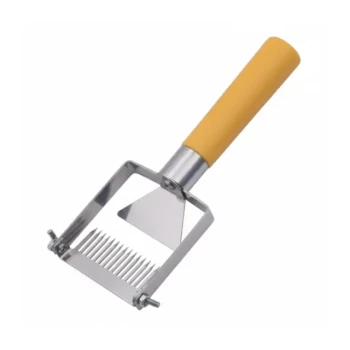
- Adjustable Stainless Steel Honey Uncapping Fork with Plastic Handle for Beekeeping
- All-Stainless Steel Pivoting Honey Uncapping Fork for Beekeeping
- Stainless Steel Pivoting Honey Uncapping Fork with Plastic Handle
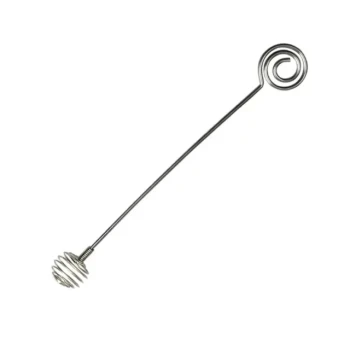
- Modern Stainless Steel Honey Dipper Stirrer
People Also Ask
- What is a honey dipper and what is it used for? A Guide to Mess-Free Drizzling
- What is a honey taking spoon called? Discover the Tool for a Perfect, Mess-Free Drizzle
- What is a honey dipper? Master the Art of the Perfect Drizzle with This Essential Tool
- What is the proper method for cleaning a honey dipper? Maintain Pure Flavor with These Easy Pro Tips
- How do you clean and store a honey dipper? Simple Steps for Long-Lasting Performance