High-speed grinding acts as a critical mechanical catalyst to overcome the naturally resistant physical properties of propolis. Because propolis is a complex, high-viscosity resin with non-uniform density, standard processing fails to expose enough surface area to the solvent. By homogenizing the material into a fine powder, you mechanically disrupt the dense structure, ensuring that solvents can effectively access and extract bioactive compounds.
The core challenge of propolis solubility is that its resinous, waxy structure physically encapsulates active ingredients. High-speed homogenization is not merely about making particles smaller; it is about shattering this protective matrix to allow solvents like honey, syrup, or ethanol to penetrate fully and release compounds like p-coumaric acid.
The Physical Mechanics of Solubility
Overcoming High Viscosity and Density
Raw propolis is inherently dense and viscous, properties that naturally resist liquid penetration. In its solid or chunky form, the material presents a formidable barrier to solvents.
High-speed equipment converts this non-uniform substance into a consistent, fine powder. This drastic reduction in particle size creates a massive increase in the contact surface area available to the solvent.
Disrupting Structural Encapsulation
Propolis is composed of resins and waxes that form a "physical encapsulation" around its bioactive components.
Mechanical grinding effectively breaks down this dense physical structure. By disrupting the resinous matrix, you expose the internal material that was previously locked away from the solvent.
Chemical Implications for Experiments
Maximizing Bioactive Diffusion
For solubility experiments—particularly those simulating a beehive environment—the goal is the uniform release of specific markers, such as p-coumaric acid.
Without homogenization, the release of these compounds is slow and uneven. Fine powder ensures that diffusion occurs fully and uniformly during the incubation process.
Enhancing Solvent Penetration
Whether using honey, syrup, or ethanol, the solvent requires access to the core of the material to function effectively.
The homogenized powder allows the solvent to penetrate thoroughly rather than just washing over the surface. This deep penetration is a prerequisite for high-efficiency extraction of flavonoids and polyphenolic compounds.
Understanding the Trade-offs
Managing Frictional Heat
While high-speed processing is necessary, it introduces energy in the form of friction.
Propolis is sensitive to heat and can become sticky or "gummy" if the temperature rises during grinding. This can cause the powder to re-clump, negating the benefits of the surface area increase.
The Necessity of Brittleness
To counter the natural stickiness of propolis, specific conditions (often low temperature) are required to make the material brittle.
If the equipment does not manage the physical state of the propolis effectively, you may fail to achieve the target particle size (e.g., 50-60 microns), resulting in suboptimal dissolution data.
Making the Right Choice for Your Goal
To ensure your solubility experiments yield accurate and reproducible data, consider the following:
- If your primary focus is Extraction Efficiency: Prioritize equipment that guarantees a particle size of 50-60 microns to maximize surface area and solvent contact.
- If your primary focus is Bioactive Stability: Ensure your grinding process minimizes heat generation to prevent the propolis from reverting to a sticky, impermeable resinous state.
Effective propolis experimentation relies on transforming a stubborn, protective resin into a receptive, uniform powder.
Summary Table:
| Factor | Impact on Propolis Solubility | Why High-Speed Equipment is Necessary |
|---|---|---|
| Surface Area | Low in raw state | Increases contact area for faster solvent penetration. |
| Physical Matrix | Dense resin/wax encapsulation | Shatters the protective matrix to release p-coumaric acid. |
| Particle Size | Non-uniform chunks | Achieves 50-60 microns for consistent, reproducible data. |
| Bioactive Release | Slow and uneven | Ensures uniform diffusion of flavonoids and polyphenols. |
| Heat Control | Risk of stickiness/clumping | High-speed processing must manage friction to maintain brittleness. |
Scale Your Propolis Processing with HONESTBEE
Are you looking to optimize your commercial propolis processing or expand your beekeeping operations? At HONESTBEE, we specialize in empowering commercial apiaries and distributors with the high-performance tools and machinery needed for professional-grade production. From specialized hive-making machinery to advanced honey-filling and processing equipment, we provide the full spectrum of industrial solutions.
Our comprehensive wholesale offering includes everything from essential beekeeping hardware to unique honey-themed cultural merchandise. Partner with us to enhance your production efficiency and product quality.
Ready to upgrade your apiary or distribution business? Contact our expert team today to explore our complete equipment catalog and find the perfect fit for your needs.
References
- Petra Urajová, Alena Krejčı́. Propolis as a Key Source of <em>p</em>-Coumaric Acid Permeating Honey and Sucrose Syrup Stores of Honey Bees. DOI: 10.20944/preprints202510.0563.v1
This article is also based on technical information from HonestBee Knowledge Base .
Related Products
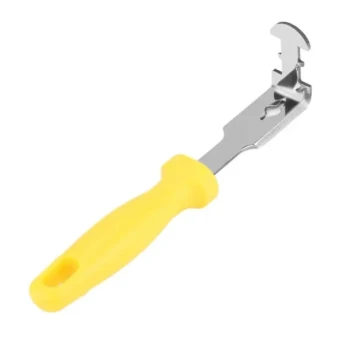
- Heavy Duty Stainless Steel Frame Cleaner with Plastic Handle
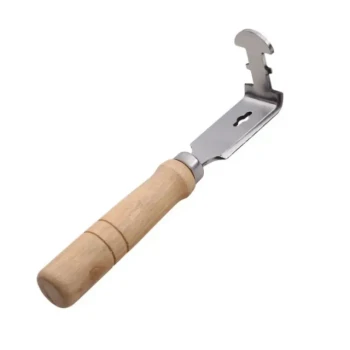
- Professional Stainless Steel Frame Cleaner with Ergonomic Wood Handle
- 8 Frame and 10 Frame Propolis Trap Collector Screen for Propolis Collection
People Also Ask
- What tools are used for cleaning frames? A Beekeeper's Simple 4-Tool Guide
- What are the physical characteristics of the frame cleaning tool? Durable Wood Design for Effective Hive Maintenance
- What is the purpose of the frame cleaning tool? A Precision Tool for Efficient Frame Maintenance
- In what specific situation is the frame cleaning tool particularly useful? Master Cut Comb Maintenance
- What is the function of the frame cleaning tool in beekeeping? Streamline Your Apiary Hygiene and Maintenance