The necessity of using sealed plastic bags stems from the critical need to create a physical barrier around honey-containing frames immediately after extraction.
This barrier serves a singular, vital purpose: preventing cross-contamination from external pollen sources during transportation and storage, which would compromise scientific analysis.
To determine the true botanical origin of honey, the sample must remain physically distinct from its environment. Sealed packaging isolates the frame, ensuring that the pollen profile analyzed in the lab matches the specific flowering period of the harvest, rather than the environment encountered during transport.
The Science of Sample Isolation
To understand why this step is non-negotiable, you must look at the requirements of melissopalynological analysis (the study of pollen in honey).
Preventing Pollen Intrusion
During the transport of frames, they are often moved through environments containing various active plant species.
Without a sealed barrier, airborne pollen from non-target plants can settle on the sticky surface of the honey or comb.
Sealing the frame guarantees that the sample remains isolated from these external "pollutants."
Preserving Specific Flowering Periods
In agricultural research, you are often targeting a specific crop, such as the Satsuma mandarin.
The goal is to analyze the honey produced during that specific peak flowering season.
Plastic bags prevent the mixing of pollen from earlier or later flowering periods, preserving a snapshot of that specific timeframe.
Ensuring Analytical Accuracy
The laboratory results are only as good as the sampling hygiene.
If external pollen is introduced during transport, the analysis will show a "mixed" botanical origin.
This false data renders the sample useless for certifying single-origin honey batches.
Common Pitfalls in Packaging Logistics
It is easy to conflate different beekeeping protocols. However, the requirements for transporting honey frames are fundamentally different from other apiary tasks.
Honey Frames vs. Live Specimens
A common error is applying the protocols for live bees to honey samples.
As noted in standard practices, live honeybees require ventilated packaging and humidity (moistened sponges) to survive transport stress.
However, applying this "aeration" logic to honey frames is a mistake.
The Danger of Air Exposure
While air is vital for the survival of the bee, it is a contaminant vector for the honey frame.
Using ventilated boxes for frames allows for the intrusion of dust, debris, and foreign pollen.
Always separate your logistics: seal the honey, ventilate the bees.
Making the Right Choice for Your Goal
To ensure your data is valid, you must match your packaging method to the specific material you are transporting.
- If your primary focus is determining botanical origin: Use sealed plastic bags to create an impermeable barrier against environmental pollen contamination.
- If your primary focus is transporting live bees: Use ventilated boxes with moistened sponges to ensure respiration and humidity regulation.
The integrity of your research depends on this strict separation of sampling protocols.
Summary Table:
| Factor | Sealed Plastic Bags (Honey Frames) | Ventilated Packaging (Live Bees) |
|---|---|---|
| Primary Goal | Prevent pollen cross-contamination | Ensure survival and respiration |
| Barrier Effect | Complete isolation from environment | Allows airflow and humidity exchange |
| Data Integrity | Preserves single-origin pollen profile | Not applicable |
| Recommended Use | Melissopalynological analysis | Transporting live specimens |
Elevate Your Apiary Operations with HONESTBEE
Maintaining the integrity of your honey harvest starts with the right tools. At HONESTBEE, we specialize in supporting commercial apiaries and distributors with a comprehensive range of professional beekeeping solutions. Whether you need high-precision honey-filling machines, specialized hive-making machinery, or essential industry consumables, our portfolio is designed to enhance your efficiency and product quality.
From hardware to honey-themed cultural merchandise, we provide the wholesale expertise you need to scale your business. Contact us today to discover how our premium equipment and tailored supply chain can drive your success in the competitive beekeeping market.
References
- Saša Prđun, Lidija Svečnjak. Physico-chemical, melissopalynological and sensory characteristics of Satsuma mandarin honey (Citrus unshiu Marc.). DOI: 10.5513/jcea01/21.2.2787
This article is also based on technical information from HonestBee Knowledge Base .
Related Products
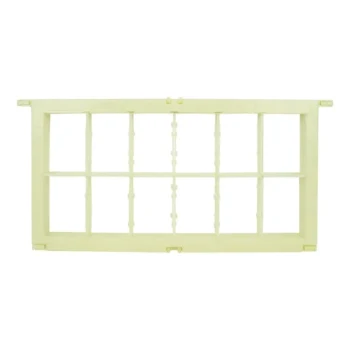
- Plastic Honey Comb Frames Cassette Box for Honey
- Conical Nylon Honey Strainer Filter Bag for Beekeeping and Honey Filtration
- Food Grade Plastic Honey Bucket Pail for Beekeeping
- Hexagonal Glass Honey Jars with Metal Lug Caps Elegant Versatile Packaging
- Squeezable No-Drip Beehive-Shaped Honey Jars with Flip-Top Cap
People Also Ask
- How are honeybee combs utilized for non-destructive colony monitoring? Master Population Density Tracking
- What is the significance of sampling honeycomb frames and hive bottoms? A Guide to Scientific Sanitation Monitoring
- What is a honeycomb frame? The Key to Modern, Sustainable Beekeeping
- What is the technical purpose of exchanging honeycomb frames? Master Apiary Equalization for Growth
- What frame to use for honeycomb? Choose the Right System for Pure, Edible Comb