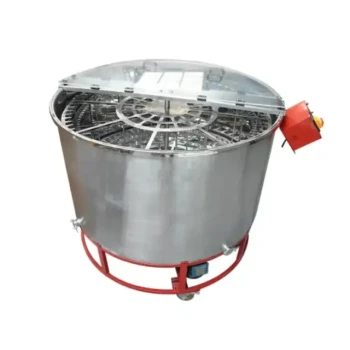
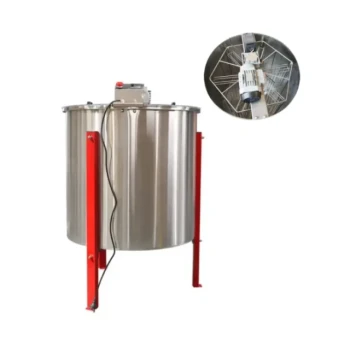
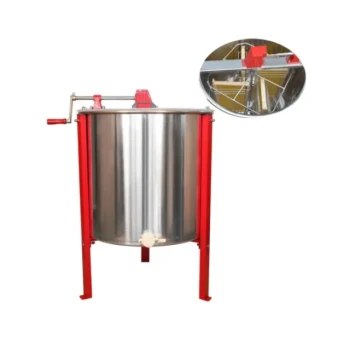
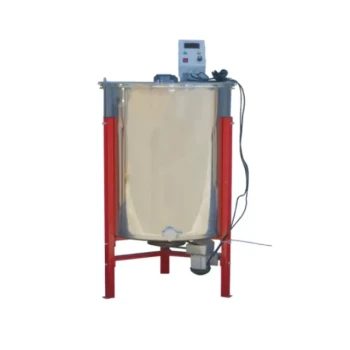
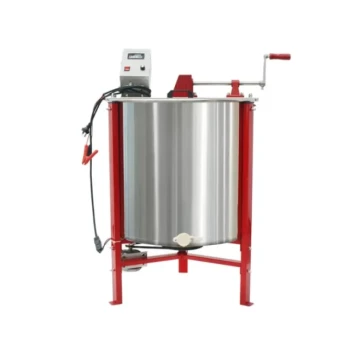
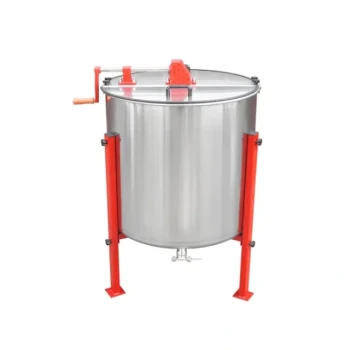
Verifying frame dimensions is the single most critical step in selecting a honey extractor because compatibility is not universal across all equipment. If your specific frames—particularly deep or non-standard sizes—do not fit the extractor’s basket physically, you cannot achieve efficient honey removal and risk causing significant damage to both your harvest and the machine during high-speed rotation.
Compatibility is not guaranteed by frame count alone; you must confirm that the extractor's basket dimensions accommodate the specific height and width of your hive frames. A mismatch in sizing leads to mechanical instability, inefficient extraction, and potential equipment failure.
The Mechanics of Compatibility
Physical Fit and Clearance
The primary function of an extractor relies on the frames sitting securely within a spinning basket. Not all extractors accept every frame type.
You must ensure the basket provides enough depth and width so the frames fit without forcing, allowing the mechanism to spin freely.
The Challenge of Deep Frames
Beekeepers utilizing deep frames face the highest risk of incompatibility. Many standard or smaller extractors are designed only for medium or shallow frames.
If a deep frame is inserted into an undersized basket, it may protrude, preventing the lid from closing or striking the interior tank wall during operation.
The Consequences of Incorrect Sizing
Operational Imbalance
A honey extractor acts as a centrifuge, and it must be perfectly balanced to operate safely.
If frames do not fit the dimensions of the basket precisely, the weight distribution will be uneven. This causes the machine to become unsteady and shaky, making the extraction process difficult and loud.
Compromised Speed and Efficiency
When a machine is unbalanced due to poor frame fit, the operator is often forced to run the extractor at significantly lower speeds to maintain control.
Low speeds result in incomplete honey removal, wasting your harvest. In severe cases, the operator may have to physically hold the unit down to prevent it from "walking" across the floor.
Risk of Mechanical Failure
Severe imbalance caused by ill-fitting frames puts excessive stress on the extractor's central shaft and bearings.
The supplementary data indicates that if the imbalance is acute, the extractor can actually fall over or sustain permanent mechanical damage. This renders the investment useless and creates a safety hazard in your workspace.
Common Pitfalls to Avoid
Assuming "Standard" is Universal
A common mistake is assuming that because a frame is a "standard" Langstroth deep, it will fit any "standard" extractor.
Manufacturers vary in their basket designs. Always compare the specific measurements of your frames against the manufacturer's basket specifications, not just the generic product title.
Ignoring the "Wiggle Room"
While frames must fit, they should not be loose enough to shift violently during rotation.
Excessive space can lead to the same balance issues as frames that are too large. The goal is a fit that is secure enough to maintain the center of gravity while the basket spins.
Making the Right Choice for Your Goal
To ensure a successful purchase, match your equipment needs to your specific apiary setup:
- If your primary focus is using Deep Frames: You must verify that the extractor’s tank depth and basket height are explicitly rated for deep frames to prevent physical obstruction.
- If your primary focus is smooth, hands-free operation: You must ensure the frame dimensions match the basket snugly to maintain the necessary weight balance for high-speed spinning without wobbling.
Precise measurement of your frames prior to purchase is the only way to guarantee a safe, efficient, and damage-free honey harvest.
Summary Table:
| Factor | Impact of Correct Sizing | Risk of Incorrect Sizing |
|---|---|---|
| Physical Fit | Secure placement & free rotation | Protrusion, lid issues, & frame damage |
| Machine Balance | Smooth, quiet, & stable operation | Intense vibration, shaking, & "walking" |
| Extraction Speed | High-speed, maximum honey yield | Low-speed limits & incomplete harvest |
| Mechanical Longevity | Protects central shaft & bearings | Shaft warping & permanent motor failure |
Optimize Your Apiary with Professional-Grade Equipment
Don't let equipment mismatch hinder your honey production. HONESTBEE specializes in serving commercial apiaries and distributors with high-performance, precision-engineered beekeeping machinery. Whether you need specialized honey-filling machines, industrial-scale honey extractors, or custom hive-making equipment, we provide the technical expertise to ensure your tools match your specific frame dimensions perfectly.
Maximize your yield and protect your investment today.
Contact HONESTBEE for Wholesale Solutions
Related Products
- HONESTBEE 72 Frame Industrial Electric Honey Extractor for Beekeeping
- Commercial Electric 12 Frame Honey Extractor Spinner Motorized Honey Extractor
- HONESTBEE 6 Frame Self Reversing Electric Honey Extractor for Beekeeping
- HONESTBEE 3-Frame Manual Acrylic Honey Extractor
- Stainless Steel Manual 8 Frame Radial Honey Extractor Machine for Beehives
People Also Ask
- What is the importance of balancing honeycomb frames within a honey extractor? Ensure Stability and Protect Machinery
- How is honey separated from the frames after they are uncapped? Efficient Extraction Methods for High Yields
- What are the main benefits of using a honey extractor? Maximize Yields and Protect Your Honeycomb
- What are the recommended methods for removing honey from the honeycomb? Top Extraction Techniques for Maximum Efficiency
- How do manual honey extractors compare to electric honey extractors? Choosing the Right Tool for Your Apiary Growth