Precise bee space is essential because it determines whether a hive remains functional, maintainable, and compatible with standard equipment. The accepted clearance is approximately 1/4 to 3/8 inch (6 to 9.5 mm) between frames, hive walls, covers, and other internal components. Gaps below this range encourage propolis buildup, while larger gaps lead to burr or brace comb, causing components to stick together and complicating inspections, harvesting, and routine hive management.
Bee space is a manufacturing specification, not a minor detail. Consistent internal clearances preserve free-moving frames, prevent unwanted comb and propolis, protect bees during handling, and ensure that hive components remain modular and interchangeable.
Why Bee Space Matters in Hive Design
It Prevents Propolis and Burr Comb
Honeybees naturally fill spaces that fall outside their preferred working clearance. When a gap is too narrow, they seal it with propolis, a sticky resin used to close and protect openings.
When a gap is too wide, bees typically build burr comb or brace comb to fill the excess space. This unwanted wax can connect frames to one another or attach them to hive walls and covers.
It Preserves Straight, Usable Comb
Correct spacing helps bees construct comb in predictable locations and maintain orderly frame alignment. That is particularly important in framed hive systems, where straight comb supports efficient inspection, extraction, and reuse.
Incorrect dimensions can allow comb to extend into neighboring spaces. Over time, this reduces the practical value of standardized frames and increases the likelihood of comb damage during removal.
It Supports Safe Frame Handling
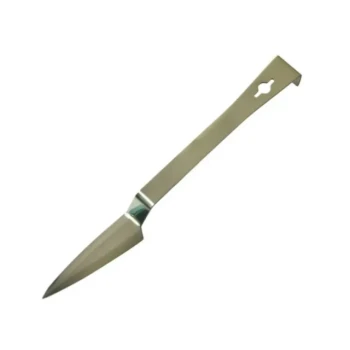
Frames must be removable with a standard hive tool without crushing bees or tearing delicate comb. Precise bee space provides enough clearance for manipulation while limiting the empty space bees might otherwise fill.
This directly affects inspection quality. Beekeepers can remove individual frames, assess colony condition, and return equipment without unnecessarily disrupting the hive structure.
The Manufacturing Requirements Behind Reliable Bee Space
Dimensional Accuracy Must Be Consistent
Bee space depends on the relationship between multiple parts, including frame dimensions, rabbet depth, side clearances, box dimensions, inner covers, and queen excluders. A component can be accurately made in isolation but still create incorrect spacing when assembled with another part.
Manufacturers therefore need controlled dimensions across the complete hive system, not just acceptable measurements for individual pieces.
Tolerances Must Account for Assembly
Wooden hive components can vary because of material movement, machining accuracy, and assembly quality. Manufacturing processes should establish suitable tolerances so that the assembled hive remains within the functional bee-space range.
Quality control is especially important for high-volume production, where small dimensional errors can be repeated across entire product batches.
Standardization Protects Interchangeability
Commercial beekeepers and distributors depend on components that work across compatible hive bodies, supers, frames, covers, and accessories. Consistent bee space allows equipment to be stacked, replaced, expanded, and serviced without creating new spacing problems.
For wholesalers and B2B resellers, this makes standardized production a commercial advantage. Customers can purchase replacement or expansion components with greater confidence that they will integrate into existing operations.
Modular Hives Must Remain Separable
Proper bee space prevents bees from permanently bonding adjacent hive sections with excessive wax or propolis. Hive bodies and supers can therefore be separated during inspections, transport, and honey harvesting.
This modularity is central to the Langstroth-style operating model and is a key reason dimensional consistency matters throughout the product range.
Operational and Commercial Impact
It Reduces Inspection Labor
Frames that remain movable require less force, less scraping, and less corrective work during inspections. This reduces handling time for individual beekeepers and becomes increasingly valuable in commercial apiaries managing large numbers of colonies.
Efficient frame access also helps preserve comb, reducing the need to repair or replace damaged equipment.
It Protects Colony Management
Incorrect spacing increases the risk of crushing bees when frames are forced apart or returned to the hive. It can also damage comb containing brood, pollen, or stored honey.
Accurate equipment supports smoother manipulation and helps beekeepers maintain the hive with less unnecessary disturbance.
It Improves Product Reliability
A hive component that meets its nominal dimensions but fails during assembly is not a reliable commercial product. Bee-space accuracy should therefore be treated as part of product performance, alongside material quality, finish, durability, and packaging.
For distributors and resellers, reliable dimensional compatibility reduces complaints, returns, installation issues, and uncertainty when supplying repeat customers.
Understanding the Trade-offs
Tighter Is Not Always Better
Reducing a clearance below the functional bee-space range does not create a more efficient hive. It encourages propolis sealing and can make frames difficult to remove without damaging bees or comb.
Designers should preserve the specified clearance rather than pursuing the smallest possible internal gap.
Larger Gaps Create Their Own Problems
Extra space is not harmless. Gaps above approximately 3/8 inch encourage bees to build burr or brace comb, which can bind frames and connect removable parts.
This can increase labor during inspections and honey extraction while creating inconsistent comb that is difficult to manage.
Nominal Dimensions Need Practical Verification
Relying only on drawings or individual part measurements can miss problems caused by assembly relationships. Finished products should be checked at relevant contact points and, where practical, evaluated as assembled units.
Verification should cover frames, boxes, covers, and accessories that are intended to function together.
Bee Space Is Not a Substitute for Overall Quality
Correct clearance cannot compensate for warped timber, poor joints, rough surfaces, weak fasteners, or inadequate moisture control. Bee space is one critical requirement within a broader woodenware quality system.
A dependable supplier must combine dimensional control with durable materials, consistent finishing, responsive service, and reliable order fulfillment.
Making the Right Choice for Your Goal
The most effective sourcing decision connects bee-space accuracy with the operational needs of the customer.
- If your primary focus is product reliability: Choose manufacturers with documented dimensional controls and consistent specifications across complete hive systems.
- If your primary focus is commercial apiary efficiency: Prioritize frames, boxes, covers, and excluders that preserve free movement and reduce inspection labor.
- If your primary focus is distribution and resale: Source a compatible full-spectrum product portfolio so customers can expand or replace equipment without creating spacing conflicts.
- If your primary focus is rapid order fulfillment: Work with suppliers that combine standardized production, responsive customer service, and dependable inventory or delivery processes.
Precise bee space keeps beehive equipment functional, interchangeable, and efficient from manufacturing through daily colony management.
Summary Table:
| Aspect | Importance |
|---|---|
| Prevents Propolis & Burr Comb | Correct spacing avoids sticky resins and unwanted wax, keeping equipment clean and functional. |
| Preserves Straight Comb | Ensures predictable comb construction and easy frame removal without damage. |
| Supports Safe Handling | Minimizes bee crushing and comb damage during inspections. |
| Manufacturing Accuracy | Consistent dimensions across components ensure assembly within functional range. |
| Standardization | Interchangeable parts for commercial apiaries and distributors. |
| Operational Efficiency | Reduces inspection labor and enhances colony management. |
Ensure your beekeeping operations run smoothly with HONESTBEE's precision-crafted hive components. Our full-spectrum portfolio, including beehive boxes, frames, and accessories, is designed to meet exact bee-space standards for reliable performance. Benefit from our rapid response, dedicated support, and ultra-fast delivery. For distributors, we offer competitive margins, OEM/ODM services, and certified quality, ensuring supply reliability. Contact us today to elevate your apiary efficiency.
Related Products
- Durable Plastic Frame Spacer
- Ergonomic Plastic Frame Spacer Tool for Rapid Hive Management Beekeeping
- Metal Bee Hive Stand Bee Box Stand for Beekeeping
- Wooden Bee Hive Frames for Beekeeping and Wholesale
- Assembled Wooden Bee Frames with Plastic Foundation for Durability and Convenience by HONESTBEE
People Also Ask
- Are plastic bee hive frames good? A Guide to Modern Durability vs. Natural Appeal
- Are plastic bee frames good? A Guide to Durability, Efficiency & Bee Acceptance
- What are the advantages of using Standard Langstroth 10-frame equipment? Scale Your Commercial Apiary Efficiency
- How do you clean plastic frames? A Gentle Guide to Preserving Your Frames
- How must plastic frames be prepared for bees? Expert Tips for 100% Acceptance & Success