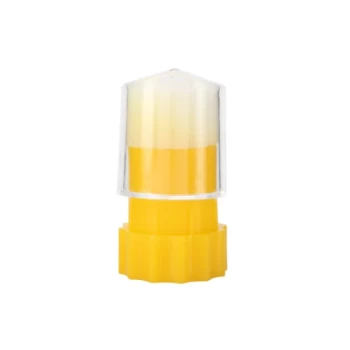
Non-toxic water-based marking paint is the industry standard for tracking bee larvae development because it allows for the precise isolation of specific honeycomb cells without introducing chemical stressors. By marking these areas, researchers and commercial beekeepers can monitor transition stages—such as the third instar—to ensure development reflects natural environmental factors rather than interference from the marking material itself.
Core Takeaway: Specialized non-toxic, non-volatile paint is essential for apiculture research and management because it provides a visible identifier that does not compromise the colony's health or the accuracy of physiological data.
The Technical Necessity of Non-Toxic Formulations
Eliminating Chemical Interference
The primary requirement for any marking tool in a colony is that it be non-volatile. Standard paints release odors and chemical vapors that can trigger colony stress or mask the natural pheromones bees use to communicate and care for larvae.
Ensuring Data Integrity
Using water-based, non-toxic materials ensures that research results accurately reflect the impact of specific variables, such as pesticide exposure or nutritional interventions. This prevents "secondary interference," where the marking material itself could be blamed for developmental delays or health issues.
Protecting Sensitive Larval Stages
Larvae are highly susceptible to their environment; the non-toxic nature of these paints ensures that the delicate physiological functions of the larvae are not damaged during the marking process. This is critical for establishing an accurate time-effect relationship in long-term field observations.
Applications Across the Colony Lifecycle
Precise Larvae Development Tracking
Technicians apply the paint to specific honeycomb areas or individual cells to track the emergence timing of larvae. This allows for the identification of specific age cohorts even as they transition from larvae to pupae and eventually to adult worker bees.
Individual and Queen Identification
Beyond larvae, this paint is used on the thoracic dorsal plate of queen bees to monitor lifespan and egg-laying performance. For distributors, offering a product that serves both larval tracking and queen management provides a versatile solution for end-users.
Age-Cohort Monitoring
Specialized marking allows for the creation of identifiable age groups within a colony of thousands. This enables professionals to recover specific test batches weeks later for hemolymph sampling or gland development measurements, ensuring the bees being studied are of the exact required age.
Understanding the Trade-offs
Durability vs. Safety
While solvent-based paints might offer longer-lasting marks, they are unsuitable for apiculture due to their toxicity. Water-based acrylics offer the best balance of visibility and biological safety, though they may require more careful application to ensure adhesion to the bee's thorax or the wax cell.
Application Precision vs. Speed
High-efficiency marking pens provide the speed required for large-scale operations, but they must be carefully sourced to ensure they remain non-irritating. Lower-quality markers may dry too slowly or flake off, leading to lost data points and inefficient colony management.
Sourcing Excellence for Your Beekeeping Portfolio
The Value of a Full-Spectrum Portfolio
Distributors must provide a comprehensive range of colors and applicator types to meet the needs of researchers who use color-coding to differentiate between multiple test groups. A one-stop sourcing approach ensures that all tools—from cell markers to queen cages—are compatible and professional-grade.
Reliability and Rapid Fulfillment
In commercial beekeeping and research, timing is everything; a delay in delivery can miss a specific larval development window. Partnering with a supplier that prioritizes ultra-fast delivery and efficient order fulfillment is critical for maintaining the operational rhythm of your B2B clients.
Professional Expertise in Product Selection
Wholesalers benefit from a supplier with deep industry expertise who understands the subtle differences between "non-toxic" and "beekeeping-safe." Providing verified, high-performance marking tools builds long-term trust with professional end-users who cannot afford to risk their colony's health.
How to Apply This to Your Inventory Strategy
- If your primary focus is Research Institutions: Prioritize water-based, opaque markers that are certified non-volatile to ensure their data remains uncontaminated by chemical stressors.
- If your primary focus is Commercial Apiaries: Focus on high-visibility color sets and rapid-dry formulations that allow technicians to mark queens and cells quickly during routine inspections.
- If your primary focus is Niche Specialty Retail: Stock a variety of colors and tip sizes to support multi-year tracking and complex age-cohort differentiation.
By providing high-quality, non-toxic marking solutions, you empower your clients to maintain the highest standards of colony health and data accuracy.
Summary Table:
| Key Feature | Benefit for Beekeeping | Primary Application |
|---|---|---|
| Non-Volatile Formulation | Prevents chemical stress and pheromone masking | Larvae tracking & Research |
| Water-Based Acrylic | Safe for sensitive larval physiological functions | Age-cohort monitoring |
| High-Visibility Colors | Allows for precise color-coding of test groups | Queen & individual identification |
| Rapid-Dry Tech | Increases efficiency in large-scale operations | Commercial apiary inspections |
| Opaque Finish | Ensures long-term visibility on wax and bees | Lifecycle development studies |
Scale Your Inventory with HONESTBEE’s Professional Wholesale Solutions
Are you looking to provide your B2B clients with the industry’s most reliable beekeeping tools? HONESTBEE is your premier partner, offering a one-stop sourcing experience for commercial apiaries and distributors. From non-toxic marking pens and specialized consumables to advanced honey-filling machines and hive-making hardware, our full-spectrum portfolio is designed to maximize your profit margins and supply reliability.
Why Partner with HONESTBEE?
- Deep Industry Expertise: Products tested for biological safety and professional performance.
- Rapid Fulfillment: Ultra-fast delivery to keep your supply chain moving.
- Comprehensive Support: OEM/ODM capabilities and dedicated customer service for wholesalers.
Empower your customers with the best in apiculture technology. Contact our wholesale team today to receive our latest product catalog and specialized pricing!
References
- Brunelle Ramos Andrade, Carlos Alfredo Lopes de Carvalho. Fluctuating Asymmetry in Melipona scutellaris (L.) 1811 (Hymenoptera: Apidae) Associated to Stress due to Transportation of Colonies. DOI: 10.13102/sociobiology.v67i3.4987
This article is also based on technical information from HonestBee Knowledge Base .
Related Products
- Queen Bee Marking Pen POSCA Queen Marking Pens for Beekeeping Bee Markers
- Queen Bee Marking Pen UNI Medium Point for Queen and Bee Marking
- Plastic Long Marker Device for Catching and Marking Bees Queen Bee Marking Tube and Cage
- Queen Bee Catcher Plastic Bee Marker Bottle with Piston Marking Tube
- Queen Bee Marking Tube Cage Bottle Catcher Holder with Clear Plastic Plunger Marker
People Also Ask
- What role do specialized marking pens and color-coding systems play in honeybee tracking? Enhance Research Precision
- Why are specialized marking pens used for stingless bee queens? Essential Tools for Large-Scale Breeding Success
- How should a new paint pen be primed before marking a queen bee? Essential Tips for Safe & Clear Markings
- How should a queen bee marking pen tip be properly primed? Master the Art of Safe Queen Marking
- What specifications are required for a high-quality queen bee marking pen? Ensure Safety and Precision for Your Colony