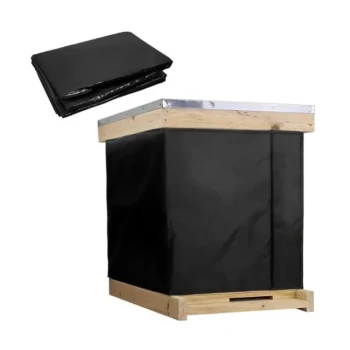
Sackcloth acts as a critical moisture management tool and thermal insulator when placed over hive frames. Its primary function is to wick away the water vapor generated by the colony's respiration, preventing condensation from collecting on the inner cover and dripping back onto the bees.
Core Takeaway In winter beekeeping, dampness is often more lethal than the cold itself. Sackcloth serves a dual purpose: it acts as a breathable barrier that absorbs excess humidity to keep the cluster dry, while simultaneously reducing heat loss to conserve the colony's energy reserves.
The Role of Sackcloth in Winter Ecology
Preventing the "Rain" Effect
Honeybees generate significant heat and moisture through metabolism and respiration. In a closed winter hive, this warm, moist air rises and hits the cold inner cover.
Without an absorbent layer, this vapor condenses into water droplets. These freezing droplets can drip back onto the cluster, chilling the bees and leading to colony collapse.
Sackcloth acts as a moisture-wicking interface. It absorbs this evaporation before it condenses, holding the moisture away from the bees while allowing it to dissipate slowly.
Thermal Retention and Energy Conservation
While moisture control is paramount, sackcloth also provides a layer of breathable insulation. By reducing heat loss through the top of the hive, it helps stabilize the internal temperature.
When heat is retained efficiently, the colony consumes less biological energy to maintain its cluster temperature. This conservation is vital for ensuring the bees do not exhaust their honey stores before spring.
Optimizing Internal Humidity
The goal of winter management is not to create a bone-dry environment, but a stable one. Sackcloth helps optimize internal humidity.
It allows the hive to "breathe" without creating the drafts associated with open ventilation. This balance protects the respiratory health of the colony and prevents mold growth on the frames.
Understanding the Trade-offs
The Risk of Saturation
Sackcloth is effective, but it has a saturation point. If the hive lacks adequate upper ventilation or if the colony is exceptionally large, the cloth can become sodden.
A wet piece of fabric loses its insulating properties and can eventually freeze, becoming a heat sink rather than an insulator. It must be checked or paired with proper ventilation strategies.
It Is Not a Complete Solution
Placing sackcloth is an internal measure and does not replace the need for external protection. It functions best when part of a system that includes proper external insulation or high-precision hives with good airtightness.
Furthermore, thermal management techniques are useless if the colony starves. Sackcloth does not negate the need for winter patties or adequate syrup feeding in the fall.
Making the Right Choice for Your Goal
To maximize winter survival rates, integrate sackcloth into a broader management strategy:
- If your primary focus is Moisture Control: Use sackcloth directly over the frames to prevent condensation drip, ensuring it is checked periodically for saturation.
- If your primary focus is Thermal Efficiency: Combine internal sackcloth with external insulation blankets to create a stable microclimate that reduces store consumption.
- If your primary focus is Colony Mobility: Ensure you have removed queen excluders before placing your insulation layers, allowing the cluster to migrate upward to food sources freely.
Success in winter beekeeping comes from keeping the colony dry, well-fed, and thermally stable.
Summary Table:
| Feature | Function in Winter Management | Benefit to the Colony |
|---|---|---|
| Moisture Wicking | Absorbs vapor from bee respiration | Prevents freezing condensation from dripping on the cluster |
| Thermal Insulation | Reduces heat loss through the hive top | Conserves honey stores by stabilizing internal temperature |
| Breathability | Facilitates stable air exchange | Prevents mold growth and respiratory issues without drafts |
| Microclimate Control | Optimizes internal humidity levels | Keeps the hive environment dry, warm, and stable |
Maximize Your Colony Survival with HONESTBEE
At HONESTBEE, we understand that moisture is the silent killer of wintering colonies. As a premier partner for commercial apiaries and global distributors, we provide the professional-grade tools and consumables you need to protect your investment. From high-precision, thermally efficient hives to essential winter management supplies, our comprehensive wholesale portfolio is designed to enhance your operational success.
Whether you are scaling your honey production with our advanced honey-filling machinery or looking to stock specialized hardware for your retail business, we offer the expertise and equipment to help you thrive.
Ready to elevate your beekeeping operations? Contact our team today to explore our wholesale solutions and secure the best equipment for your apiary.
References
- F. M. El-Sheikh, M. A. Al-Rajhi. Effect of Using A Modified Warming System on Activities and Productivity of Honey Bees. DOI: 10.5281/zenodo.5045378
This article is also based on technical information from HonestBee Knowledge Base .
Related Products
People Also Ask
- What are the steps to properly wrap a beehive for winter? Ensure Your Colony Survives the Cold
- When is the best time to wrap a beehive for winter? A Guide to Perfect Winterization Timing
- How do professional insulation wraps provide protection for bee colonies? Optimize Winter Survival & Energy Efficiency
- What are the technical benefits of using winter wraps for beehive insulation? Boost Colony Survival & Hive Health
- What are the benefits of using insulated covers for hives? Ensure Colony Survival and Health