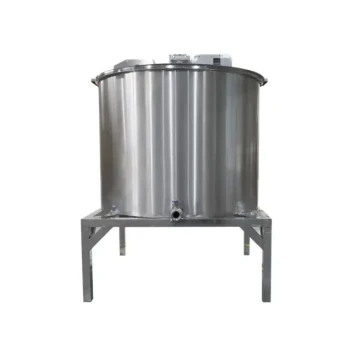
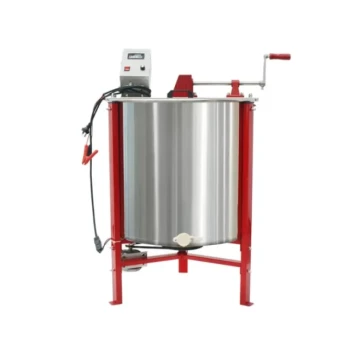
The distinct physical properties of Manuka honey render standard extraction methods ineffective. While most honey flows naturally, Manuka exists in a thixotropic (jelly-like) state within the comb, meaning it resists the simple centrifugal force used in traditional extractors. Specialized machinery is required to apply mechanical agitation, such as vibration or shearing, to temporarily liquefy the honey for extraction without destroying the honeycomb.
Core Takeaway Manuka honey behaves as a gel rather than a liquid, making it impossible to extract efficiently with standard centrifugal force alone. Specialized equipment utilizes mechanical shearing or vibration to break this gel structure, allowing for maximum recovery of the high-value product while preserving the structural integrity of the reusable honeycomb frames.
The Physics of Thixotropic Honey
Understanding the Gel State
Unlike standard honey varieties that are merely viscous fluids, Manuka and similar heather honeys possess thixotropic properties.
This means they sit in the honeycomb cells as a semi-solid gel. Without external intervention, this gel structure prevents the honey from flowing out, regardless of how fast a standard extractor spins.
Why Standard Centrifuges Fail
Standard industrial extraction relies entirely on centrifugal force to throw liquid honey out of the comb.
Because thixotropic honey resists flow in its resting state, a standard centrifuge fails to separate the honey from the wax. Attempting to force extraction by simply increasing spin speed often results in frame breakage before the honey releases.
How Specialized Extraction Works
The Role of Mechanical Agitation
To overcome high viscosity, specialized machinery incorporates specific shearing functions or vibration devices.
These mechanisms agitate the honey directly within the frame cells. This agitation is not about force, but about changing the physical state of the substance.
Liquefaction on Demand
The application of vibration or shearing causes the thixotropic gel to temporarily transition into a liquid state.
Once the structure is broken and the honey creates a fluid flow, it can be efficiently separated from the comb. This process ensures high recovery rates of the honey, which is critical given the high market value of varieties like Manuka.
Understanding the Trade-offs
Equipment Complexity vs. Comb Preservation
The primary trade-off in honey extraction is balancing the force required to extract the product against the fragility of the wax comb.
Standard extractors are simple but cannot handle gels; destructive methods (like pressing) get the honey out but destroy the comb. Specialized agitation machinery offers the middle ground: it extracts difficult honey while keeping the structural integrity of the honeycomb intact.
The Value of Intact Frames
Preserving the comb is a critical operational efficiency metric.
As noted in standard beekeeping practices, returning intact frames to the hive saves the bee colony significant energy and time that would otherwise be spent rebuilding wax cells. Specialized machinery protects this asset, ensuring the colony can focus on honey production rather than reconstruction.
Making the Right Choice for Your Operation
For producers handling high-value or complex honey varieties, equipment selection is dictated by the physics of the product.
- If your primary focus is High-Viscosity/Thixotropic Honey (e.g., Manuka): You must invest in machinery with vibration or shearing capabilities to liquefy the gel structure for extraction.
- If your primary focus is Standard Liquid Honey: Standard centrifugal extractors are sufficient to separate the honey efficiently using simple centrifugal force.
- If your primary focus is Colony Efficiency: Prioritize machinery that maximizes extraction yield without damaging the comb, allowing you to return intact frames to the hive to conserve bee energy.
Selecting the correct extraction method is not merely about speed; it is about matching the mechanical process to the unique physical characteristics of the honey.
Summary Table:
| Feature | Standard Extraction | Specialized Manuka Extraction |
|---|---|---|
| Honey State | Liquid/Viscous | Thixotropic (Jelly-like) |
| Primary Mechanism | Centrifugal Force Only | Mechanical Shearing & Vibration |
| Extraction Efficiency | Low (for gels) | High (liquefies gel structure) |
| Comb Preservation | Risk of damage at high speeds | High (maintains frame integrity) |
| Production Focus | Standard Liquid Honey | High-Value/Complex Varieties |
Maximize Your High-Value Honey Yield with HONESTBEE
Handling thixotropic varieties like Manuka requires precision engineering that standard equipment simply can't provide. At HONESTBEE, we specialize in supporting commercial apiaries and distributors with high-performance machinery designed to protect your investment. From specialized extraction units that liquefy gels without damaging combs to honey-filling machines and industrial hardware, we provide the full spectrum of tools needed to scale your operations.
Ready to upgrade your extraction efficiency?
Contact our honey processing experts today to discover how our wholesale equipment and consumables can streamline your production and preserve your colony's energy.
References
- Don Keith. The decline of melliferous native flora for European honey bees in Queensland – some reflections. DOI: 10.5962/p.357816
This article is also based on technical information from HonestBee Knowledge Base .
Related Products
- 32 Frame Commercial Electric Honey Extractor for Beekeeping and Honey Production
- High Quality Honey Dehumidifier Dryer Thickening Machine for Beekeeping
- Heavy Duty Stainless Steel Honey Processing Machine Decrystallizing Tank
- Stainless Steel Manual 8 Frame Radial Honey Extractor Machine for Beehives
- HONESTBEE 6 Frame Three Use Electric Honey Extractor for Beekeeping
People Also Ask
- What are commercial honey extractors used for? Boost Your Apiary's Efficiency & Profitability
- What is a commercial honey extractor? The Essential High-Volume Solution for Large Apiaries
- Who are commercial honey extractors designed for? Scaling Your Industrial Beekeeping Success
- How is honey extracted commercially? Maximize Your Apiary's Efficiency and Honey Yield
- What are commercial honey extractors and for what scale of beekeeping are they intended? Scale Your 200+ Colony Apiary