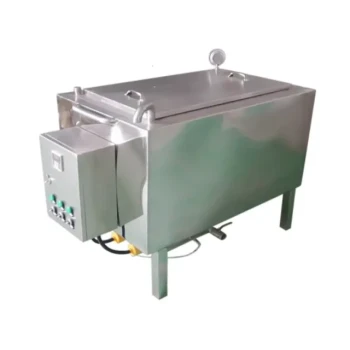
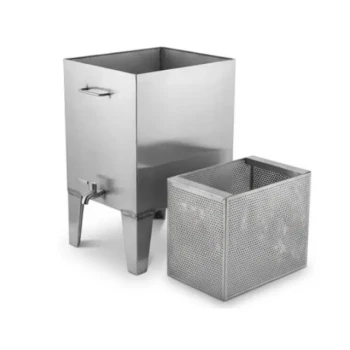
Specialized processing machinery is necessary because it provides the integrated temperature control and filtration systems required to transform raw, impure byproducts into high-purity commercial materials. Without these precise technical capabilities, beekeepers cannot remove impurities while preserving biological activity, rendering the byproducts unsuitable for high-value industrial and consumer markets.
By bridging the gap between raw biological waste and refined commodities, specialized machinery allows operations to diversify revenue streams. It transforms byproducts from a disposal challenge into a primary asset, significantly reducing the economic risks associated with relying solely on honey sales.
The Technical Necessity: Purity and Precision
Integrated Temperature Control
Raw beeswax and resins are sensitive biological materials. Specialized machinery utilizes precise thermal regulation to melt these substances without overheating them.
This prevents the degradation of the material's chemical structure. It ensures that the biological activity of the beeswax is preserved, which is a critical factor for its value in cosmetic and pharmaceutical applications.
Advanced Filtration Systems
Raw harvest materials are naturally contaminated with debris, cocoons, and other hive impurities. Machinery equipped with integrated filtration effectively separates these contaminants from the valuable wax and resins.
This process yields a refined, high-purity product that meets strict commercial standards. Manual processing often fails to achieve this level of clarity, resulting in a lower-grade product that commands a lower market price.
The Economic Imperative: Value and Stability
Diversifying Revenue Streams
Relying exclusively on honey sales exposes beekeepers to market volatility and harvest fluctuations. Specialized machinery enables the production of high-value derivatives such as propolis soaps, processed bee pollen, and royal jelly.
By refining these byproducts, enterprises can enter new markets beyond the food sector. This diversification acts as an economic buffer, stabilizing income even when honey yields are low.
Unlocking Asset Value
Refinement changes the fundamental valuation of the harvest. Raw wax is often treated as waste or a low-cost input, but refined wax is a tradeable commodity.
This equipment ensures that the asset values of these byproducts are accurately reflected in the processing workflow. It allows small operations to adapt effectively to global market demands for premium natural ingredients.
Operational Independence: The Closed-Loop System
Achieving Resource Recycling
Specialized processing allows beekeepers to recycle their own wax into foundation sheets. This creates a closed-loop system where the apiary produces its own structural consumables rather than buying them.
This internal recycling reduces operational costs. It also ensures that the physical dimensions of the honeycomb foundation are standardized and compatible with the operation's specific hives.
Ensuring Organic Integrity
For organic beekeeping, purity is paramount. Processing one's own wax prevents chemical contamination that often comes from purchasing external commercial wax sheets.
Using specialized equipment to refine internal wax sources guarantees the purity of the honeycomb. This protects the overall health of the bee colony from introduced pathogens or pesticides found in the general wax supply.
Understanding the Trade-offs
System Complexity
Implementing this machinery requires moving toward a comprehensive technical system. It is not just about a single melting pot; it often involves integrating extractors, molds, and specific manual tools.
This requires a shift in management style. Operators must be trained to handle precision machinery rather than just traditional manual beekeeping tasks.
Capital vs. Volume
While the machinery increases the value per unit of wax, it represents a capital investment.
For very small hobbyist operations, the volume of byproducts may not initially justify the cost of advanced filtration systems. However, for any operation scaling toward commercial viability, this equipment is the gateway to professional consistency.
Making the Right Choice for Your Goal
To determine how to integrate this machinery into your workflow, consider your primary objective:
- If your primary focus is Financial Stability: Prioritize machinery that enables the creation of finished consumer goods (like soaps or cosmetics), as this maximizes the added value of your raw materials and insulates you from honey price drops.
- If your primary focus is Organic Certification: Prioritize filtration and molding equipment that allows you to recycle your own wax, ensuring a closed-loop cycle that eliminates the risk of external chemical contamination.
Ultimately, specialized processing machinery is not just a refinement tool; it is the infrastructure required to turn a raw agricultural harvest into a resilient, multi-product business.
Summary Table:
| Feature | Benefit of Specialized Machinery | Impact on Commercial Viability |
|---|---|---|
| Temperature Control | Prevents chemical degradation of biological activity. | High-value pharmaceutical/cosmetic grade. |
| Advanced Filtration | Removes cocoons, debris, and hive contaminants. | Meets strict industrial purity standards. |
| Revenue Diversity | Enables production of soaps, pollen, and royal jelly. | Reduces reliance on volatile honey markets. |
| Closed-Loop Recycling | Transforms raw wax into foundation sheets. | Lowers operational costs and prevents contamination. |
Maximize Your Apiary’s Revenue with HONESTBEE Professional Processing Solutions
Don’t let valuable byproducts go to waste. HONESTBEE empowers commercial apiaries and distributors with the specialized machinery needed to turn raw wax and resins into high-purity, tradeable commodities.
Our comprehensive wholesale range includes everything from hive-making and honey-filling machines to advanced thermal processing equipment designed to preserve biological activity and ensure organic integrity. Whether you are scaling your operation or supplying the industry, we provide the tools, machinery, and honey-themed cultural merchandise to set you apart in the global market.
Ready to refine your success? Contact HONESTBEE Today to discover how our equipment can transform your harvest into a resilient, multi-product business.
References
- Luciano Abelardo Ponce Vaca, Barbara Enriquez Obregón. MODELO DE GESTIÓN EMPRESARIAL PARA LA ADMINISTRACIÓN DE LA ASOCIACIÓN DE APICULTURA “ASOPROAPIMIEL” DEL SITIO QUIMIS DEL CANTÓN JIPIJAPA, MANABÍ, ECUADOR. DOI: 10.47230/unesum-ciencias.v4.n4.2020.345
This article is also based on technical information from HonestBee Knowledge Base .
Related Products
- Electric Flatting and Embossing Machine with Tray for Beekeeping
- Fully Automatic Beeswax Embossing Machine Foundation Mill
- Electric Commercial Beeswax Melter for Factory Use
- Steam Beeswax Melter Wax Warmer for Wax Processing
- Electric Beeswax Flat Sheet Machine with Operating Tray for Wax Processing
People Also Ask
- What are the advantages of implementing a pulley and belt drive system in beeswax foundation machinery? Master Quality.
- What are the primary technical challenges faced by beeswax foundation production machinery? Tackling Lipophilic Residues
- How does the beeswax flatting and embossing machine prepare the wax for processing? Achieve Perfectly Uniform Wax Sheets
- What is the purpose of the beeswax flatting and embossing machine? Boost Hive Efficiency & Honey Production
- What are the sequential stages of operation for a beeswax flatting and embossing machine? Master High-Quality Wax Sheets