Temperature control equipment is strictly necessary because it suppresses the biochemical reactions that naturally occur within honey samples after collection. Specifically, maintaining a refrigerated environment is the only way to arrest the degradation of volatile antibiotic residues, ensuring they remain chemically stable until laboratory analysis can be performed.
The accuracy of food safety risk assessments relies entirely on sample stability. Without consistent low-temperature preservation, antibiotic residues like tetracycline and streptomycin break down, leading to inaccurately low detection values and compromised data.
The Science of Sample Preservation
Suppressing Biochemical Activity
Honey is a complex biological matrix that remains chemically active even after harvest. Temperature control equipment is used to lower the sample temperature immediately upon collection.
By maintaining a cold environment, you effectively pause or significantly slow down the internal biochemical reactions within the honey. This "stasis" is required to keep the sample in a state that reflects its condition at the moment of collection.
Preventing Chemical Degradation
The specific targets of your analysis—antibiotic residues such as tetracycline and streptomycin—are chemically fragile. They are susceptible to degradation when exposed to heat or fluctuating environmental conditions.
If the temperature is not controlled, these compounds begin to break down. This degradation changes the chemical profile of the sample, causing the target residues to disappear before the sample ever reaches the lab bench.
The Impact on Analytical Accuracy
Eliminating False Negatives
The primary risk of improper temperature management is the generation of false negative results. If residues degrade during transport or storage, the laboratory equipment will detect lower concentrations than what actually exists in the honey.
This leads to "inaccurately low detection values." The lab equipment may be working perfectly, but the sample itself has been compromised, rendering the results invalid.
Ensuring Valid Risk Assessments
Food safety protocols depend on precise data to assess the risk honey poses to consumers. If samples are allowed to degrade due to heat, the resulting data suggests the honey is safer than it actually is.
Rigorous temperature control safeguards the integrity of this data chain. It ensures that the final risk assessment is based on the actual antibiotic load, not a degraded artifact.
Common Pitfalls and Considerations
The Danger of Moisture Exchange
While temperature is critical for antibiotics, it is not the only factor in sample preservation. Honey is highly hygroscopic, meaning it readily absorbs moisture from the surrounding air.
You must not rely on temperature control alone; samples must also be stored in clean, airtight bottles. If the container is not sealed, the honey may absorb moisture, leading to fermentation or spoilage that alters physical properties like mineral content and pollen composition.
Stability vs. Spoilage
A common mistake is assuming that preventing spoilage (fermentation) is the same as preserving chemical stability. While airtight storage prevents fermentation, it does not stop chemical degradation of antibiotics.
You must view preservation as a dual requirement: airtight sealing to prevent physical spoilage, and temperature control to prevent chemical degradation.
Making the Right Choice for Your Goal
To ensure your laboratory results are defensible and accurate, apply the following preservation strategies:
- If your primary focus is detecting antibiotics (e.g., tetracycline): You must prioritize continuous refrigeration to prevent the chemical breakdown of these heat-sensitive residues.
- If your primary focus is general physical integrity (e.g., moisture, pollen): You must prioritize airtight sealing to prevent the absorption of environmental moisture and subsequent fermentation.
Reliable food safety analysis is impossible without the strict inhibition of chemical degradation through precise temperature management.
Summary Table:
| Preservation Factor | Primary Function | Impact of Failure |
|---|---|---|
| Temperature Control | Suppresses biochemical reactions and stops antibiotic breakdown | False negative results; degraded chemical profile |
| Airtight Sealing | Prevents moisture absorption (hygroscopic) | Fermentation, spoilage, and altered mineral content |
| Cold Storage | Maintains stability of Tetracycline & Streptomycin | Chemical degradation before laboratory analysis |
| Sample Integrity | Reflects the honey's state at the moment of collection | Compromised data and invalid risk assessments |
Secure Your Honey Quality with HONESTBEE Professional Solutions
At HONESTBEE, we understand that maintaining the integrity of your honey—from hive to laboratory—is vital for commercial apiaries and global distributors. As your dedicated wholesale partner, we provide more than just tools; we provide the precision equipment necessary to safeguard your products and your reputation.
Whether you need specialized honey-filling machines designed for hygiene, industrial-grade beekeeping machinery, or high-quality consumables, our comprehensive portfolio is built to support your growth. We empower distributors with reliable hardware and honey-themed cultural merchandise to capture market share.
Ready to elevate your beekeeping operations and ensure laboratory-grade sample integrity?
Contact HONESTBEE Today for Wholesale Inquiries
References
- Sema Ağaoğlu, Nazlı Ercan. Antibiotic Residues in Filtered Honeys. DOI: 10.24925/turjaf.v8i11.2408-2415.3687
This article is also based on technical information from HonestBee Knowledge Base .
Related Products
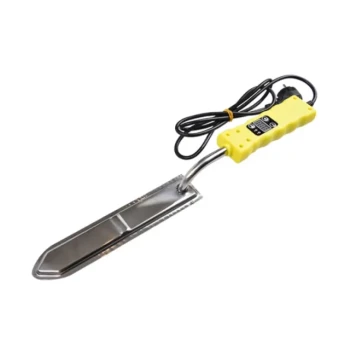
- Professional Electric Honey Uncapping Knife with Heated Digital Temperature Control for Beekeeping
- Electric Hot Honey Uncapping Knife with Thermostat
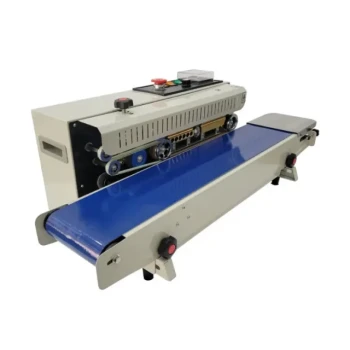
- Automatic Continuous Heat Sealing Machine
- HONESTBEE AC Powered Wire Embedder with Alligator Clips
- Professional Thermostatic Conical Honey Melter
People Also Ask
- Why are electric honey uncapping knives essential? Boost Efficiency & Preserve Comb for Professional Honey Extraction
- What is an electric uncapping knife and how is it used? Master Faster Honey Extraction with Heat
- What are the advantages and disadvantages of using an electric knife for uncapping honey frames? Boost Extraction Speed
- What are the drawbacks of using an electric knife for uncapping honey frames? Cost and Power Constraints Explained
- How should an electric uncapping knife be utilized? Master Efficient Honey Extraction with Heated Precision