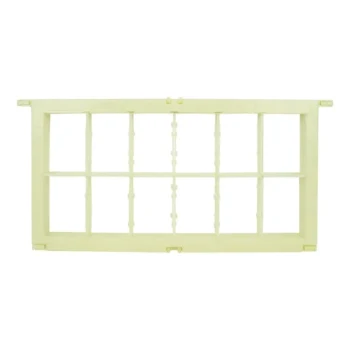
To properly clean a honey press, you must disassemble the unit and wash all components using warm water and a food-safe detergent, followed by a thorough rinse with clean water to remove all soap residue. This process should be performed both before and after every use to ensure hygiene and equipment longevity.
Core Takeaway The most effective cleaning routine involves full disassembly, the use of warm water and food-safe detergent to remove sticky residues, and careful storage. While heat helps manage wax, you must balance cleaning efficiency with the need to protect heat-sensitive components and honey nutrients.
The Cleaning Workflow
Disassembly and Preparation
Cleaning begins with taking the unit apart. Most honey presses are designed for easy disassembly. You must unwind the press and release the steel cage or mesh basket from the frame to access all surfaces.
Managing Wax Buildup
Wax is often harder to remove than honey. For the steel cage specifically, you may pour boiling water over the metal to soften stubborn wax deposits. Once soft, scrape the wax off the cage; you can rinse the remaining wax debris with cold water and collect it for later melting.
The Washing Phase
Use the correct cleaning agents. Wash all parts using warm water and a food-safe detergent. For scrubbing, utilize a soft nylon brush to reach into crevices without scratching the material.
Leverage pressure for stainless steel. If you are using a stainless steel press, you can take the main components outside and use a high-pressure water jet to blast away visible wax and honey remnants. The stainless mesh basket can often be placed in a dishwasher for a final, thorough clean.
Rinsing and Drying
Remove all chemical residues. After washing, rinse every component thoroughly with clean water to ensure no detergent remains. Dry all parts completely before reassembling the press for its next use.
Critical Considerations and Trade-offs
Temperature Sensitivity
Heat destroys honey nutrients. While hot water is useful for cleaning empty metal parts, never apply heat above 104°F (40°C) if honey is still present or being processed. High temperatures destroy the enzymes and valuable nutrients that define raw honey.
Manufacturing Residues
New equipment requires special attention. A brand-new honey press must be cleaned with a detergent solution before its very first use. This is critical to remove residual industrial oils and welding residues left over from the manufacturing process.
Storage Protocols
Prevent contamination between uses. Once the press is clean and dry, it should be kept covered during storage. This prevents dust accumulation, which would require you to perform a deep clean again before the next harvest.
Making the Right Choice for Your Goal
- If your primary focus is removing heavy wax: Utilize boiling water on the detached metal cage to soften the wax before scraping it off.
- If your primary focus is equipment longevity: Use soft nylon brushes and non-abrasive cloths to prevent scratching the press surfaces during the wash.
- If your primary focus is safety for a new device: Perform a dedicated detergent wash to eliminate factory oils before any honey touches the press.
Consistency in this process ensures your honey remains pure and your equipment lasts for years.
Summary Table:
| Cleaning Stage | Method/Tool | Key Consideration |
|---|---|---|
| Disassembly | Manual breakdown | Access all crevices and internal mesh |
| Wax Removal | Boiling water + Scraper | Soften wax on metal; avoid high heat on honey |
| Washing | Warm water + Food-safe detergent | Use soft nylon brushes to prevent scratching |
| Stainless Care | Pressure jet / Dishwasher | Ideal for deep cleaning mesh and cages |
| First-use Prep | Detergent solution wash | Removes industrial oils and welding residues |
| Storage | Covered and dry | Prevents dust accumulation and corrosion |
Maximize Your Harvest Purity with HONESTBEE
Maintaining professional-grade equipment is essential for producing premium honey. At HONESTBEE, we empower commercial apiaries and distributors by providing the industry's most durable and easy-to-clean beekeeping machinery.
Our extensive portfolio includes:
- High-Efficiency Honey Presses & Filling Machines
- Precision Hive-Making Equipment
- Comprehensive Wholesale Tools & Consumables
- Curated Honey-Themed Cultural Merchandise
Whether you are scaling your extraction line or looking for a reliable wholesale partner, our team is here to support your growth with specialized hardware and expert insights.
Ready to upgrade your apiary’s efficiency? Contact us today to explore our full catalog!
Related Products
- Stainless Steel Manual Honey Press with Guard for Pressing Honey and Wax
- Stainless Steel Honey Press Wax Press with Tank
- Easy Use Manual Stainless Steel Honey Press for Honey Comb
- Electric Honey Press Machine for Squeezing Honey Comb Press Equipment
- 10L Stainless Steel Electric Honey Press Machine
People Also Ask
- What other functions can a honey press serve besides honey extraction? Discover Versatile Multi-Purpose Uses
- How does the honey press preserve the quality of honey during extraction? Maintain Pure Enzymes and Flavor
- What materials are used to construct the honey press? Choose Durable, Food-Grade Solutions for Your Apiary
- What are the fundamental differences between manual honey presses and centrifugal honey extractors? A Guide for Pros
- What are some general features of a honey press? Maximize Your Yield with Durable Extraction Tools