The aperture design is the defining technical variable that determines the success or failure of a pollen trap.
This design relies on a precise calculation to create a physical obstruction that mechanically strips pollen pellets from a worker bee's hind legs as she enters the hive. Crucially, the geometry must be exact enough to dislodge the load without inflicting physical injury on the insect, ensuring the colony remains healthy while securing high-protein raw material.
Core Insight Precision in aperture sizing balances two competing goals: maximizing harvest yield and maintaining colony safety. A well-designed trap acts as a selective filter, effectively stripping pollen for commercial use while allowing the bees to continue their natural behaviors unharmed.
The Mechanics of Precision Harvesting
Achieving Mechanical Separation
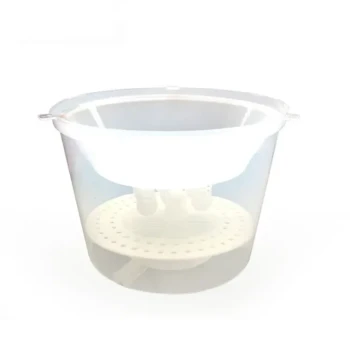
The primary function of the aperture is to act as a specific physical barrier. As the bee navigates the sieve plate, the dimensions of the pore force the pollen pellets—stored in the baskets on the hind legs—to brush against the edges of the trap. This mechanical action dislodges the pellets, which then fall into a collection tray.
Protecting the Workforce
According to the primary technical guidelines, the aperture must be calculated to prevent physical harm. If the opening is too narrow or the edges are sharp, the trap risks injuring the bees' legs or wings. A trap that damages the workforce will ultimately degrade the colony's population dynamics and long-term productivity.
Optimizing Yield and Purity
Maximizing Production Volume
Optimized aperture designs are directly linked to high-performance output. By utilizing a series of precisely sized holes, advanced traps can significantly increase the annual yield per hive. In high-efficiency setups, production can reach levels as high as 36kg per colony.
Enhancing Raw Material Quality
The aperture design does more than just harvest; it acts as a quality control filter. By stripping the pollen at the entrance, the design reduces the entry of internal hive impurities. This ensures the initial purity of the raw pollen—rich in over 200 enzymes and sugars—providing a high-quality foundation for botanical classification and commercial processing.
Understanding the Trade-offs
Disruption of Colony Dynamics
While the goal is collection, the design must not halt the colony's work. An aperture that is too restrictive may mechanically harvest pollen well but could impede traffic flow or stress the colony. The design must allow for efficient collection without disrupting the normal population dynamics or essential foraging activities.
Placement and Environmental Risks
While the aperture handles the stripping, the trap's location affects the quality of the harvest. For example, "low-bottom" traps installed near the hive floor often suffer from restricted ventilation and moisture accumulation. This can lead to high-humidity conditions that facilitate fungal growth (such as Fusarium), necessitating shorter collection intervals to prevent spoilage.
Making the Right Choice for Your Goal
Selecting the correct pollen trap configuration depends on balancing yield requirements with colony welfare.
- If your primary focus is Commercial Yield: Prioritize high-performance traps with optimized aperture series capable of reaching yields up to 36kg per colony.
- If your primary focus is Colony Health: Ensure the aperture calculation is precise and verified to prevent physical injury or excessive obstruction of hive traffic.
- If your primary focus is Sample Purity: Utilize entrance-mounted traps that strip pollen immediately to minimize contamination from internal hive debris.
Ultimately, the correct aperture design transforms a simple barrier into a sophisticated harvesting tool that respects the bee while maximizing production.
Summary Table:
| Feature | Impact of Correct Aperture Design | Benefit to Operation |
|---|---|---|
| Mechanical Stripping | Precisely dislodges pollen pellets from hind legs | Maximizes raw material collection volume |
| Worker Safety | Smooth, calculated dimensions prevent limb/wing injury | Maintains colony population and health |
| Purity Control | Strips pollen at the entrance to block hive debris | Ensures high-quality, contaminant-free product |
| Yield Optimization | Supports high-efficiency harvesting (up to 36kg/hive) | Increases annual production for commercial use |
| Traffic Flow | Balances obstruction with hive accessibility | Prevents colony stress and foraging disruptions |
Elevate Your Apiary’s Production with HONESTBEE
At HONESTBEE, we specialize in empowering commercial apiaries and distributors with professional-grade harvesting solutions. From precision-engineered pollen traps that maximize yields without harming your workforce to industrial-scale hive-making and honey-filling machinery, we provide the full spectrum of beekeeping equipment.
Whether you are scaling a commercial operation or stocking essential consumables, our portfolio of high-performance hardware and honey-themed cultural merchandise is designed to give you a competitive edge.
Ready to optimize your harvest? Contact us today to explore our wholesale offerings!
References
- Patrick M Fratellone, Gregory Fratellone. Apitherapy Products for Medicinal Use. DOI: 10.1089/acm.2015.0346
This article is also based on technical information from HonestBee Knowledge Base .
Related Products
- Removable Plastic Pollen Trap With Ventilated Tray for Bees Pollen Collector
- 30 cm Plastic Entrance Hole Bee Pollen Trap and Collector
- Plastic Bee Pollen Trap Strips Comb Catcher Collector
- High-Efficiency Diamond Maze Bee Escape for Clearing Supers
- Professional Bucket Style Wasp and Moth Pheromone Trap
People Also Ask
- What are the design principles and advantages of pollen traps in the collection of bee pollen? Boost Your Apiary Yield
- What is the function of professional pollen traps in evaluating honey plants? Quantifying Pollination and Crop Potential
- What functions do pollen traps serve for bee bread production? Optimize Your Raw Material Collection
- What maintenance and pest prevention measures should be taken for pollen traps? Protect Your Hive and Harvest Quality
- How does the use of pollen traps in honeybee hives enhance crop fertilization? Boost Your Yield Through Induced Activity