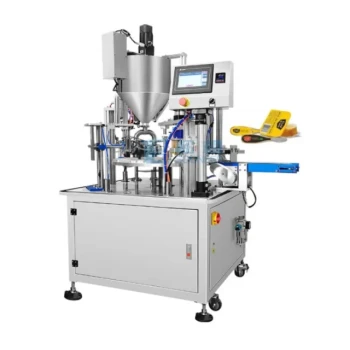
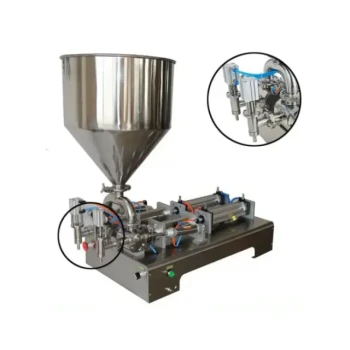
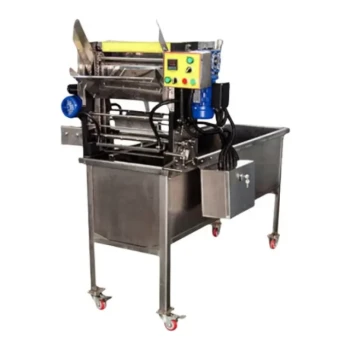
The automated honey filling machine functions as the critical bridge between raw agricultural production and standardized retail commerce. It is considered a core component because it solves the specific physical challenges of honey processing—namely viscosity and stickiness—by delivering high-precision quantitative filling within a rigorously sanitary environment. This equipment transforms bulk harvest into retail-ready units by automating volume control and sealing, which directly extends product shelf life and ensures consistency across various honey densities.
By eliminating the inconsistencies of manual handling, automated filling machinery secures the two most vital metrics for commercial success: precise weight compliance for regulatory standards and an enclosed hygienic process that prevents spoilage.
Achieving Commercial Standardization
Precision Volumetric Control
In a commercial setting, consistency is not optional; it is a regulatory requirement. Automated machines utilize automated controls to ensure every jar meets net weight specifications.
This high-precision metering eliminates the variance inherent in manual pouring. It ensures that the final product adheres strictly to commercial standards, minimizing raw material loss that often occurs through overfilling.
Handling Viscosity Variations
Honey is not a uniform liquid; its density changes based on floral source and temperature.
The core value of sophisticated filling machines lies in their ability to handle these various honey densities, such as thicker forest honey. The equipment adjusts to these physical characteristics to maintain fill-level consistency without slowing down production.
Elevating Food Safety Standards
The Enclosed Environment
Manual filling exposes honey to open air, dust, and human contact. Automated machines perform the filling and sealing process in a closed environment.
This isolation is critical for preventing environmental contamination. By removing human handling from the immediate packaging phase, producers significantly reduce the risk of introducing microbes or foreign particles.
Extending Shelf Life
Honey is hygroscopic, meaning it naturally absorbs moisture from the air, which can lead to fermentation and spoilage.
Automated sealers minimize the honey's exposure time to the atmosphere. This rigorous sanitary protection preserves the product's stability, effectively extending the shelf life and ensuring the honey remains safe for consumption over long retail cycles.
Scaling Operations for Market Demand
Managing Seasonal Surges
Honey production is often seasonal, resulting in sudden, high-volume harvests that overwhelm manual labor.
Industrial-grade filling machines provide the speed and efficiency necessary to process these surges. They allow apiaries to package bulk quantities quickly, preventing bottlenecks that could delay entry into the market.
Meeting Export Requirements
For producers aiming for high-value export markets, visual and hygienic perfection is a decisive factor.
Automated lines ensure standardization and hygiene that meet international food safety standards. This level of technical compliance is often the prerequisite for entering supermarket supply chains and global distribution networks.
Understanding the Operational Trade-offs
While automated filling is superior for volume and safety, it introduces specific operational requirements.
Rigidity of Process: Unlike manual filling, which can adapt instantly to odd-shaped jars on the fly, automated machines rely on standardized containers to function efficiently.
Maintenance of Physical Characteristics: For premium varieties where transparency and viscosity are selling points, the machine must be calibrated carefully. Improper settings can agitate the honey, potentially altering the visual appeal that consumers expect from high-end brands.
Making the Right Choice for Your Goal
To determine how to integrate this technology into your processing line, consider your end-market objectives:
- If your primary focus is entering supermarket chains: Prioritize machines with high-precision volumetric controls to strictly ensure regulatory net-weight compliance and uniform packaging.
- If your primary focus is extending product shelf life: Focus on equipment that offers a fully enclosed filling and sealing environment to minimize moisture absorption and preventing contamination.
- If your primary focus is scaling for export: Select machinery capable of meeting rigorous international hygiene standards to ensure your product qualifies for high-value global markets.
Automated filling technology is not just about speed; it is the fundamental tool that legitimizes a honey operation, turning a natural harvest into a trusted, shelf-stable consumer product.
Summary Table:
| Key Feature | Commercial Benefit | Technical Impact |
|---|---|---|
| Precision Metering | Regulatory compliance & waste reduction | Eliminates overfilling via automated volume control |
| Enclosed System | Enhanced food safety & hygiene | Minimizes contamination and moisture absorption |
| Viscosity Adaptation | Processing consistency | Handles various honey densities and floral sources |
| High-Speed Sealing | Extended shelf life | Rapidly isolates product from atmospheric moisture |
| Standardized Output | Market & export readiness | Meets international retail and supermarket standards |
Scale Your Honey Business with HONESTBEE Machinery
Transitioning from manual labor to professional automation is the key to unlocking global market access. HONESTBEE specializes in supporting commercial apiaries and distributors with high-performance beekeeping tools and industrial machinery.
Our comprehensive wholesale range includes:
- High-Precision Filling & Sealing Machines: Engineered for various honey densities to ensure regulatory weight compliance.
- Comprehensive Equipment Portfolio: From hive-making machinery to specialized honey-themed cultural merchandise.
- Essential Industry Consumables: A one-stop shop for all your beekeeping and processing needs.
Ready to enhance your production standards and extend your product's shelf life? Contact us today to find the perfect machinery for your operation!
References
- N. H. Rachmani, L. Cyrilla ENSD. Preferences of Young Consumers in Bogor City in Consuming Honey during the Covid 19 Pandemic. DOI: 10.29244/jipthp.11.1.13-18
This article is also based on technical information from HonestBee Knowledge Base .
Related Products
- Fully Automatic Honey Filling Packaging Machine for Processing Line
- Automatic Honey Filling and Filtering Machine for Beekeeping Bottle Filling
- Precision Durable Efficient HONESTBEE Rotary Honey Filling Machine
- Semi Automatic Small Honey Bottle Filling Machine Honey Filler
- Precision Automated Packaging Turntable Honey Spoon Filling Sealing Packing Machine
People Also Ask
- Why are fully automatic honey filling and packaging lines essential? Boost Your Honey's Market Value and Quality
- What is a fully-automatic honey filler? Streamline Your Production with High-Precision Automation
- How do automated honey filling and packaging machines affect profitability? Boost Margins with HONESTBEE Technology
- How do automated honey filling and packaging machines contribute to the market value of honey products? Maximize Your ROI
- How do industrial-grade automated honey filling and packaging machines mitigate the risk of physical contamination?