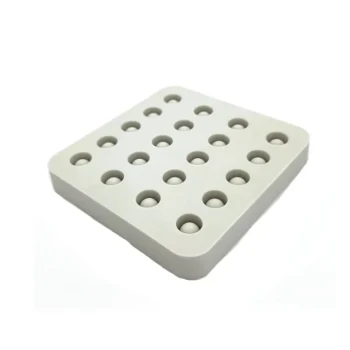
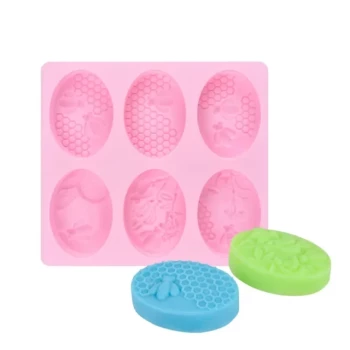
The use of standardized beeswax blocks serves as the fundamental baseline for accurately testing the efficacy of plant extracts against pests like Galleria mellonella (Greater Wax Moth). By providing a consistent feeding substrate, these blocks enable researchers to observe normal larval behavior while simultaneously delivering the botanical treatment through both ingestion and physical contact.
By simulating the natural conditions of a beehive, standardized beeswax blocks transform a simple toxicity test into a comprehensive bioassay. They allow for the simultaneous evaluation of contact killing effects and stomach toxicity, ensuring that efficacy data is relevant to real-world apiculture scenarios.
Replicating the Natural Ecosystem
To determine if a plant extract will work in a real beehive, the experimental environment must mirror the pest's natural habitat.
Simulating the Beehive Environment
Standardized beeswax blocks are not merely food; they act as a structural proxy for the honeycomb.
Using these blocks allows researchers to move beyond abstract laboratory conditions. It simulates the physical environment where Galleria mellonella larvae naturally thrive, ensuring the data collected is applicable to actual apiary challenges.
Ensuring Normal Feeding Behavior
For toxicity results to be valid, the test subjects must behave naturally.
The beeswax blocks induce normal feeding and burrowing activities in the larvae. Without a familiar substrate, larvae may exhibit stress behaviors or cease feeding, which would skew mortality data and lead to inaccurate conclusions about the plant extract's potency.
Measuring Dual Modes of Action
The most distinct advantage of using treated beeswax blocks is the ability to assess multiple pathways of pesticide delivery in a single setup.
Assessing Stomach Toxicity
When plant extracts are incorporated into the beeswax, the block becomes a delivery vehicle for the toxin.
As the larvae feed on the treated substrate, researchers can measure stomach toxicity. This confirms whether the botanical agent is effective when ingested, which is a primary mode of entry for pests that consume hive materials.
Evaluating Contact Toxicity
Simultaneously, the blocks facilitate the assessment of external exposure.
As larvae burrow through the treated wax, their cuticle comes into direct contact with the plant extract. This allows for the measurement of contact killing effects, providing a complete picture of the botanical pesticide's lethality.
Understanding the Trade-offs
While essential, the use of beeswax blocks introduces specific variables that must be tightly controlled to maintain scientific rigor.
The Challenge of Consistency
The term "standardized" is the critical constraint in this methodology.
If the beeswax blocks vary in density, purity, or composition, larval feeding rates will fluctuate unpredictably. Inconsistency in the substrate can result in "noise" in the data, making it difficult to distinguish between the effect of the plant extract and natural variations in larval appetite.
Preparation Precision
Integrating plant extracts into beeswax requires precise temperature and mixing controls.
If the extract is not distributed evenly throughout the block, the larvae may encounter "hot spots" of high toxicity or pockets of untreated wax. This lack of uniformity can lead to false negatives or positives regarding the extract's true efficacy.
Making the Right Choice for Your Research
When designing an experiment to test botanical pesticides in apiculture, the quality of your substrate determines the quality of your data.
- If your primary focus is measuring total lethality: Ensure the plant extract is homogeneously mixed into the wax to capture both contact and ingestion mortality rates accurately.
- If your primary focus is translating results to the field: Use standardized blocks to replicate the hive environment, ensuring that observed behaviors match what will occur in an actual apiary.
The precision of your standardized beeswax blocks is directly proportional to the reliability of your pest control data.
Summary Table:
| Key Role | Impact on Bioassay Reliability |
|---|---|
| Structural Proxy | Replicates the natural hive environment for Galleria mellonella larvae. |
| Behavioral Baseline | Ensures normal feeding and burrowing behavior, preventing stress-skewed data. |
| Dual Mode Testing | Facilitates simultaneous measurement of stomach toxicity and contact killing effects. |
| Standardization | Minimizes substrate variables to ensure high-precision mortality data. |
Elevate Your Beekeeping Operations with HONESTBEE
At HONESTBEE, we understand that precision in the lab translates to success in the field. As a leading partner for commercial apiaries and distributors, we provide more than just equipment; we provide the foundation for industry growth. From specialized hive-making and honey-filling machinery to high-quality beekeeping tools and consumables, our comprehensive wholesale catalog is designed to optimize your productivity.
Whether you are scaling a commercial operation or seeking reliable inventory for distribution, our team is dedicated to supplying the hardware and expertise you need to thrive. Contact us today to explore our full spectrum of beekeeping solutions.
References
- Lalita Lalita, Sunita Yadav. Effectiveness of Different Plant Extracts against Galleria Mellonella Larvae in Laboratory. DOI: 10.26832/24566632.2018.030109
This article is also based on technical information from HonestBee Knowledge Base .
Related Products
- Assembled Wooden Bee Frames with Beeswax Foundation Ready to Use by HONESTBEE
- Notebook Style Beeswax Foundation Mould Wax Foundation Mold
- Beeswax Foundation Sheets Beehive Foundation for Wholesale
- Manual Beeswax Flat Sheet Machine for Beeswax Processing
- Fully Automatic Beeswax Embossing Machine Foundation Mill
People Also Ask
- Do bee frames need foundation? Choose the Right Approach for Your Apiary
- Under what circumstances should bee frames be destroyed? Protect Your Apiary from American Foulbrood
- How should frames be rearranged as a bee colony grows? Master Hive Expansion and Nest Management
- How do you re-wax bee frames? A Simple Guide to Faster Comb Building
- What types of bee frames can be cleaned and returned to service? A Guide to Safe Apiary Refurbishment