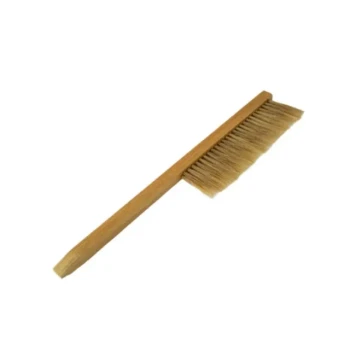
The necessity of a fine camel hair brush lies in the extreme fragility of the specimen. Varroa destructor mites possess delicate structures that are easily destroyed by coarser tools. The soft bristles of a camel hair brush allow for the transfer of these microscopic samples without compromising the surface features required for accurate morphological identification.
Reliable analysis of Varroa mites depends entirely on sample integrity. A fine camel hair brush provides the specific tactile sensitivity required to transfer mites without altering their physical dimensions or physiological activity, ensuring data remains accurate and representative.
Preserving Physical Integrity for Identification
Protecting Delicate Surface Features
To identify Varroa destructor morphologically, researchers must examine specific external structures.
The dorsal shield and legs are critical for classification but are prone to breakage.
A camel hair brush offers the requisite softness to move the mite without scratching or crushing these vital anatomical landmarks.
Handling Microscopic Dimensions
The scale of these organisms makes them highly susceptible to mechanical force.
Typical dimensions of the mite are approximately 1167.3 µm in length and 1708.9 µm in width.
At this microscopic scale, even slight pressure from rigid tools (like forceps) can distort the body shape, rendering subsequent measurements inaccurate.
Ensuring Biological Viability
Gentle Extraction from Hosts
Mites are often collected directly from the capped brood cells of honey bee larvae or pupae.
Both the mite and the host are highly susceptible to physical damage during this extraction process.
Fine brushes allow for "extremely gentle contact," enabling the separation of the parasite from the host without injuring either organism.
Maintaining Physiological Activity
For studies focused on resistance monitoring, the mite must remain alive and biologically active.
Rough handling can stress or kill the specimen, altering its physiological activity.
Using a soft brush ensures the biological sample remains representative, preventing false negatives in resistance data caused by handling trauma.
The Risks of Improper Tool Selection
Mechanical Distortion
Using harder synthetic brushes or metal tools introduces a high risk of crushing the exoskeleton.
Once the structural integrity is compromised, precise morphological measurements become impossible.
Compromised Experimental Data
If the extraction tool is too abrasive, it may induce stress responses in live mites.
This compromises the accuracy of experimental data, particularly in behavioral or toxicological studies where the mite's natural state is the baseline.
Ensuring Data Quality Through Proper Handling
Selecting the right tool is the first step in rigorous data collection.
- If your primary focus is Morphological Identification: Use the brush to prevent damage to the dorsal shield and legs, ensuring clear visibility for microscopic measurement.
- If your primary focus is Resistance Monitoring: Use the brush to maintain the mite's physiological health, ensuring that lack of movement is due to the chemical treatment, not handling trauma.
Precision in handling leads to precision in results.
Summary Table:
| Feature | Why Use a Camel Hair Brush? | Risk of Improper Tools (e.g., Forceps) |
|---|---|---|
| Structural Integrity | Soft bristles prevent crushing delicate dorsal shields. | Mechanical distortion and exoskeleton damage. |
| Measurement Accuracy | Maintains precise dimensions (~1167µm x 1709µm). | Distorts body shape, leading to data errors. |
| Specimen Viability | Gentle extraction keeps mites alive for activity studies. | High stress or mortality due to handling trauma. |
| Host Safety | Protects honey bee larvae/pupae during collection. | Potential injury to the host bee brood. |
Scale Your Apiary Operations with HONESTBEE
Precise research requires precise tools. At HONESTBEE, we understand the technical demands of commercial beekeeping and resistance monitoring. We provide a comprehensive wholesale range of professional beekeeping tools, machinery, and essential consumables designed for distributors and large-scale apiaries.
Whether you need specialized hardware like honey-filling machines or high-quality manual equipment for hive management, our portfolio is built to enhance your efficiency and data quality.
Ready to upgrade your equipment inventory? Contact us today to discuss our bulk pricing and tailored solutions for your business.
References
- Nripesh Shrestha, Ishan Gautam. Seasonal prevalence of Asian honeybee ectoparasitic mite Varroa destructor Anderson and Trueman, 2000 in Madanpokhara Apiaries, Palpa, Nepal. DOI: 10.3126/njz.v4i2.33885
This article is also based on technical information from HonestBee Knowledge Base .
Related Products
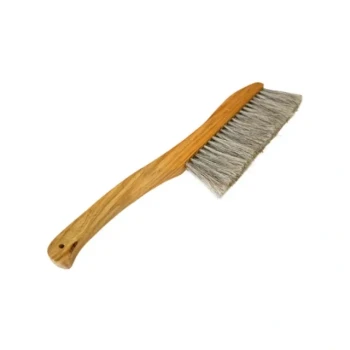
- Premium Triple-Row Horsehair Bee Brush
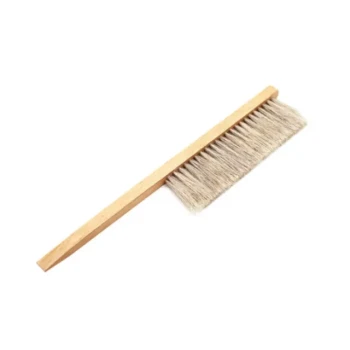
- Wooden Bee Brush with Double-Row Horsehair Bristles
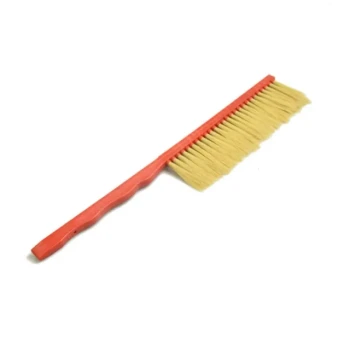
- Plastic Handle Single Row Artificial Fiber Bee Brush
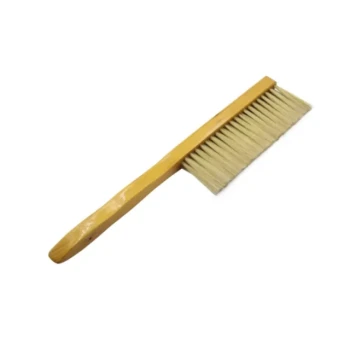
- Wooden Bee Brush with Triple Row Artificial Fiber for Beekeeping
- Classic Wooden Bee Brush with Double-Row Boar Bristles
People Also Ask
- What is the specific function of a bee brush? Ensure Pure Harvests and Colony Welfare During Honey Extraction
- What are the key characteristics of the bristles on a bee brush? Master Gentle and Efficient Bee Removal
- What problem does a bee brush solve? Protect Your Colony with Gentle Precision Tools
- What are the key features of a popular bee brush? Essential Design for Bee Safety and Hive Hygiene
- What is a bee brush and what is its primary use? A Gentle Tool for Hive Management