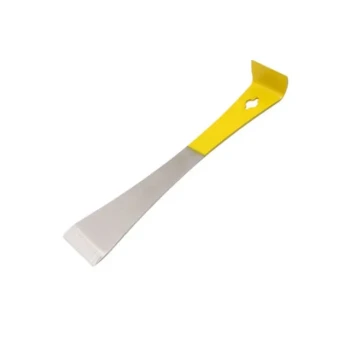
The critical nature of a high-precision transfer tool lies in its ability to handle extremely fragile biological material without causing damage. specifically, this tool is essential for the non-destructive picking and precise placement of larvae that are approximately 36 hours old. The tool’s mechanical characteristics directly dictate the survival rate of the larvae, which is the primary variable determining the total yield of royal jelly.
Core Insight: Royal jelly production is a biological chain reaction that begins with the physical integrity of the larva. If the transfer tool fails to preserve the viability of the larva during the graft, the nurse bees will reject the cell immediately, rendering the entire production cycle for that cup a failure.
The Biological Constraints of Grafting
Handling Micro-Scale Fragility
The target of the grafting process is a larva that is roughly 36 hours old. At this stage of development, the organism is microscopic, gelatinous, and highly susceptible to physical trauma.
Preventing Structural Damage
A standard or blunt instrument risks crushing the larva or severing its delicate tissues during retrieval. A high-precision tool is designed to slide beneath the larva, ensuring non-destructive picking that preserves the organism's vitality.
The Mechanical Impact on Yield
Fine Tip Precision and Flexibility
The primary reference highlights that the flexibility and fine tip precision of the tool are the specific features that drive success. A flexible tip conforms to the shape of the comb cell, allowing the user to scoop the larva and its surrounding bed of jelly without applying lethal pressure.
Driving Queen Cell Acceptance
Success in royal jelly production is measured by the "acceptance rate"—the percentage of grafted cups that nursing bees decide to tend to. If a larva is damaged during transfer, nursing bees will detect the injury and clean out the cell rather than filling it with royal jelly.
Standardization of Operations
As noted in supporting documentation, high-precision tools allow for standardized collection operations. By reducing the variability in how larvae are handled, producers can ensure a more stable and predictable supply of royal jelly for commercial markets.
Understanding the Risks of Low Precision
The "Silent" Failure Mode
The danger of using inferior tools is that damage to the larva is often invisible to the naked eye. You may successfully move the larva, but if it has suffered internal trauma, it will die shortly after placement, leading to a "blank" cell with no jelly production.
Efficiency Bottlenecks
Without the tactile feedback and geometric fit of a high-precision tip, the grafting process becomes significantly slower. In large-scale production, where thousands of cups must be grafted, the lack of precision tools creates a bottleneck that limits overall economic efficiency.
Making the Right Choice for Your Goal
Whether you are managing a large-scale commercial apiary or a smaller breeding operation, the quality of your transfer tool dictates your results.
- If your primary focus is Commercial Yield: Prioritize tools with high tip flexibility to maximize the "acceptance rate" of queen cells, as this directly correlates to the total volume of royal jelly produced.
- If your primary focus is Operational Efficiency: Select high-precision tools to standardize the grafting motion, allowing technicians to work faster while maintaining larval survival rates.
The transfer tool is not merely a utensil; it is the deciding factor in whether a colony invests resources into a cell or rejects it entirely.
Summary Table:
| Key Feature | Impact on Production | Benefit |
|---|---|---|
| Fine Tip Precision | Enables non-destructive picking of 36-hour larvae | Higher survival and acceptance rates |
| Tip Flexibility | Conforms to comb cell shape without crushing | Preserves larval structural integrity |
| Mechanical Consistency | Standardizes large-scale collection operations | Increased operational efficiency |
| Tactile Feedback | Reduces 'silent' failure modes (invisible trauma) | Stable and predictable jelly supply |
Elevate Your Apiary's Productivity with HONESTBEE
At HONESTBEE, we understand that in commercial royal jelly production, precision is the difference between profit and loss. We specialize in supporting commercial apiaries and distributors by providing a comprehensive wholesale offering of professional-grade beekeeping tools and machinery.
From high-precision grafting tools that ensure maximum larval survival to advanced hive-making and honey-filling machines, our portfolio is designed to optimize every stage of your operation. We also supply a wide array of essential industry consumables and unique honey-themed cultural merchandise to help your business stand out.
Ready to scale your production and improve your yields?
Contact HONESTBEE today to discover how our premium equipment and wholesale solutions can empower your beekeeping enterprise.
References
- H. Mahfouz. Effect of Different Honey Bee, Apis mellifera L. Colonies Strength on the Quantity of the Produced Royal Jelly. DOI: 10.21608/jppp.2016.51184
This article is also based on technical information from HonestBee Knowledge Base .
Related Products
- Plastic Beekeeping Honey Bee Larvae Grafting Tools for Queen Rearing and Chinese Grafting
- Stainless Steel Queen Grafting Tool for Beekeeping and Bee Queen Grafting
- Black 2 Pack Beekeeper Queen Grafting Tool for Bee Queen Larva Transferring Needle
- Stainless Steel Beekeeping Queen Grafting Tool for Honey Bee Rearing
- Retractable Chinese Queen Rearing Grafting Tools Equipment
People Also Ask
- How do larvae grafting tools and royal jelly production kits contribute to a diversified bee product strategy?
- What happens if a larva is grafted too late? Avoid Scrub Queens and Failed Rearing
- What is the primary function of a Professional Bee Larvae Grafting Tool in queen rearing? Enhance Breeding Efficiency
- What is the grafting method of queen rearing? Master Controlled Queen Production for Your Apiary
- What is the primary function and technical requirement of a larvae grafting tool? Master Precision Queen Rearing