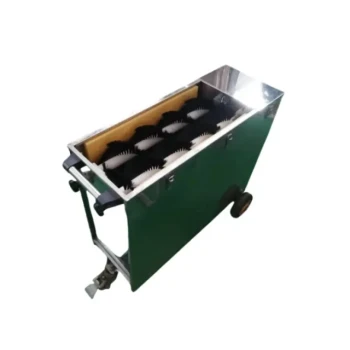
The superior performance of suction machines stems from their ability to harvest honey using a non-contact vacuum principle, which extracts liquid directly from storage pots without crushing the surrounding hive structure. Unlike traditional pressing, which physically squeezes the nest and introduces contaminants, suction harvesting ensures exceptional purity by preventing the mixing of pollen, propolis, and larval fluids into the final product.
The transition from pressing to suction represents a shift from destructive harvesting to sustainable management. By using negative pressure, you protect the structural integrity of the hive, ensuring medicinal-grade honey clarity while significantly reducing the biological stress placed on the bee colony.
The Critical Importance of Hygiene and Purity
Eliminating Cross-Contamination
Traditional pressing methods involve squeezing the entire honey storage structure. This inevitably forces impurities—such as royal jelly, larval debris, and pollen—to mix with the honey.
Suction machines utilize a targeted vacuum principle. This allows for the precise extraction of honey alone, isolating it from the rest of the hive's biological materials and resulting in a much clearer, purer product.
Reducing Moisture and Fermentation Risks
Manual squeezing often mixes mature honey with high-moisture immature honey. This excess moisture can lead to fermentation, spoiling the harvest.
Mechanical suction devices offer better control, allowing the harvester to target only sealed, mature pots. This separation ensures the final batch maintains a lower moisture content, preserving the honey's quality and increasing its market value.
Preserving Hive Architecture and Energy
Protecting Delicate Cerumen Pots
Stingless bees store their honey in unique, delicate waxy structures called cerumen pots, rather than the sturdy hexagonal combs of standard honeybees.
Traditional pressing destroys these pots, forcing the bees to rebuild their storage infrastructure from scratch. Suction harvesting leaves the physical structure of the nest largely intact, allowing the bees to immediately reuse the pots.
Conserving Colony Energy
When a hive is damaged during pressing, the colony must divert significant energy toward repairs and reconstruction. This creates a production lag.
By utilizing a non-destructive process, suction machines minimize the need for repairs. The bees can focus their metabolic energy on foraging and honey production rather than reconstruction, leading to a shorter production cycle and higher overall yields.
Understanding the Trade-offs
Equipment Complexity and Maintenance
While superior in output, suction machines introduce technical complexity. Unlike simple manual pressing, these devices require regular cleaning of hoses and collection bottles to prevent mold or bacterial growth between harvests.
Dependence on Power Sources
Electric suction models require reliable battery power or electricity, which can be a logistical challenge in remote apiaries. Manual vacuum pumps solve the power issue but require more physical effort from the operator compared to motorized versions.
Making the Right Choice for Your Goal
Whether you are scaling a commercial operation or managing a small apiary, the harvesting method dictates the quality of your end product.
- If your primary focus is producing medicinal-grade honey: Prioritize electric or manual suction to ensure zero contamination from larval fluids or propolis, maximizing clarity and value.
- If your primary focus is colony sustainability: Use suction devices to minimize physical damage to the cerumen pots, allowing the colony to recover faster and survive distinct seasons.
- If your primary focus is operational scalability: Transition to electric vacuum pumps to increase collection efficiency and standardize the quality of your harvest across multiple hives.
Adopting suction technology is the single most effective step you can take to professionalize stingless bee keeping and ensure a premium product.
Summary Table:
| Feature | Traditional Pressing | Suction Harvesting (Manual/Electric) |
|---|---|---|
| Honey Purity | Low (Mixes with pollen & larvae) | High (Pure liquid extraction) |
| Hive Structure | Destructive (Crushes pots) | Non-destructive (Pots remain intact) |
| Colony Stress | High (Requires major repairs) | Low (Minimal reconstruction needed) |
| Harvest Quality | Risk of moisture & fermentation | Low moisture; Medicinal-grade clarity |
| Best Used For | Small-scale / Personal use | Commercial apiaries / Premium honey |
Professionalize Your Stingless Bee Operation with HONESTBEE
Maximize your honey yield and ensure medicinal-grade quality with advanced harvesting technology. HONESTBEE caters specifically to commercial apiaries and distributors, offering a comprehensive wholesale range of professional beekeeping tools and machinery.
From high-efficiency suction devices to specialized honey-filling and hive-making machines, we provide the hardware and industry consumables you need to scale your production. Partner with us to access durable equipment and cultural merchandise that adds value to your brand.
Ready to upgrade your equipment? Contact our wholesale experts today to discuss your bulk requirements and custom solutions!
References
- Eni Suhesti, Sri Utami Lestari. Pelatihan Budidaya Lebah Kelulut (Heterotrigona itama) Bagi DKM Masjid Ash-Shiddiq Rumbai Pekanbaru. DOI: 10.31849/dinamisia.v7i5.15937
This article is also based on technical information from HonestBee Knowledge Base .
Related Products
- Stainless Steel Manual 8 Frame Radial Honey Extractor Machine for Beehives
- HONESTBEE 6 Frame Three Use Electric Honey Extractor for Beekeeping
- All-Stainless Steel Pivoting Honey Uncapping Fork for Beekeeping
- HONESTBEE 6 Frame Self Reversing Electric Honey Extractor for Beekeeping
- Automatic Honey Filling and Filtering Machine for Beekeeping Bottle Filling
People Also Ask
- What types of beehive frames are compatible with honey extractor machines? Find the Perfect Match for Your Apiary
- Which type of honey extractor is generally more durable? Focus on Material & Build Quality for Longevity
- What are the key features and benefits of a stainless steel honey extractor? Upgrade to Professional Purity
- What are the disadvantages of a manual honey extractor? Overcome Efficiency Bottlenecks in Your Apiary
- Why are manual extractors popular among beginner beekeepers? A Guide to Starting Simple & Saving Money