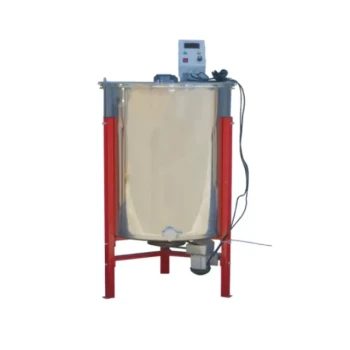
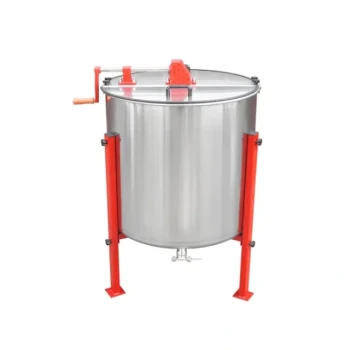
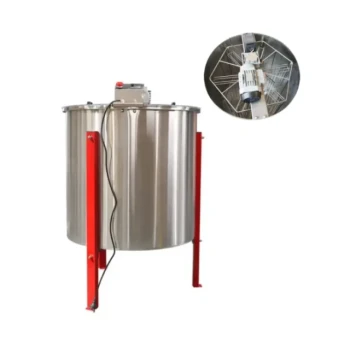
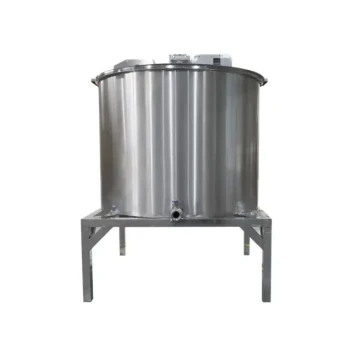
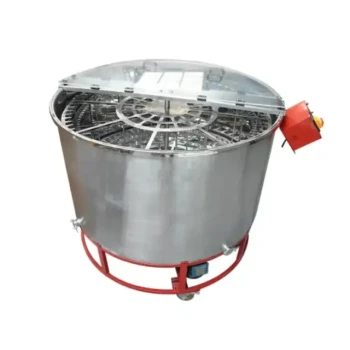
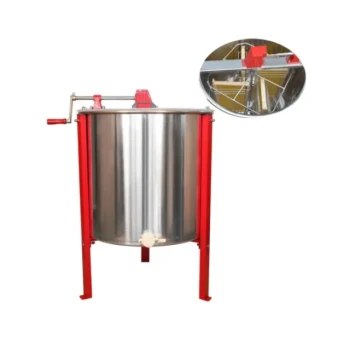
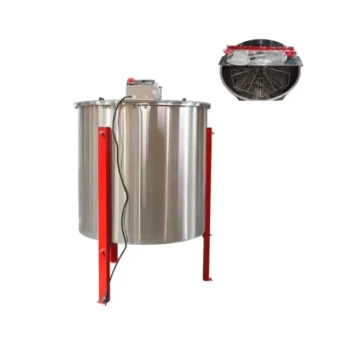
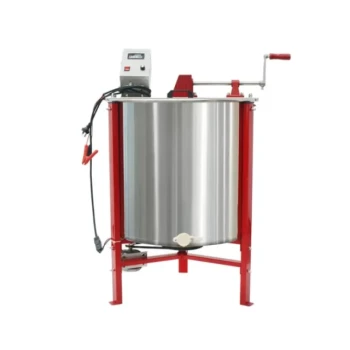
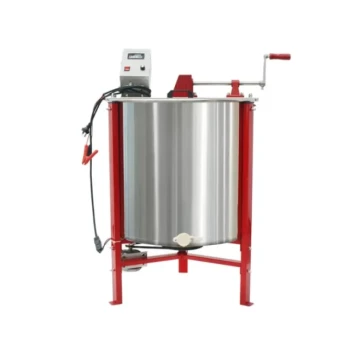
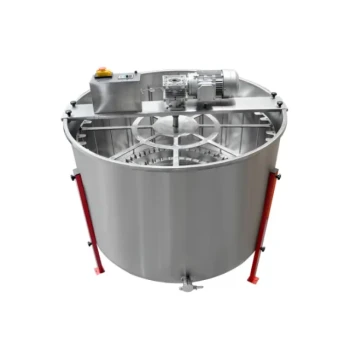
The decisive factor is structural preservation. Unlike traditional harvesting methods that rely on crushing and filtering, a centrifugal extractor uses rotational force to separate honey while leaving the honeycomb frames physically intact. This allows the apiarist to return the empty combs immediately to the hive, bypassing the destructive nature of pressing or squeezing.
The Core Efficiency Principle By preserving the honeycomb structure, centrifugal extraction eliminates the biological cost of wax rebuilding. This allows the colony to redirect immense energy reserves from construction back to nectar collection, significantly shortening production cycles and increasing total annual yield.
The Biological Economy of the Hive
To understand why this equipment is critical, one must look beyond the mechanical process and look at the biological resources of the bee colony.
The High Cost of Wax Production
In a traditional "crush and harvest" method, the honeycomb is destroyed. This forces bees to build new comb from scratch.
Biologically, wax secretion is expensive. Bees must consume significant amounts of honey and nectar to produce just a small amount of beeswax. When you destroy the comb, you are effectively destroying the colony's energy reserves.
Redirection of Energy
When you return intact combs from a centrifugal extractor to the hive, the bees accept them immediately.
Because the infrastructure is already in place, the bees do not need to waste time or metabolic energy secreting new wax. Instead, they can focus entirely on foraging and storing nectar.
Shortening the Production Cycle
This preservation directly impacts speed. By removing the construction phase, the turnaround time between harvests is drastically reduced.
The colony can fill the recycled combs much faster than they could if they had to build them first. This often allows for additional harvest cycles within a single season.
Quality and Process Efficiency
Beyond pure volume, the centrifugal method improves the efficiency of the extraction workflow and the quality of the final product.
Mechanical Separation vs. Filtration
Traditional pressing mixes honey with wax particles, debris, and potentially bee larvae. This requires extensive, slow filtering.
Centrifugal extractors separate the liquid cleanly. Because the comb isn't crushed, the honey remains free of large wax residues and biological impurities, streamlining the post-harvest processing.
Maintaining Food Safety Standards
The centrifugal process typically occurs in a sealed environment. This protects the honey from external contaminants during extraction.
It also prevents the introduction of water-insoluble impurities that are common in pressing methods, ensuring the honey meets higher hygiene standards with less effort.
Understanding the Trade-offs
While centrifugal extractors are superior for productivity, they introduce operational considerations that traditional methods avoid.
Equipment Cost and Complexity
Centrifugal extractors represent a higher upfront financial investment than simple crushing tools. They also require mechanical maintenance (bearings, motors, or hand-cranks) and storage space, which may be excessive for micro-apiaries with only one or two hives.
Infrastructure Requirements
Unlike simple crushing, these extractors require specific frames and foundations that can withstand centrifugal force. If you are producing "comb honey" (honey sold inside the wax), this equipment is naturally not applicable.
Making the Right Choice for Your Apiary
The decision to use centrifugal equipment depends on your specific production targets.
- If your primary focus is Maximum Yield: You must use a centrifugal extractor to preserve combs and minimize the bees' energy expenditure on wax production.
- If your primary focus is Comb Honey: Traditional cutting methods are necessary, as the product is the wax structure itself.
- If your primary focus is Purity and Speed: Centrifugal extraction provides the cleanest product in the shortest amount of time by avoiding debris contamination.
By shifting the burden of "infrastructure management" from the bees to the machine, you unlock the colony's full productive potential.
Summary Table:
| Feature | Centrifugal Extraction | Traditional Crushing |
|---|---|---|
| Comb Integrity | Preserved (Reusable) | Destroyed (Requires Rebuild) |
| Colony Energy | Focused on Nectar Collection | Wasted on Wax Secretion |
| Harvest Cycles | Shorter & More Frequent | Longer due to Reconstruction |
| Honey Purity | High (Mechanical Separation) | Lower (Requires Heavy Filtering) |
| Ideal For | Commercial & High-Yield Apiaries | Comb Honey Production |
Scale Your Apiary Production with HONESTBEE
Maximize your honey yield and protect your colonies' vital energy with professional-grade extraction technology. At HONESTBEE, we specialize in supporting commercial apiaries and distributors with a comprehensive range of beekeeping tools, specialized machinery, and essential consumables.
From high-efficiency centrifugal extractors to advanced honey-filling machines and hive-making equipment, our wholesale solutions are designed to streamline your operations and improve product quality. Let us help you unlock the full potential of your beekeeping business.
Ready to upgrade your equipment? Contact us today to explore our wholesale catalog!
References
- M Taha, Gudina Terefe Tucho. Knowledge, Attitudes, and Practices of Beekeepers on Pesticide Risk Mitigation and Bee Mortality in Southwest Ethiopia. DOI: 10.1177/11786302251328178
This article is also based on technical information from HonestBee Knowledge Base .
Related Products
- electric honey extractor honey centrifuge 3 frame honey extractor stainless steel honey frame extractor
- Manual Hand Crank 4 Frame Honey Extractor Centrifuge for Beekeeping
- Professional 4 Frame Self Reversing Electric Honey Extractor for Beekeeping
- Electric 4 Frame Tangential Honey Extractor
- 24 Frame Honey Extractor Commercial Radial Honey Frame Extraction Machine
People Also Ask
- What are the characteristics of electric honey extractors? Boost Your Apiary Efficiency with Automated Technology
- What are the disadvantages of using an electric honey extractor? Weighing Cost, Power, and Comb Safety
- What are the advantages of an electric honey extractor? Boost Efficiency and Scale Your Honey Production
- What are the technical advantages of electric honey extractors? Maximize Yield and Protect Your Bee Colony
- How does an electric honey extractor affect the quality of honey? Preserve Flavor & Purity with Precision Extraction