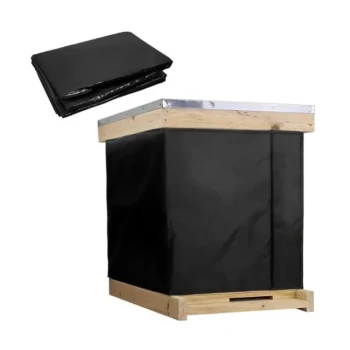
The use of Ventilated Meshed Cloth is the single most critical factor in preventing colony loss due to heat accumulation during transport. When honeybees are moved over long distances, the physical disturbance triggers a stress response where the bees vibrate rapidly. This vibration generates significant heat that, without a breathable mesh cover to facilitate airflow, will lead to suffocation and fatal heatstroke within the hive.
Transporting bees introduces a unique environment where the colony's natural defense mechanism—generating heat via vibration—becomes its greatest threat. Ventilated meshed cloth is required to aggressively dissipate this heat, ensuring the internal hive temperature remains survivable.
The Physiology of Transport Stress
The Heat-Vibration Connection
Under normal conditions, bees regulate their hive temperature with precision. However, the motion and confinement of long-distance transport disrupt this balance.
When disturbed, honeybees instinctively generate heat through vibration. In a confined space like a truck, this collective vibration causes the internal temperature of the hive to spike rapidly.
The Risk of Suffocation
If this rapidly generated heat cannot escape, the hive acts like an oven. The oxygen levels deplete as the temperature rises.
Without adequate ventilation, the colony faces an immediate risk of suffocation or death from heatstroke. This is the primary cause of colony loss during transit, not the distance itself.
Material Selection: Mesh vs. Fabric
The Necessity of Airflow
The cover material dictates the hive's ability to "breathe." Ventilated Meshed Cloth is engineered specifically to maximize air exchange.
It allows the hot, stale air generated by the agitated bees to escape vertically while permitting fresh, cooler air to enter.
Why Heavy Covers Fail
Traditional coverings, such as heavy fabric or dung covers, act as insulators rather than ventilators.
While these materials might be useful for winter insulation, using them during transport creates a thermal trap. They retain the heat generated by the bees, accelerating the path toward colony collapse.
Understanding the Trade-offs
Ventilation vs. Insulation
While ventilated mesh is essential for heat dissipation, it offers little insulation against external cold or protection from heavy precipitation.
The primary reference emphasizes heat dissipation because transport usually generates excess heat. However, operators must be aware that mesh exposes the hive to the elements more than solid wood or heavy canvas.
Structural Breathability
While the mesh cover handles immediate heat exhaust, the construction of the hive body also plays a supporting role.
As noted in supplementary data, high-quality wood processes help balance internal humidity. However, for the specific acute stress of transport, the mesh cover is the dominant variable for survival, regardless of the wood quality.
Ensuring Safe Colony Transport
To ensure your colonies arrive healthy, you must prioritize temperature management above all other factors.
- If your primary focus is Preventing Heatstroke: Prioritize the installation of Ventilated Meshed Cloth to counteract the heat generated by stress-induced vibration.
- If your primary focus is Long-Term Colony Health: Ensure your hive bodies are constructed of breathable, quality wood to manage humidity once the transport is complete and the mesh is removed.
Proper ventilation during transport is not an optional feature; it is a life-support requirement for the colony.
Summary Table:
| Feature | Ventilated Meshed Cloth | Traditional Heavy Covers |
|---|---|---|
| Primary Function | Heat dissipation & air exchange | Insulation & thermal retention |
| Airflow Capacity | High (prevents suffocation) | Low (creates thermal traps) |
| Heat Management | Exhausts vibration-induced heat | Retains internal hive heat |
| Best Use Case | Long-distance transit/transport | Winter insulation (stationary) |
| Colony Safety | Prevents heatstroke/collapse | High risk of transit mortality |
Secure Your Colony's Safety with Professional Grade Equipment
At HONESTBEE, we understand that transporting honeybee colonies is a high-stakes operation. As a dedicated partner to commercial apiaries and distributors, we provide the high-performance ventilated meshed cloth and specialized hive components necessary to prevent heatstroke and ensure colony survival during transit.
Beyond transport essentials, our comprehensive wholesale offering includes:
- Industrial Machinery: Hive-making and honey-filling machines to scale your production.
- Beekeeping Tools: A full spectrum of professional-grade hardware and equipment.
- Industry Consumables: Every essential item needed for successful commercial operations.
- Cultural Merchandise: Unique honey-themed retail products.
Ready to upgrade your apiary’s efficiency? Contact us today to discuss our wholesale solutions and let HONESTBEE support your business growth.
References
- Teweldemedhn Gebretinsae, Yayneshet Tesfay. Honeybee Colony Marketing Practices In Werieleke District Of The Tigray Region, Ethiopia. DOI: 10.1080/0005772x.2014.11417590
This article is also based on technical information from HonestBee Knowledge Base .
Related Products
- Inner Beehive Cover for Beekeeping Bee Hive Inner Cover
- Professional Insulated Winter Hive Wrap for Beekeeping
- Telescopic Beehive Outer Cover Lid Roof with Galvanised Sheeting for Langstroth Hive and Beehive Outer Cover
- Three-Layer Ventilated Beekeeper Suit with Structured Fencing Veil
- Premium Three Layer Ventilated Bee Suit with Round Veil
People Also Ask
- What is the purpose of the inner cover in a beehive? A Key to Hive Health & Easy Management
- What is the function and placement of an inner cover in a beehive? Essential Hive Management Guide
- What is the purpose of the inner and outer covers in a beehive? Essential for Hive Health & Management
- What is a beehive's inner cover and how is it used? Essential Guide for Hive Insulation and Ventilation
- What are the functions of the inner and outer covers on a beehive? Essential Guide for Hive Protection and Management