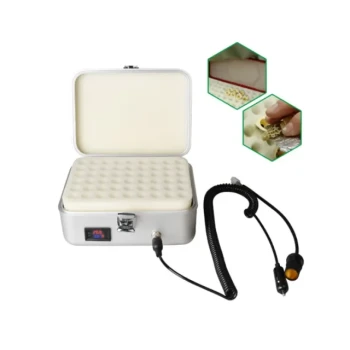
Beehive samples are stored at 35 °C to precisely replicate the internal biological environment of a living colony. This specific temperature is required to maintain the natural metabolic activity of biological components, such as live larvae and pupae, ensuring the sample remains representative of a functioning hive.
Accurate content identification relies on data fidelity. By maintaining samples at 35 °C, you ensure that volatile chemical substances are released at a rate consistent with natural conditions, guaranteeing that gas samples truly reflect the aromatic profile of a healthy colony.
The Science of Environmental Simulation
To identify hive content accurately, you must treat the sample not as a static object, but as a dynamic biological system. The 35 °C benchmark is not arbitrary; it is the thermal standard required to sustain the hive's specific biological and chemical equilibrium.
Maintaining Metabolic Continuity
A beehive contains living organisms, specifically larvae and pupae, which rely on a regulated environment to function.
At 35 °C, you simulate the natural heat generated by a colony. This allows the biological components within the sample to continue their normal metabolic activity. If the metabolic rate shifts due to temperature changes, the biological "signature" of the sample is altered.
Consistent Volatile Release
The identification process often relies on analyzing gas samples or aromas. Temperature directly dictates the rate at which chemical substances vaporize (volatility).
By stabilizing the environment at 35 °C, you ensure that volatile chemical substances are released exactly as they would be in the wild. This captures the true chemical output of the hive rather than an artificially suppressed or accelerated profile.
Capturing the Aromatic Profile
The ultimate goal of sample preparation is to capture the "scent" of the hive for analysis.
Because the volatility and metabolic activity are stabilized, the gas collected during this stage accurately reflects the aromatic characteristics of a healthy honeybee colony. This creates a high-fidelity snapshot of the hive's condition at that moment in time.
The Risks of Temperature Deviation
The precision of your input data defines the quality of your output. Failing to maintain the 35 °C standard introduces specific variables that can compromise the entire identification process.
The Impact on Sensor Training
The primary purpose of these samples is often to train sensor classifiers. These algorithms require "ground truth" data to learn effectively.
If the temperature deviates, the chemical profile of the gas sample changes. This results in poor training quality for the sensors, as they are learning to recognize a chemical profile that does not exist in a natural, healthy hive.
Artificial Data Skew
Temperature deviation does not just lower the signal; it distorts it.
A sample stored too cold may suppress specific volatiles, making the hive appear dormant or devoid of certain biological markers. A sample stored at the wrong temperature breaks the simulation, rendering the data collected statistically irrelevant for real-world application.
Optimizing Sample Preparation for Data Integrity
To ensure your content identification process yields reliable results, you must prioritize the stability of the sample environment above all else.
- If your primary focus is Biological Accuracy: Maintain 35 °C to preserve the metabolic functions of larvae and pupae, preventing the degradation of biological markers.
- If your primary focus is Sensor Calibration: Strictly adhere to the 35 °C standard to generate gas samples that match real-world aromatic profiles, ensuring your classifiers are trained on valid data.
By controlling the thermal environment, you transform a raw biological sample into a precise, reliable dataset for analysis.
Summary Table:
| Parameter | Requirement | Purpose in Sample Preparation |
|---|---|---|
| Storage Temperature | 35 °C (Constant) | Replicates internal colony thermal environment |
| Biological Target | Larvae & Pupae | Maintains natural metabolic activity and signatures |
| Chemical Focus | Volatile Substances | Ensures gas release rates match natural conditions |
| Primary Goal | Data Fidelity | Provides accurate ground truth for sensor training |
| Risk of Deviation | Inaccurate Data | Causes artificial data skew and poor classifier quality |
Maximize Your Colony Insights with HONESTBEE
Precise data starts with professional-grade tools. At HONESTBEE, we empower commercial apiaries and distributors with the high-performance equipment needed to maintain industry standards. From advanced beekeeping machinery and honey-filling systems to specialized hardware and essential consumables, our comprehensive wholesale catalog is designed to optimize your operations.
Whether you are scaling your honey production or looking for the latest in hive-making technology, we provide the expertise and tools to help you succeed.
Ready to elevate your beekeeping business? Contact us today to explore our full spectrum of professional equipment and cultural merchandise!
References
- Beata Bąk, J. Wilde. The Identification of Bee Comb Cell Contents Using Semiconductor Gas Sensors. DOI: 10.3390/s23249811
This article is also based on technical information from HonestBee Knowledge Base .
Related Products
People Also Ask
- What happens if a colony loses its queen during the nectar flow? A Guide to Salvaging Your Honey Harvest
- How can you tell if the worker bees have accepted the queen? Decode Bee Behavior for a Thriving Hive
- How can the queenless state of a newly created nuc be resolved? Expert Solutions for Colony Growth
- What are the primary reasons for replacing a queen bee? Boost Your Commercial Honeybee Colony's Success
- What queen bee behaviors should be observed after introduction? Ensure Hive Success with Our Expert Monitoring Guide