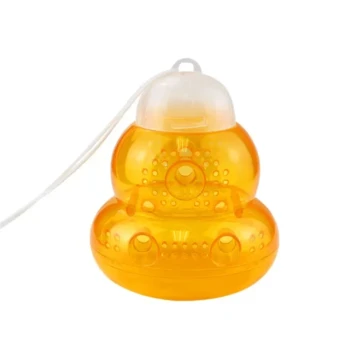
To effectively intercept the Large Hive Beetle, trap design must exploit the insect's sensory biology and locomotion mechanisms. Specialized traps are required to account for flight capabilities and chemotaxis because the beetle does not simply wander into a hive; it actively tracks airborne scents and flies toward them. Ignoring these factors results in passive defenses that fail to capture the pest before it breaches the hive interior.
By combining chemical attraction technology with flight path simulation, these traps function as highly specific decoys. This approach allows apiarists to intercept the beetle during its approach phase, preventing it from entering the hive in large numbers.
The Principles of Biological Interception
Exploiting Chemotaxis
The Large Hive Beetle relies heavily on chemotaxis, the biological process of moving toward specific chemical stimuli. To locate a host, the beetle tracks volatile substances naturally emitted by honeybee colonies.
Effective traps mimic these specific chemical signatures. By replicating the scent of a hive, the trap diverts the beetle from the actual colony toward the containment mechanism.
Integrating Flight Path Simulation
Unlike pests that primarily crawl, the Large Hive Beetle utilizes flight to close the distance to the hive. A trap placed on the ground or outside the natural approach vector may be ignored entirely.
Advanced designs incorporate flight path simulation to position the capture mechanism within the beetle's likely trajectory. This ensures the physical hardware aligns with the insect's airborne approach, drastically increasing the probability of capture.
The Goal of Preemptive Capture
The ultimate justification for these complex design requirements is the timing of the capture. The objective is to stop the beetle before it manages to enter the hive interior.
Once inside, the beetle is difficult to manage and causes significant damage. By targeting the flight and scent-tracking phases, the trap acts as a perimeter defense rather than a clean-up tool.
Technical Trade-offs and Complexity
Precision vs. Generalization
Designing for specific flight paths and chemical signatures introduces a requirement for high precision. A trap that relies on generic attractants or poor placement logic will fail to compete with the strong signals emitted by a live bee colony.
Complexity of Implementation
Incorporating flight path simulation moves monitoring technology beyond simple physical barriers. This approach requires a deeper understanding of beetle behavior, meaning the setup and maintenance of these specialized traps may be more demanding than traditional, passive methods.
Optimizing Your Monitoring Strategy
To ensure your monitoring efforts are effective, you must select equipment that matches the biological reality of the pest.
- If your primary focus is Early Detection: Prioritize traps that utilize high-fidelity chemical attraction technology to identify beetle presence before they establish inside the hive.
- If your primary focus is Perimeter Defense: Ensure your setup accounts for flight path simulation, positioning traps to intercept beetles in the air rather than waiting for them to land.
The most successful monitoring strategy treats the trap not as a passive container, but as an active decoy that out-competes the hive for the beetle's attention.
Summary Table:
| Feature | Biological Mechanism | Impact on Trap Effectiveness |
|---|---|---|
| Scent Mimicry | Chemotaxis (Tracking Volatiles) | Diverts beetles from the hive toward the trap using chemical decoys. |
| Spatial Placement | Flight Capabilities | Positions the trap in the airborne trajectory to intercept beetles mid-flight. |
| Timing | Preemptive Capture | Stops the pest at the perimeter, preventing damage inside the hive interior. |
| Design Focus | Active Decoy vs. Passive Barrier | Out-competes the natural hive signals to ensure the beetle enters the containment. |
Secure Your Apiary with Advanced Pest Management Solutions
Protecting your commercial honey production requires more than passive defense. HONESTBEE specializes in empowering commercial apiaries and distributors with high-performance beekeeping tools and machinery. From specialized hive-making hardware to advanced honey-processing equipment, we provide the comprehensive wholesale solutions you need to scale your operations.
Whether you are looking for precision-engineered components or essential industry consumables, our expert team is ready to support your business growth. Contact HONESTBEE today to discuss our wholesale offerings and discover how our industry-leading equipment can enhance your apiary’s efficiency and security.
References
- Hossam F. Abou‐Shaara, Sulaiman Ali Alharbi. Modeling the Invasion of the Large Hive Beetle, Oplostomusfuligineus, into North Africa and South Europe under a Changing Climate. DOI: 10.3390/insects12040275
This article is also based on technical information from HonestBee Knowledge Base .
Related Products
- Black Plastic Beetle Barn Hive Beetle Trap for Beehives
- Reusable Aluminium Beetle Trap for Small Hive Beetles Silver Bullet
- Reusable Clear Small Hive Beetle Traps for Beehives Beetle Trapping Tools
- Removable Washable Hive Beetle Trap Attractants for Small Hive Beetles
- Plastic Beetle Blaster Trap Beekeeping Tools and Supplies
People Also Ask
- How should powdered substances be used in beetle traps for hive beetle control? Expert Guide for Maximum Colony Protection
- What are the three main types of hive beetle traps? Expert Solutions for Protecting Your Bee Colonies
- What are the types of hive beetle traps available? Master Your Beetle Control Strategy
- What are the main types of hive beetle traps available? A Beekeeper's Guide to Effective Control
- What mechanical methods can be used to manage small hive beetles? Effective Physical Solutions for Your Beehive