The Anatomy of a Winter Catastrophe
In the quiet cold of winter, an apiary looks dormant, a collection of silent boxes against the snow. For the beekeeper, this quiet is filled with a low-grade anxiety. Inside each box, a complex, self-regulating superorganism is fighting to survive until spring.
We spend the autumn preparing our hives like fortresses, reducing entrances and wrapping them against the cold. Yet, this very act of sealing them for safety creates a critical vulnerability—a single point of failure that can unravel everything.
It often starts with something that seems trivial: a small pile of dead bees at the doorway.
The Physics and Physiology of the Winter Cluster
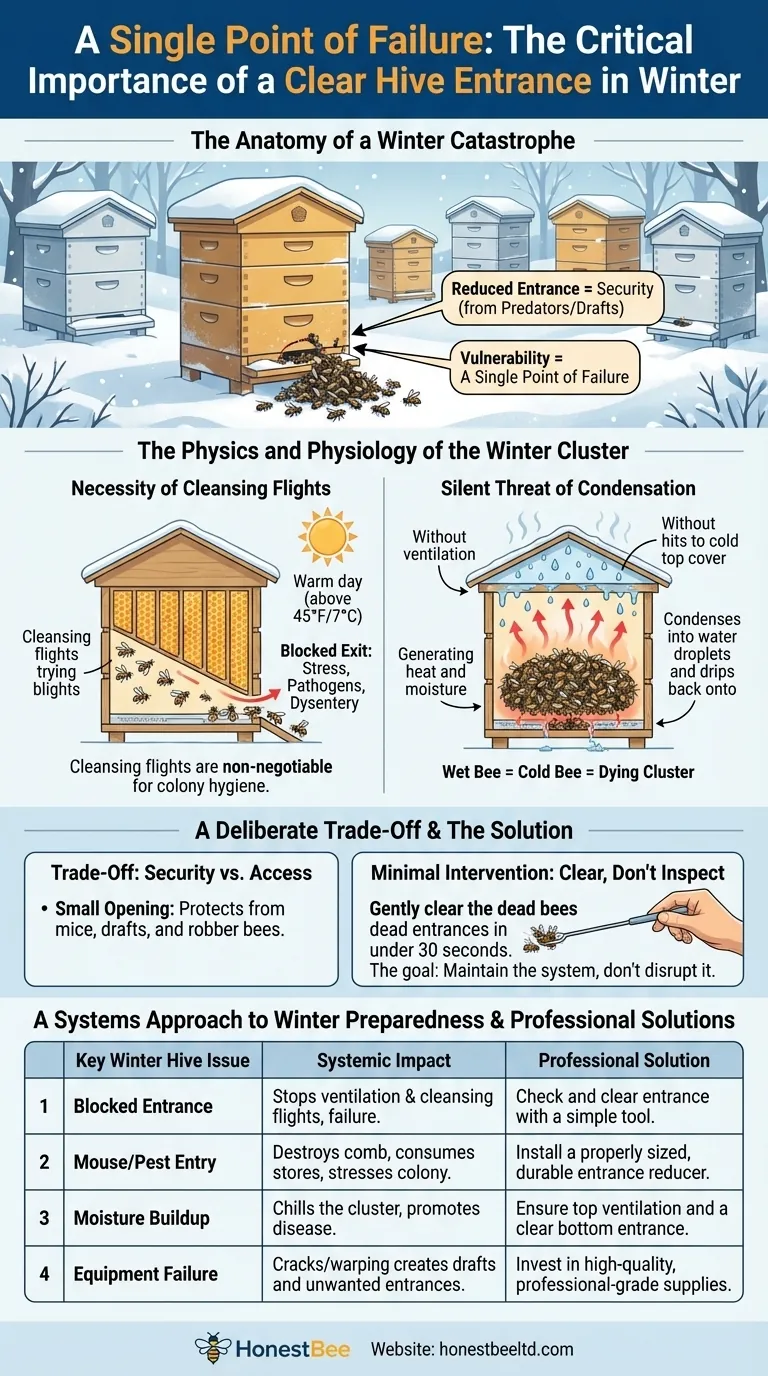
To understand the danger, you have to understand what’s happening inside that box. The winter cluster isn't hibernating; it's in a state of constant, slow-motion activity. It generates heat, and with heat comes moisture. The colony's survival depends on managing these two forces. The hive entrance is the primary valve for that system.
The Necessity of Cleansing Flights
On unusually warm winter days (above 45°F or 7°C), bees must exit the hive to defecate. These are called "cleansing flights," and they are non-negotiable for colony hygiene. They prevent the spread of diseases like dysentery inside the hive.
If the entrance is blocked by an accumulation of dead bees, they are trapped. This forces them to soil their home, introducing stress and pathogens that can decimate a colony. A clear exit is not a convenience; it's a biological necessity.
The Silent Threat of Condensation
The cluster of bees vibrates, generating heat that keeps the queen and brood warm. This metabolic process releases a significant amount of warm, moist air. In a properly ventilated hive, this air rises and exits.
When the entrance is blocked, ventilation stops. The moist air hits the cold inner surfaces of the hive, condenses into water, and drips back down onto the bees. A wet bee is a cold bee, and a cold, wet cluster is a dying one. The fortress becomes a tomb, not from the cold outside, but from the moisture trapped within.
A Deliberate Trade-Off: Security vs. Access
The irony is that a blocked entrance is often the direct result of a sound beekeeping strategy: reducing the entrance for winter. We do this for good reason.
A smaller opening protects the colony from two primary threats:
- Predators: It prevents mice from entering the warm, food-rich hive to build a nest.
- Elements & Robbers: It reduces drafts and gives the bees a smaller, more defensible doorway against robbing bees from other colonies.
This is a calculated risk—an intentional engineering choice. We create a bottleneck to enhance security, fully aware that this bottleneck can become clogged.
The psychological trap for the beekeeper is misinterpreting the signs. Seeing a small pile of dead bees at the entrance isn't a sign of failure. It’s a sign that the colony’s "undertaker" bees are doing their job, removing the dead from the hive. In the cold, they can only carry them as far as the doorway. Your job is simply to assist their efforts.
The Art of Minimal Intervention
The solution to this critical problem is remarkably simple and low-tech. The goal is not to perform a disruptive hive inspection, but to execute a quick, precise, and gentle clearing.
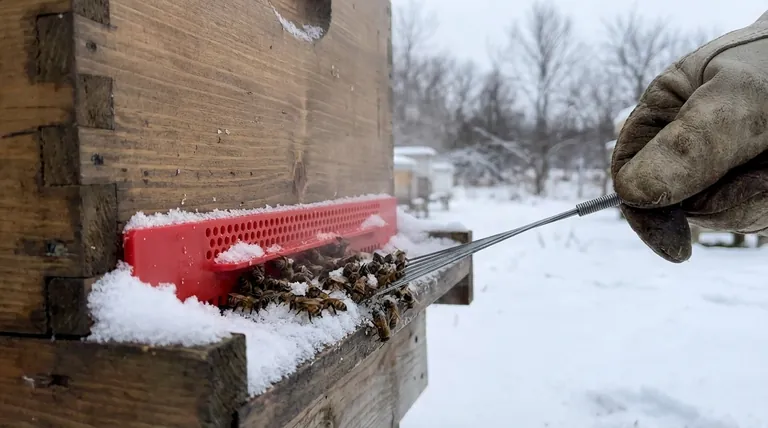
- The Right Tool: No special equipment is needed. A long stick, a piece of stiff wire, or a straightened metal coat hanger is perfect.
- The Procedure: Gently insert the tool into the entrance and rake the dead bees out and away. The entire process should take less than 30 seconds. Be swift, be gentle, and walk away.
You are not fixing a broken system. You are maintaining a single, critical component to allow the system to continue regulating itself.
A Systems Approach to Winter Preparedness
Mastering winter beekeeping is about understanding these interconnected systems. A blocked entrance is a single point of failure, but the resilience of your entire operation depends on the quality of every component. The entrance reducer that fits perfectly, the hive bodies that are free of cracks, the inner cover that allows for proper ventilation—they all matter.
For commercial apiaries and equipment distributors, this systems-thinking is paramount. Success at scale doesn't come from heroic interventions, but from using reliable, durable equipment that prevents problems before they start. This is the foundation of a resilient operation.
| Key Winter Hive Issue | Systemic Impact | Professional Solution |
|---|---|---|
| Blocked Entrance | Stops ventilation & cleansing flights, leading to failure. | Check and clear entrance with a simple tool. |
| Mouse/Pest Entry | Destroys comb, consumes stores, stresses colony. | Install a properly sized, durable entrance reducer. |
| Moisture Buildup | Chills the cluster, promotes disease. | Ensure top ventilation and a clear bottom entrance. |
| Equipment Failure | Cracks/warping creates drafts and unwanted entrances. | Invest in high-quality, professional-grade supplies. |
Ensuring your hives are equipped with professional-grade components is the first step in building a robust, year-round apiary. At HONESTBEE, we supply commercial beekeepers and distributors with the durable equipment needed to manage every seasonal challenge, from hive bodies and frames to the essential tools for winter maintenance.
By focusing on quality from the ground up, you empower your colonies to do what they do best: thrive. If you're ready to build a more resilient operation, Contact Our Experts.
Visual Guide
Related Products
- Multi-Functional Sliding Hive Entrance for Beekeeping
- Multi-Functional Rotary Hive Entrance Disc for Beekeeping
- Professional Reversible Beehive Hive Entrance
- Beehive Entrance Reducer Guardian Metal Hive Entrance for Bees
- Steel Round Disc Entrance Reducer for Flexzion Bee Hive Nuc Box Gate
Related Articles
- How Hive Entrance Size Shapes Bee Health: Balancing Ventilation and Security
- The Choke Point and the Superhighway: A Systems Approach to Hive Entrance Management
- The Unseen Flaw in Your Apiary: Why Hive Entrance Placement Dictates Your Profit
- Calibrating the Gateway: The Critical Engineering of the Hive Entrance
- The Hive Entrance: A Masterclass in Engineering and Risk Management